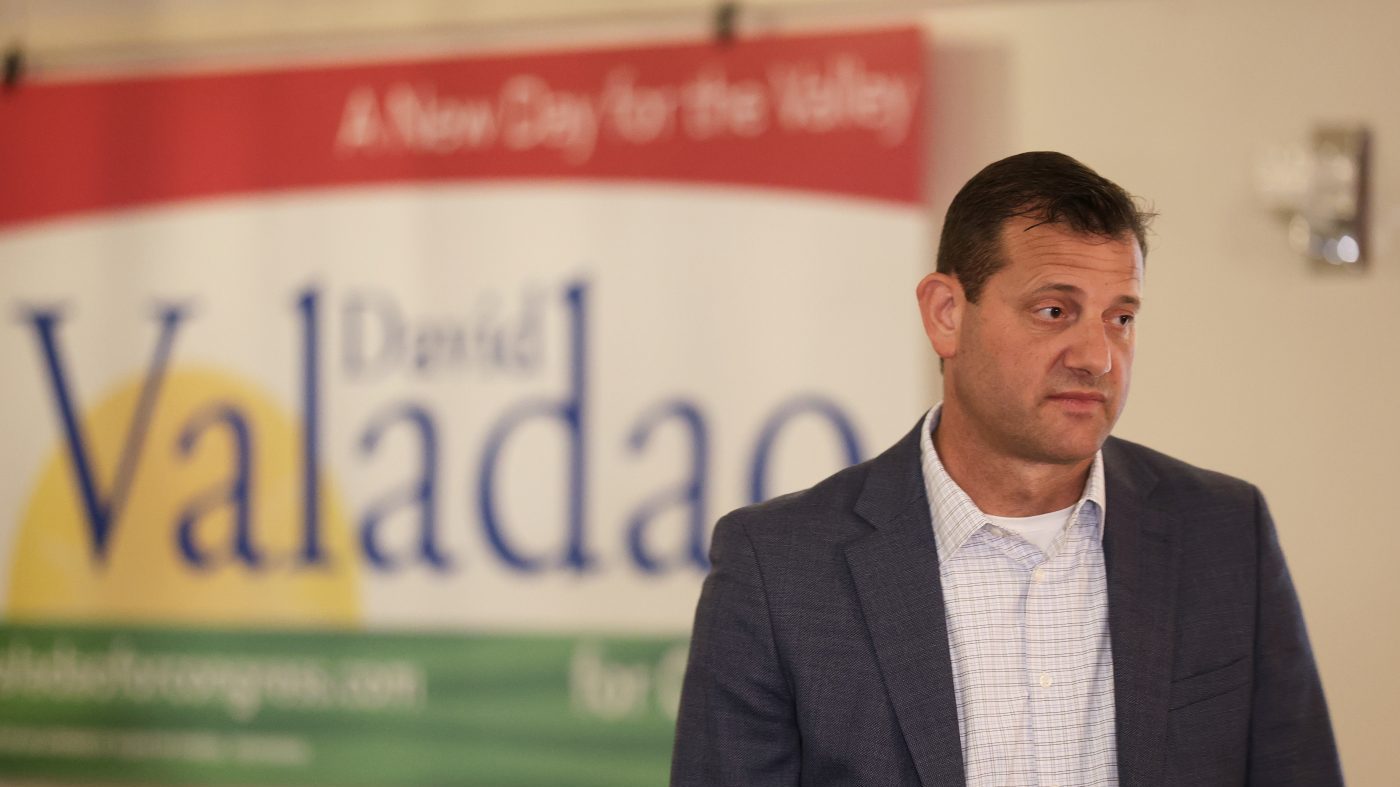
The political reckoning for House Republicans who crossed former President Trump over the Jan. 6 Capitol attack is now complete. With Rep. David Valadao's (R-Calif.) defeat on Tuesday, none of the 10 Republicans who voted for impeachment will serve in the next Congress. Valadao, the last remaining impeacher still in the House, lost his Central Valley seat to Democrat Randy Villegas, a result that underscores the enduring power of Trump's endorsement in GOP primaries.
Valadao's ouster follows a pattern that began in 2022, when eight of the ten either retired or lost primaries. Among the most high-profile was former Rep. Liz Cheney (R-Wyo.), who was defeated by Trump-backed Harriet Hageman and later campaigned for Vice President Kamala Harris in 2024. The remaining two—Reps. Dan Newhouse (R-Wash.) and David Valadao—managed to survive their primaries but have now both exited, with Newhouse announcing his retirement in December 2025 and Valadao losing his general election.

A Political Purge Driven by Trump's Wrath
The impeachment votes on Jan. 13, 2021, came just days after the violent insurrection at the U.S. Capitol. Trump, who had been impeached for incitement of insurrection, immediately vowed to unseat those Republicans who defied him. His political operation targeted each of the ten, backing primary challengers and using his considerable influence to reshape the GOP in his image.
Cheney, who served as vice chair of the House select committee investigating Jan. 6, became a symbol of anti-Trump resistance. Her defeat in 2022 was a watershed moment, signaling that Trump's grip on the party was absolute. Kinzinger, the other committee member, chose not to seek reelection after a redistricting battle, though he has remained a vocal critic, calling Trump's 2025 comeback a series of "failure after failure."
The Fate of the Impeachers
Here's a rundown of the ten and how their political careers ended:
- Liz Cheney (Wyo.): Lost the 2022 primary to Harriet Hageman, who later won a Senate seat in 2026.
- Anthony Gonzalez (Ohio): Retired in 2021 after facing censure from state Republicans; his district eventually went to a Democrat.
- Jamie Herrera Beutler (Wash.): Lost the 2022 primary to Trump-backed Joe Kent, who then lost the general election.
- John Katko (N.Y.): Retired in 2022; his seat went to Republican Claudia Tenney, who has embraced Trump.
- Adam Kinzinger (Ill.): Retired in 2022 after redistricting pitted him against a Trump ally.
- Peter Meijer (Mich.): Lost the 2022 primary to John Gibbs, who then lost the general election.
- Dan Newhouse (Wash.): Survived a primary challenge in 2022 but announced retirement in 2025.
- Tom Rice (S.C.): Lost the 2022 primary to Russell Fry, the first of the ten to be defeated.
- David Valadao (Calif.): Survived 2022 but lost the 2024 general election.
- Fred Upton (Mich.): Retired in 2022 after voting for impeachment; his seat went to a Democrat.
Legacy and Implications
The complete exit of these lawmakers marks a significant shift in the GOP, which has fully aligned with Trump's post-election grievances. As the party looks toward 2028, the absence of these dissenting voices has narrowed the ideological range within Republican ranks. Meanwhile, Trump's midterm losses have raised questions about his political future, but his influence over the party's base remains potent.
For Democrats, the defeats of these Republicans have provided electoral gains in several districts, yet the broader implication is a more polarized Congress. The Jan. 6 committee's work, now largely historical, has been overshadowed by the political fallout. As editorial boards have noted, the GOP's rout in the midterms may be tied to Trump's divisive tactics, but the purge of his critics suggests a party that has chosen loyalty over dissent.
The story of these ten lawmakers is a cautionary tale about the perils of crossing a political figure like Trump. Their exits have reshaped the Republican conference, leaving it more uniform and less willing to challenge the former president. As the 118th Congress convenes, the absence of these moderates will likely be felt in debates over everything from election reform to foreign policy.