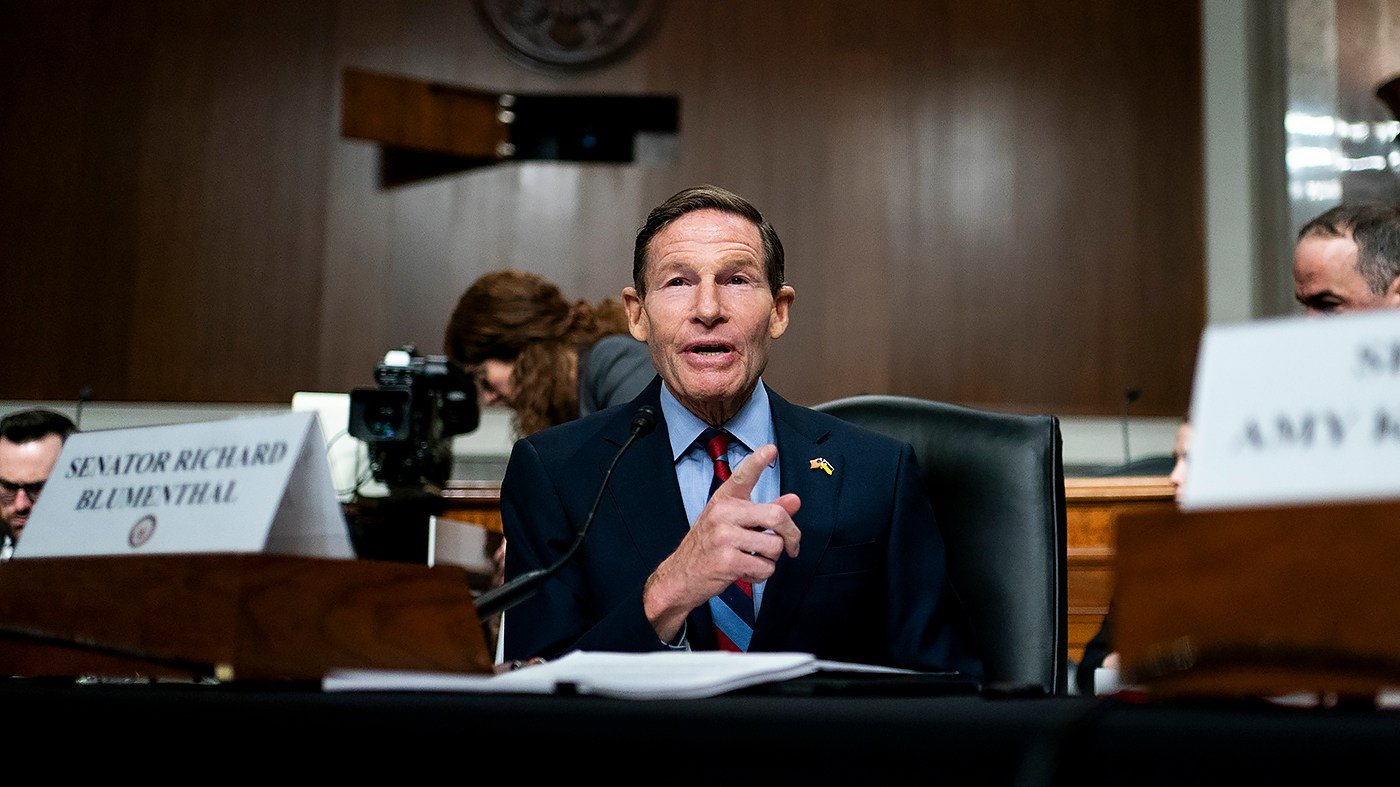
Sen. Richard Blumenthal (D-Conn.) argued Sunday that Ukraine urgently needs additional air defense systems to counter Russia's intensifying aerial campaign, casting doubt on the value of a recent CIA director visit to Moscow.
Speaking on CBS News's "Face the Nation," Blumenthal described Russian President Vladimir Putin as "a mob thug" who "understands only force and strength." He said CIA Director John Ratcliffe's trip, which President Donald Trump called "semi-routine," is unlikely to change Putin's calculus. "Actions speak louder than words," Blumenthal said, adding that the Europeans recognize "what's needed is more air defense."

Ratcliffe's unannounced visit to Moscow was first reported by The Wall Street Journal. It marked the first such trip by a CIA director since 2021, when then-Director Bill Burns traveled to warn Putin against launching a full-scale invasion of Ukraine. The recent meeting comes as Russia has escalated its aerial assaults on Ukrainian cities, resulting in a rising civilian death toll.
According to the Journal, U.S. intelligence assessed that Putin could attempt to test NATO's resolve with a limited attack on an allied nation in the coming years. However, a European official told The Hill that Washington briefed allies on the trip, emphasizing that it centered on Ukraine and that there was no imminent military threat to NATO.
Blumenthal's comments reflect growing congressional pressure on the Biden administration to accelerate military aid to Kyiv, particularly air defense systems like Patriot batteries. The senator's remarks also underscore a broader debate among Democrats about the effectiveness of direct diplomacy with the Kremlin, especially as defense industry supply chains face strain.
The call for more air defense comes as Ukraine's allies weigh additional support. European nations have pledged various systems, but shortages persist. Blumenthal's stance aligns with other Democrats who have urged the administration to be more assertive, including those who have pressed for stronger action in other foreign policy arenas.
Meanwhile, the White House has defended Ratcliffe's mission as a necessary channel of communication. Trump said the visit was routine, and Baltic officials downplayed any near-term attack risk. Yet Blumenthal remains skeptical, suggesting that only tangible military support will deter Putin.
The debate over air defense is likely to intensify as Congress considers additional funding for Ukraine. Some Republicans have questioned the scale of aid, while Democrats like Blumenthal argue that withholding support would embolden Moscow. The issue could also play into Democratic midterm messaging, with the party seeking to position itself as the strongest defender of democratic allies.
As the war grinds on, Ukraine's need for air defense remains critical. Blumenthal's remarks highlight the urgency felt by many in Washington, even as the administration explores diplomatic avenues. Whether Ratcliffe's trip yields any change in Russian behavior is unclear, but Blumenthal's message is direct: Ukraine needs more than words.