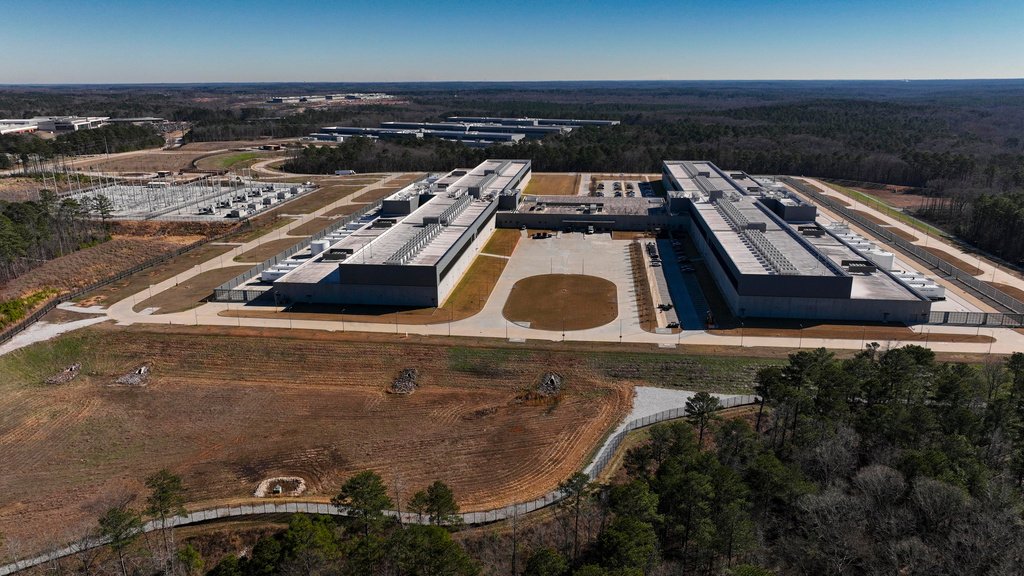
The rapid expansion of data centers to power artificial intelligence is triggering a political backlash that threatens to reshape energy policy and influence upcoming elections. Critics across the political spectrum are voicing anger over rising electricity costs and the strain on an already fragile power grid, with some states moving to halt development altogether.
Maine’s legislature recently passed a ban on new data center construction, a move backed by progressive figures like Sen. Bernie Sanders (I-Vt.) and Rep. Alexandria Ocasio-Cortez (D-N.Y.), who are pushing for a national moratorium. The backlash, however, is not confined to the left. Florida Gov. Ron DeSantis (R) has proposed restrictions on data centers, reflecting growing conservative unease with the industry’s unchecked growth.

Virginia, home to the world’s largest concentration of data centers, offers a stark illustration of the shift in public opinion. A Washington Post poll found that support for data centers in local communities has plummeted from 69 percent three years ago to just 35 percent today, with declines across all party and demographic groups. The drop underscores a broader realization that data centers—especially those running AI—are pushing the power grid to the brink of a reliability crisis.
Data centers consume enormous amounts of electricity, and the surge in demand has outpaced the grid’s ability to add new supply. Utilities warn that without significant investment, power shortfalls could become common. The cost of building new transmission lines and generation capacity is passed on to consumers, driving up monthly bills and fueling public anger.
Political missteps have only added to the fire. The Trump administration directed the Federal Energy Regulatory Commission (FERC) to consider overriding state authority over grid connections for data centers, a move widely seen as a gift to the tech industry. Critics argue that federalizing the process could allow data centers to bypass state requirements that they pay the full cost of their grid usage, shifting the burden onto ordinary ratepayers.
“This proposal is bad policy and even worse politics,” said Mark Christie, a former FERC chairman and current director of the Center for Energy Law and Policy at William and Mary Law School. Christie, who served 17 years as a utility regulator in Virginia, warned that dismissing the backlash could lead to extreme measures like outright bans.
The debate is also playing out in Congress. House Democrats have signaled they will force votes on issues like the Iran war powers resolution, but the data center fight is gaining urgency as voters demand action on rising utility costs. Recent incidents, such as the condemnation of political violence at the WHCA dinner, have further polarized the political landscape, making bipartisan cooperation on energy policy even more elusive.
Industry advocates argue that data centers are essential for AI development, which promises breakthroughs in medicine and other fields. But opponents counter that the costs are being unfairly distributed. “Soundbites about winning the AI race with China won’t soothe voters angry about skyrocketing power bills,” Christie wrote. He suggested that defense-related AI should be funded through tax dollars, not consumer electricity bills, as has been done for other military technologies.
The tech mantra of “move fast and break things” may work in Silicon Valley, but it is a risky approach for the power grid, which must serve the entire economy. With a volatile election year underway, politicians ignoring the grassroots backlash do so at their peril. As one recent analysis noted, local backlash against data centers demands smarter deals, not construction bans, suggesting that compromise may be the only way forward.