With less than two weeks before Election Day, Republicans are unleashing a torrent of late cash in a desperate bid to rescue their most vulnerable incumbents and challengers. President Trump announced Tuesday that his political operation would pour more than $400 million into GOP efforts, while the Republican National Committee confirmed it is shifting $50 million to the party's House and Senate campaign arms.
The spending surge comes as polling and nonpartisan forecasters paint a grim picture for the GOP. Decision Desk HQ now gives Republicans just a 22% chance of holding the House and a 56% probability of losing the Senate as well. Cook Political Report on Tuesday moved 11 House districts and two Senate races away from the GOP, while shifting only one Senate race toward Democrats.
"I'd rather have it in a toss-up situation than not, but at this point, it's going to take more than money in either direction, Republican or Democrat, in some of these contested races to get through the finish line," said one Republican strategist, speaking on condition of anonymity. "Money is a part of that equation, but it's not the whole answer."
The president's MAGA Inc. super PAC has already spent $277 million over the past six weeks, according to Federal Election Commission filings. The RNC's transfer—split evenly between the National Republican Congressional Committee and the National Republican Senatorial Committee—comes on top of $44 million moved between mid-August and mid-October. Another $6 million is expected before Election Day.
But some GOP operatives grumble that the influx is too little, too late. Ad rates have spiked as airtime becomes scarce, and the late spending "is certainly better than nothing but it is still two times if not more the cost of a candidate ad," the strategist said.
The RNC's new ability to coordinate and spend unlimited sums with campaigns stems from a Supreme Court ruling this summer that eased restrictions on party spending. "We're now deploying it aggressively and strategically to directly benefit our candidates when and where it has the highest impact," RNC Chairman Joe Gruters said in a statement, touting a "hard dollar edge" in key battlegrounds.
Yet the reality on the ground tells a different story. Reports indicate Republicans are pulling money from tough House districts in New Jersey and Iowa—a move that Geoffrey Skelley, chief elections analyst for Decision Desk HQ, said could be interpreted as "almost admitting that they're going to lose the House." Even the president's travel schedule, including stops in reliably red states like Mississippi and South Carolina, suggests a focus on shoring up Senate races rather than defending the House.
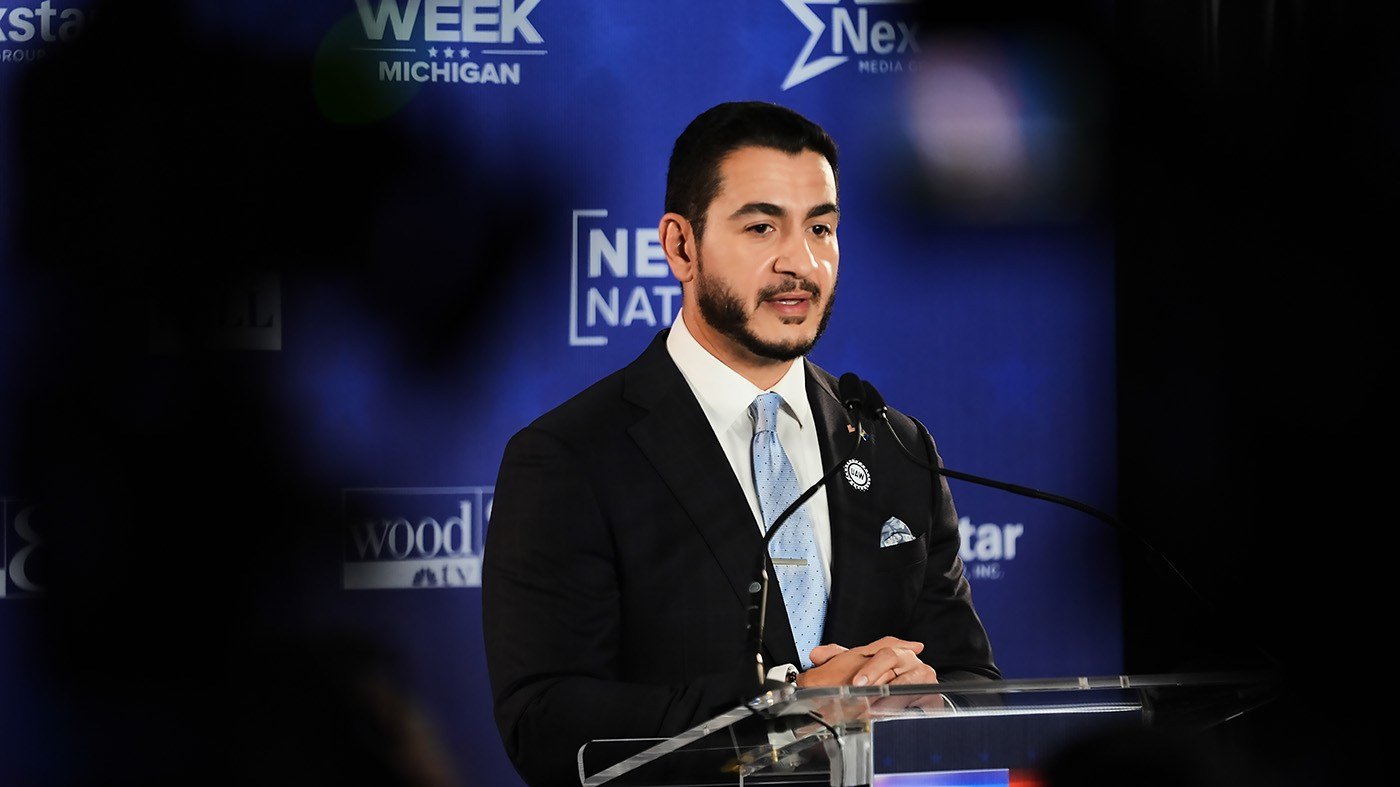
Trump has tried to rally his base by telling voters to "pretend I'm on the ballot" and promising $5,000 "Trump dividends" if the GOP keeps both chambers. But his own super PAC's spending, while massive, may not be enough to overcome the Democratic fundraising machine. Democratic Senate candidates raised staggering sums in the third quarter—James Talarico pulled in $64 million in Texas, Jon Ossoff $33 million in Georgia, and Abdul El-Sayed $31 million in Michigan, with El-Sayed dismissing GOP attacks as desperate.
With just days left, strategists warn that money has "diminishing returns" amid a "supersaturation rate" for ads. "Most of the TV has been purchased," said a second Republican strategist. "There's always options for digital, but a ground game, some sort of get-out-the-vote effort, would be key—but we're just so late in the game."
Even with the RNC's cash advantage—it entered the year with a $100 million edge over its Democratic counterpart—the late spending may not be enough to alter the trajectory. As one analyst put it, "That dollar is not going nearly as far in terms of booking ad time." The GOP's final gamble is that money can still buy a miracle.