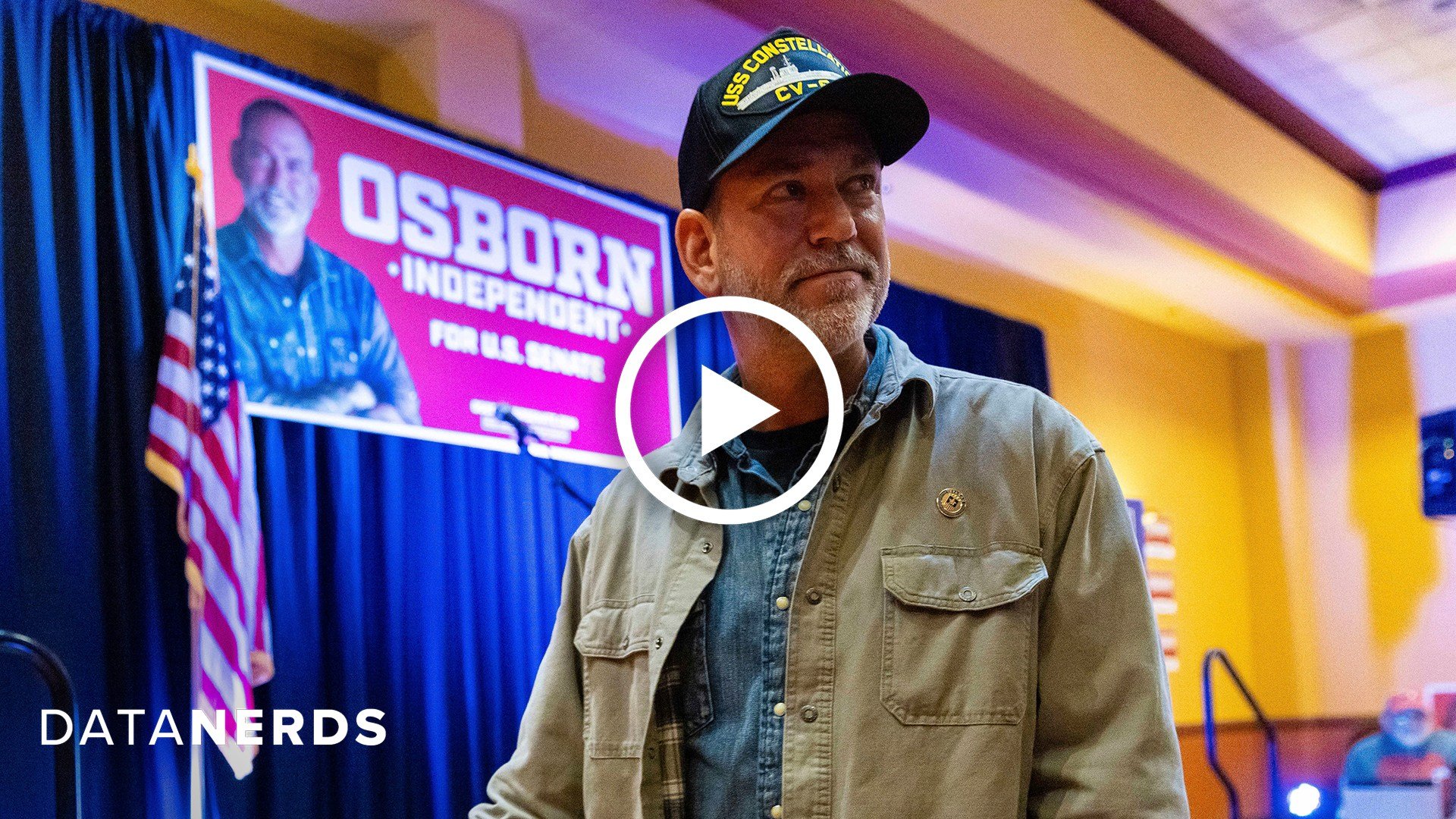
Dan Osborn's independent Senate campaign has turned Nebraska into a surprisingly competitive battleground, forcing national political observers to take notice. The race, once considered safely Republican, is now drawing intense scrutiny as Osborn's candidacy threatens to upend traditional party dynamics.
On Wednesday, The Hill's senior vice president of editorial content, Bill Sammon, and Decision Desk HQ's chief elections analyst, Geoffrey Skelley, hosted a live discussion breaking down the Nebraska race and its broader implications. The conversation, which began at noon EDT, also covered other independent candidacies, shifting Republican resources in House contests, and the Texas Senate race following progressive candidate James Talarico's CNN town hall.
Osborn, a union leader and mechanic, has positioned himself as a political outsider focused on economic populism and working-class issues. His campaign has resonated with voters frustrated by partisan gridlock, and recent polls show him running competitively against the Republican nominee. The race has become so tight that former President Trump has made multiple trips to Nebraska to rally for the GOP candidate, as Trump stumps for Ricketts in Nebraska, highlighting the national stakes.
The surge in independent candidacies is not limited to Nebraska. In Montana, the Democratic Party chair recently resigned and endorsed an independent candidate in the Senate race, a move that underscores the growing appeal of alternatives to the two major parties. This trend is forcing both Democrats and Republicans to recalibrate their strategies in key contests.
Republicans are also reallocating resources in House races, as they face unexpected challenges in districts they had previously considered safe. The shifting landscape has prompted national committees to pour money into races that were not initially on their radar, a sign of the volatile political environment heading into the midterms.
In Texas, the Senate race has gained attention after progressive candidate James Talarico's appearance on CNN, which energized progressive voters but also sparked debate about the party's direction. The Texas contest remains a long shot for Democrats, but Talarico's performance has injected new energy into the campaign.
Political analysts note that the rise of independent and third-party candidates could have a significant impact on control of the Senate. In a chamber where every seat counts, even a small shift in voter support could tip the balance. Recent polling shows Democrats competitive in five GOP-held Senate seats, but the Nebraska race is unique because it features a true independent rather than a Democrat.
Osborn's campaign has also drawn attention to the broader issue of political polarization. His message of unity and practical problem-solving appeals to voters who are tired of extreme partisanship. Whether he can translate that appeal into victory remains uncertain, but his candidacy is already reshaping the political conversation in Nebraska and beyond.
As the midterms approach, all eyes will be on Nebraska and other unexpected battlegrounds. The outcome of these races could determine the balance of power in Washington and set the stage for the 2024 presidential election. For now, Osborn's independent bid is a reminder that in American politics, the unexpected can always happen.