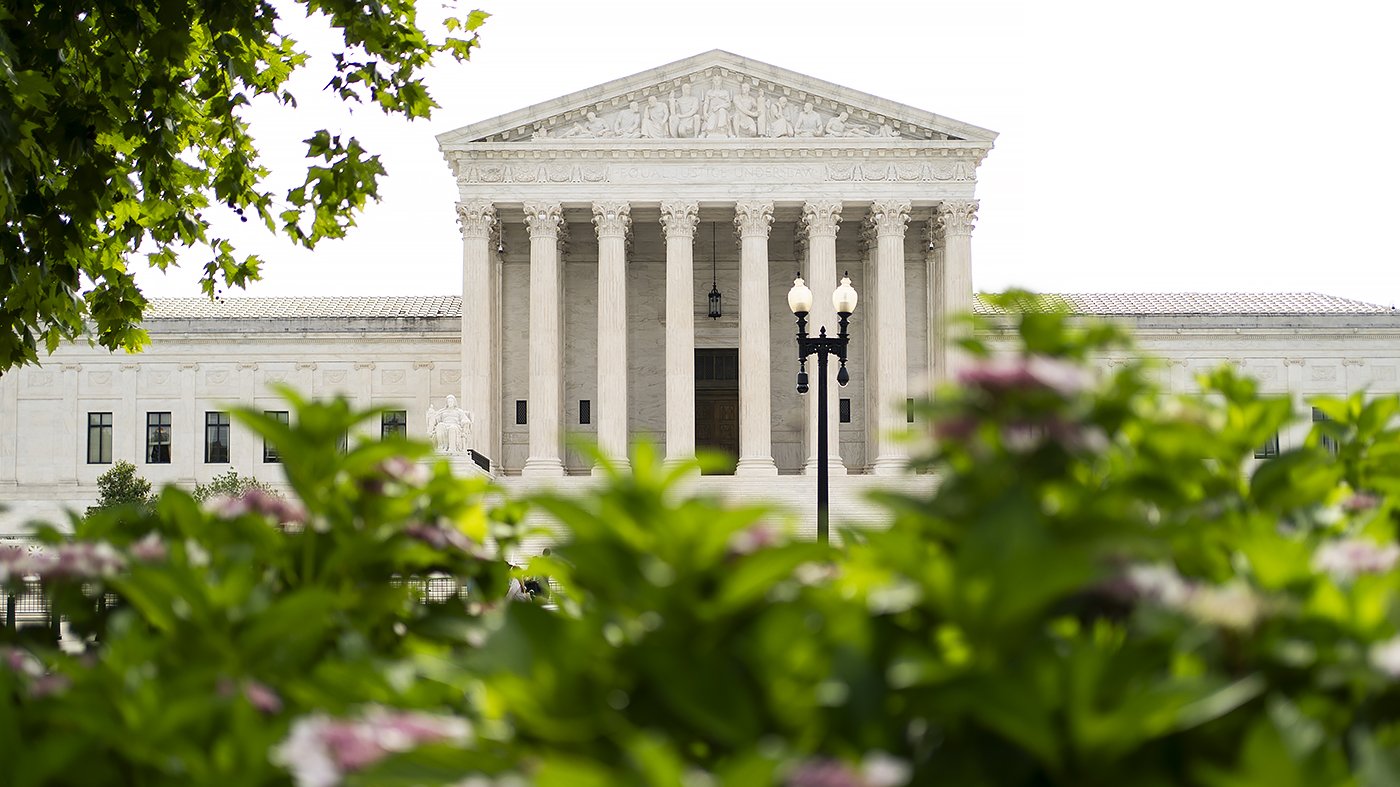
In a closely watched decision on Monday, the Supreme Court ruled 5-4 that states may continue to accept mail ballots that arrive after polls close on Election Day, as long as they are postmarked by that date. The ruling rejected a challenge from the Republican National Committee (RNC) that sought to invalidate the practice in federal elections.
Justice Amy Coney Barrett, writing for the majority, held that federal law setting Election Day as "the Tuesday next after the 1st Monday in November" does not prohibit states from counting ballots received afterward. "The election-day statutes say nothing about ballot receipt, and we cannot add to the words Congress chose," Barrett wrote.
Barrett was joined by Chief Justice John Roberts and the court's three liberal justices—Sotomayor, Kagan, and Jackson. The four conservative justices dissented, signaling a sharp ideological split on election administration.
The decision injects fresh uncertainty into the battle for control of Congress, as Republicans aim to hold their majorities in both chambers in November. It also marks a significant setback for former President Donald Trump, who has repeatedly attacked mail voting and argued that ballots should be counted only on election night to prevent fraud. His Justice Department had backed the RNC's challenge.
The case originated in Mississippi, one of 14 states with laws allowing mail ballots to be counted if they arrive within a certain window after Election Day. Mississippi permits ballots to be counted up to five business days after the election. Other states with similar provisions include California, Illinois, Maryland, Massachusetts, New Jersey, New York, Oregon, Virginia, Washington, Alaska, Nevada, Texas, and West Virginia.
Mississippi Secretary of State Michael Watson, a Republican, defended the state's law, receiving support from groups such as the NAACP, the League of Women Voters, and the Democratic National Committee. The RNC, joined by the Libertarian Party of Mississippi, was backed by the House Republicans' campaign arm, Citizens United, and eight GOP-led states.
The ruling also comes as Trump continues to target mail voting. In March, he signed an executive order aimed at restricting who can vote by mail, which is currently being challenged in lower courts.
This decision is the latest in a series of high-profile election-related cases before the high court. In other recent rulings, the Supreme Court temporarily blocked Trump's firing of a Fed governor and gave Trump sweeping power to fire independent agency officials, underscoring the court's pivotal role in shaping the political landscape.
The RNC's loss is a reminder of the ongoing intra-party tensions over election rules. While some Republicans have pushed to tighten mail voting procedures, others, like Watson, have defended the practice as a legitimate way to ensure every vote is counted. The decision is likely to intensify debates over voter access and election integrity as the November elections approach.