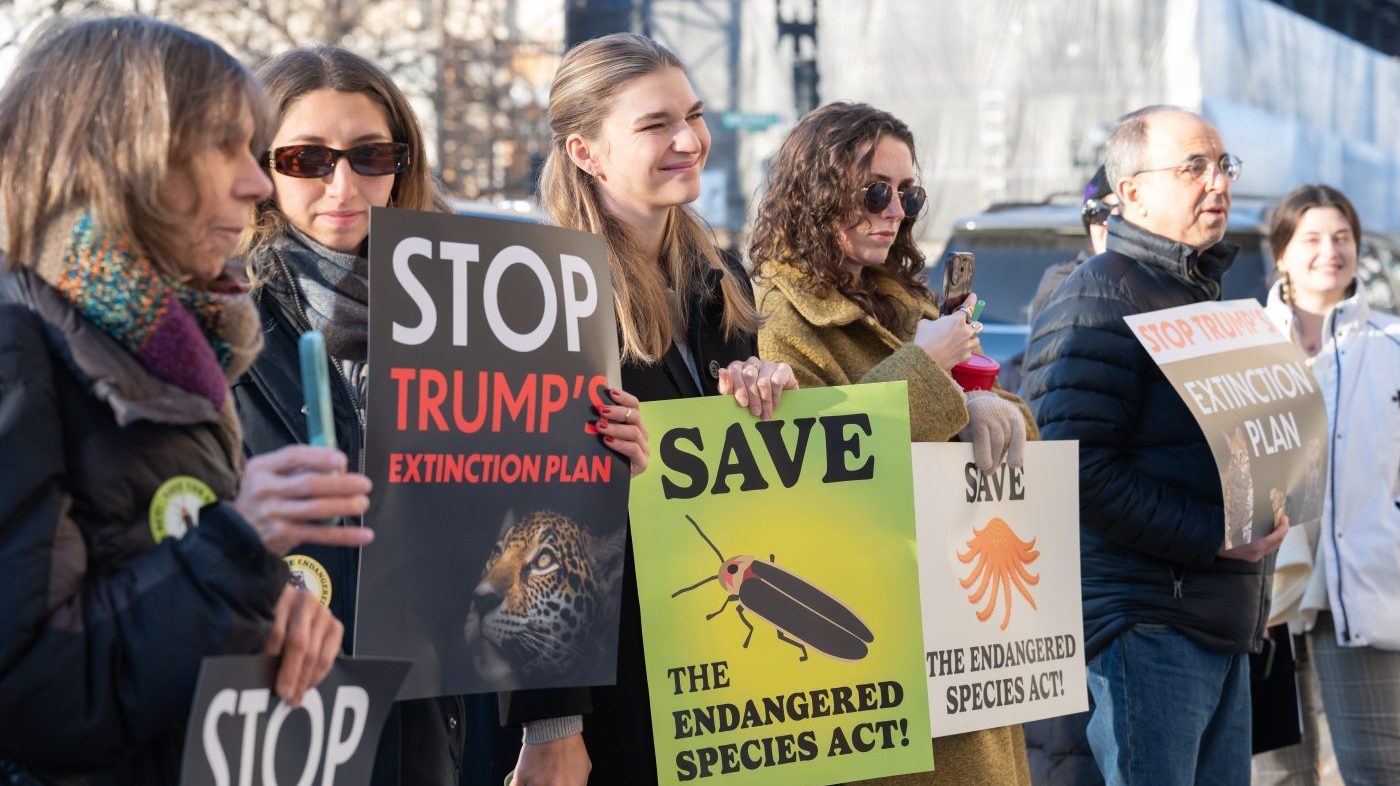
The Trump administration has quietly narrowed the scope of the Endangered Species Act (ESA), issuing an internal directive that redefines what counts as prohibited “harm” to protected wildlife and plants. The move, detailed in a Fish and Wildlife Service (FWS) memo dated Sept. 14, effectively limits enforcement to intentional acts, a significant departure from decades of regulatory practice.
The ESA has long barred any “take” of endangered species, defined as “harass, harm, pursue, hunt, shoot, wound, kill, trap, capture, or collect.” The new memo rescinds the previous regulatory definition of “harm” and adopts the interpretation set out in the dissent by the late Justice Antonin Scalia in the 1995 Supreme Court case Babbitt v. Sweet Home Chapter of Communities for a Great Oregon.
Under that reading, a “take” occurs only when someone “intentionally and purposefully” targets a particular animal. The memo gives examples: a ship that inadvertently strikes a whale has not “taken” it, and felling a tree does not constitute a “take” of bats roosting inside unless the tree was cut down specifically to kill or capture them.
The directive was obtained and published by the Center for Biological Diversity, an advocacy group that has been a frequent critic of the administration’s environmental policies. Brett Hartl, the group’s government affairs director, said the memo will effectively “muzzle” FWS enforcement. “Fish and Wildlife is going to effectively, I think, be entirely muzzled by this memo,” he said.
The change is the latest in a series of actions by the Trump administration to ease regulatory burdens on industry, particularly in the energy and agriculture sectors. Critics argue it will make it far harder to hold companies accountable for habitat destruction, accidental killings, or other indirect harms that have long been considered violations of the ESA.
Supporters of the administration’s approach contend that the previous definition was overly broad and imposed unintended costs on landowners and businesses. They say the new interpretation restores the original intent of the law, which was to punish deliberate actions against endangered species, not incidental ones.
The memo could face legal challenges. Environmental groups have already sued the administration over other rollbacks of climate and wildlife protections, including a recent move to eliminate most greenhouse gas regulations for power plants. That lawsuit, filed by a coalition of environmental and public health organizations, is pending in federal court.
In related news, the administration has also eased hunting rules on federal lands and has signaled plans to pursue a sequel to the Great American Outdoors Act. Meanwhile, lawmakers are grappling with the fallout of a Senate water bill that would weaken aquifer protections for carbon sequestration wells, and farm-to-school grants are being expanded under a new administration initiative.
The full impact of the memo remains to be seen, but legal experts say it is likely to reshape how the ESA is enforced across the country, with potentially far-reaching consequences for imperiled species and the industries that share their habitats.