The Trump administration has formally asked the Supreme Court to greenlight President Trump's executive action suspending asylum claims at the U.S.-Mexico border, arguing that lower courts overstepped their authority by striking down the measure. In a petition filed Monday, Solicitor General D. John Sauer characterized the policy as a cornerstone of the president's immigration agenda and accused the D.C. Circuit of improperly intervening in executive decision-making.
"The D.C. Circuit should not have the last judicial word on this cornerstone of the President's immigration policy," Sauer wrote in the filing, which marks the first time the asylum ban has reached the high court. The justices will consider the request when they reconvene in October, though they reject the vast majority of such appeals.
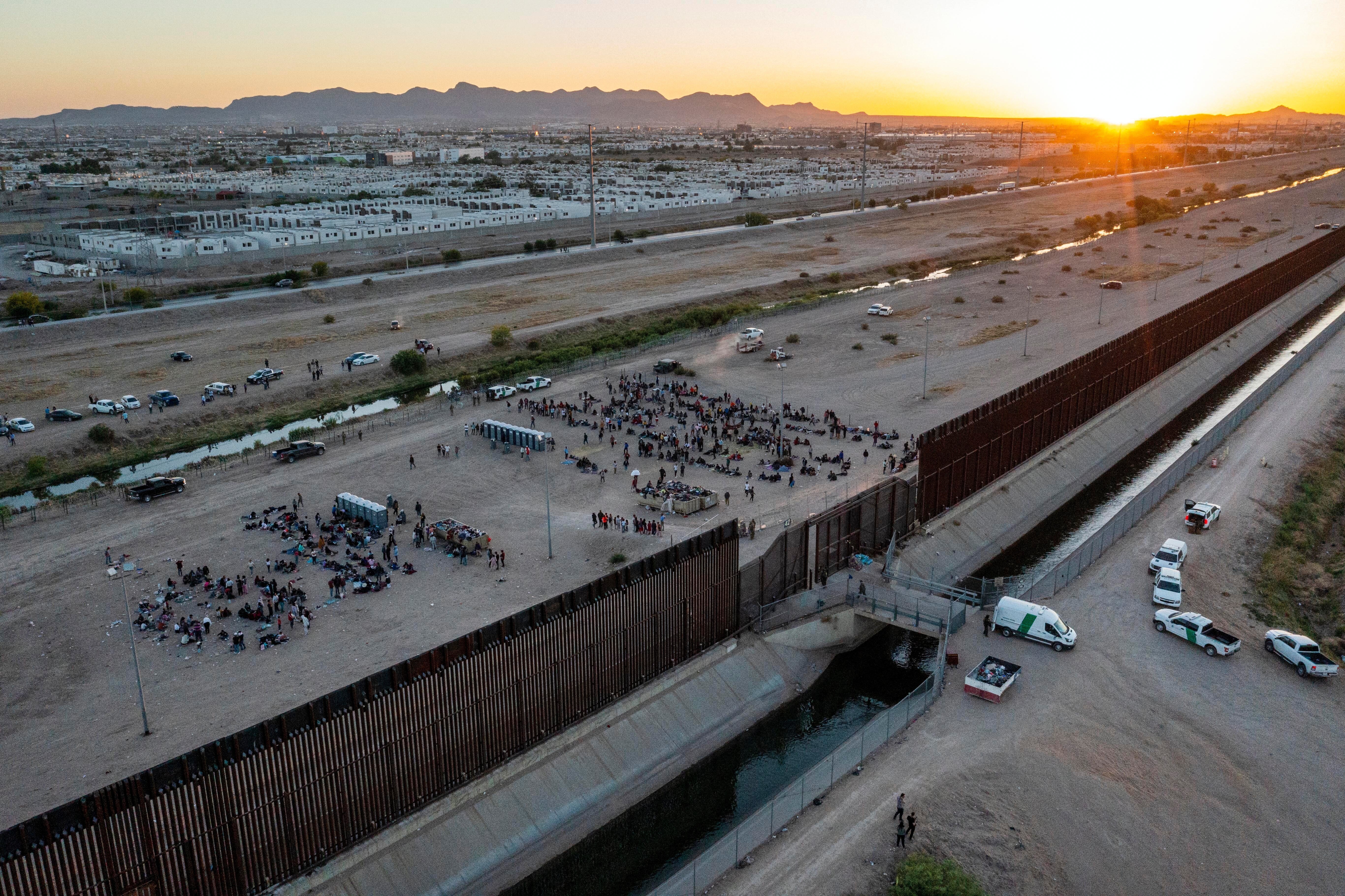
The proclamation, signed on Trump's first day back in office, suspends entry for noncitizens who cross the border outside official ports of entry or who arrive without proper documentation. It also bars them from invoking asylum or other legal protections while the president declares an "invasion" at the southern border. The policy has been allowed to remain in effect temporarily because the appeals court has not yet issued its final mandate, but its long-term fate now rests with the Supreme Court.
This petition is the latest in a series of administration efforts to secure high-court approval for its immigration policies. The Justice Department has previously persuaded the justices to uphold restrictions on Temporary Protected Status and to allow expedited removals of third-country nationals. In a separate case, the Court ruled that officials could block asylum applications from migrants turned back before reaching U.S. soil. However, the administration has not been uniformly successful—in June, the Court rejected Trump's executive order attempting to end birthright citizenship.
The asylum ban was first blocked last summer by U.S. District Judge Randolph Moss, an Obama appointee, who found it circumvented Congress. In April, the D.C. Circuit upheld that ruling, prompting the administration to appeal. The lower court concluded that the policy conflicted with the Immigration and Nationality Act (INA), which establishes a detailed framework for asylum claims. "If the Government wishes to modify this carefully structured and intricate system, it must present those arguments to the only branch of government able to amend the INA: Congress," the appeals court wrote.
Sauer, however, argues that the proclamation reflects a "commonsense" reading of immigration law and that courts must defer to the president's authority over foreign nationals' entry. He pointed to the Supreme Court's 2018 decision upholding Trump's travel ban as precedent. "This case involves the President's exercise of his inherent and delegated authority to secure our southern border, which had become overwhelmed by an ungovernable influx of millions of aliens, creating chaotic conditions that criminal and terrorist organizations exploited to threaten our national security," he wrote.
The challenge to the policy was brought by a class of asylum seekers and three advocacy groups—the Refugee and Immigrant Center for Education and Legal Services, Las Americas Immigrant Advocacy Center, and the Florence Immigrant and Refugee Rights Project—represented by the American Civil Liberties Union. They argue the ban violates both statutory and international obligations.
Observers note that the Supreme Court's decision on whether to hear the case could signal how it views the breadth of presidential power over immigration. The administration's push comes amid broader legal battles over its immigration enforcement, including a recent crackdown on media outlets that critics say reflects a wider assault on press freedom. Meanwhile, the president's aggressive trade and foreign policies continue to draw scrutiny, as seen in his ongoing feud with Canadian Prime Minister Mark Carney over tariffs.
If the justices decline to take up the case, the D.C. Circuit's ruling will stand, effectively ending the ban. If they hear it, a decision could come as early as next term, with major implications for border policy and executive authority.