President Trump's endorsement of Sen. Darline Graham (R-S.C.) did not produce the commanding victory many expected in Tuesday's GOP Senate runoff, a result that has sparked debate about the president's political influence within his own party.
Democratic strategist Chuck Rocha, who advised Sen. Bernie Sanders (I-Vt.) in his presidential bids, said on NewsNation's "CUOMO" that he anticipated Graham would win but "didn't think it would be this close" given Trump's backing. Graham defeated Rep. Ralph Norman (R-S.C.) by just under 5 points, securing the GOP nomination to replace her late brother, Sen. Lindsey Graham, who died of an aortic dissection in June.

Rocha pointed to the narrow margin as evidence that Trump's endorsement may not be the game-changer it once was. "Something's going on when Donald Trump can only deliver 52 percent," he said, while acknowledging the special-election context and Graham's short campaign. He also noted that in the June primary, more than 40 percent of GOP voters chose someone other than Lindsey Graham, suggesting a fractious Republican base.
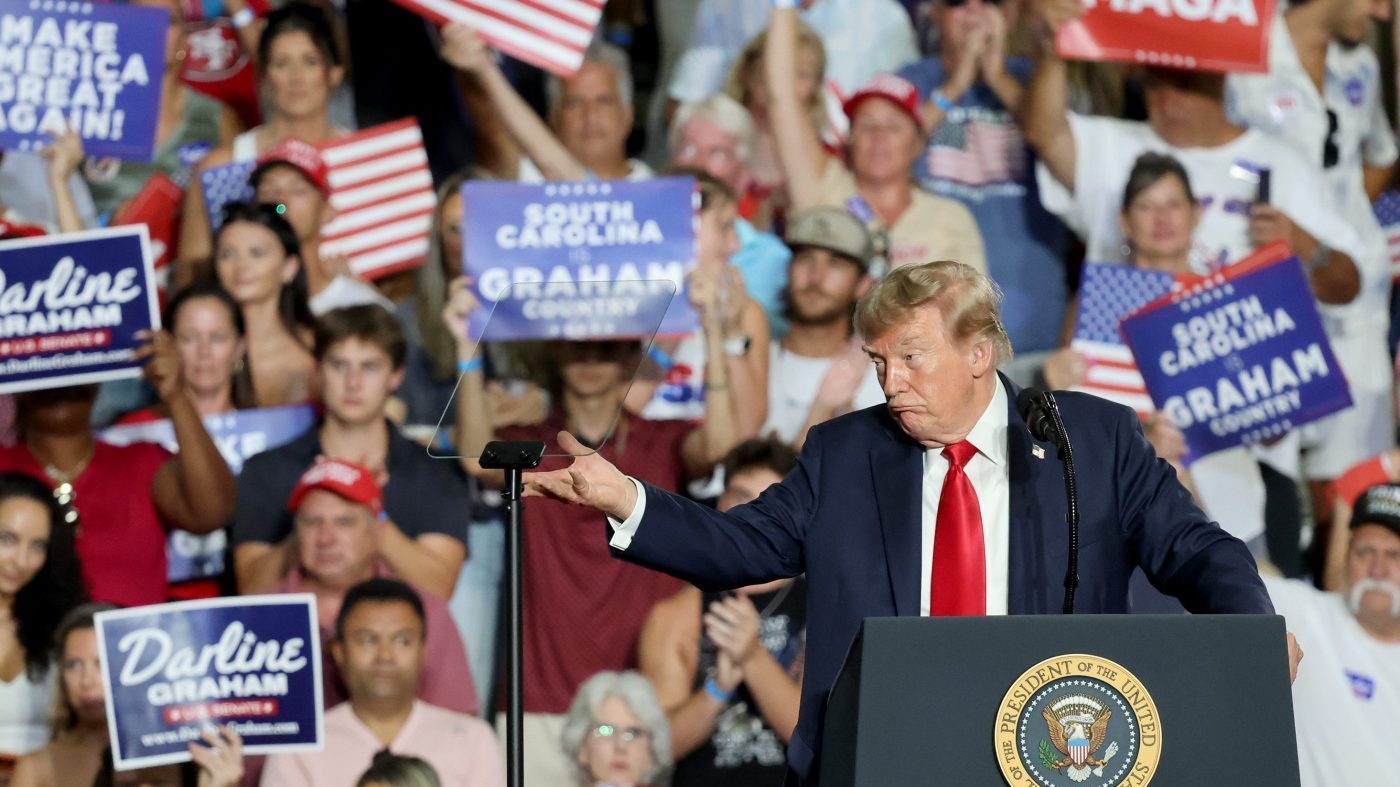
The president campaigned for Graham in Myrtle Beach, S.C., urging Republicans to treat the midterms as a referendum on his leadership. "What I want you to do is pretend, please, that I'm on the ballot," Trump said at a rally. Despite that push, Graham's win in Horry County—home to Myrtle Beach—was solid, but not overwhelming, and she carried 34 of 46 counties overall.
Turnout in the runoff was modest, with about 369,000 Republicans voting, roughly 12 percent of the state's registered voters. The relatively low participation may have diluted the impact of Trump's endorsement, which typically mobilizes his most loyal supporters.
Rocha, however, argued that even in a low-turnout race, Trump should have driven higher numbers. "But Donald Trump should be getting 70, 80, 90 percent in a Republican primary," he insisted. The outcome could signal limits to Trump's sway, especially in contested intra-party battles, as he seeks to shape the GOP's direction ahead of the 2026 midterms.
Graham now faces Democrat Annie Andrews in the general election, where Decision Desk HQ gives her an 81 percent chance of winning. Still, the narrow primary result has energized Democrats, who see an opportunity to contest a seat that has long been safely Republican.
Political analysts note that Trump's endorsement has been decisive in many primaries, but this result suggests that candidate quality and local dynamics can undercut presidential influence. As Trump continues to campaign for allies, the South Carolina outcome may serve as a cautionary tale for his political operation.
For now, Graham's victory keeps the seat in GOP hands, but the thin margin has raised questions about the durability of Trump's coattails in a state that has been a stronghold for him. With the general election ahead, both parties are watching closely to see if this primary result foreshadows a more competitive race than expected.