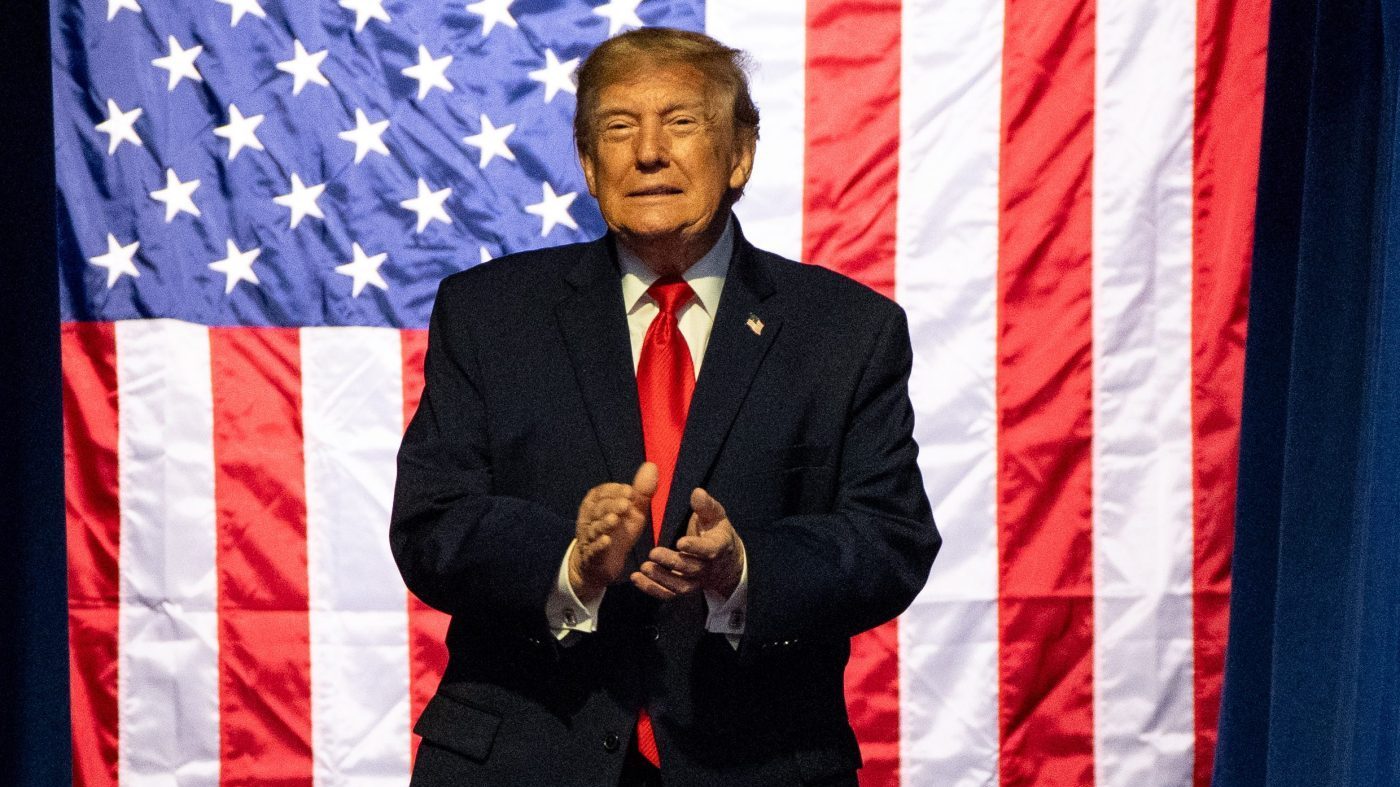
President Trump took his midterm campaign blitz to Montana on Wednesday evening, rallying Republicans behind Aaron Flint, the GOP nominee in a critical House race that could help determine which party controls Congress next year.
The event, held in the state's 1st Congressional District, is part of a two-state swing that began with a rally in Arizona. Trump's visit underscores the national stakes in a race to replace retiring Rep. Ryan Zinke, a Republican who is leaving the seat open.
Flint, a former state legislator and radio host, is locked in a tight contest with Democrat Sam Forstag, a businessman and political newcomer. The outcome in this traditionally red district is being watched closely by both parties, as Republicans seek to defend their narrow House majority.
Montana is also home to a competitive Senate race to fill the seat of outgoing Republican Sen. Steve Daines. The GOP field includes Kurt Alme, a former U.S. attorney, while Democrats have rallied behind Alani Bankhead, a nonprofit executive. Independent candidate Seth Bodnar, a university president, is also in the mix, making the race a three-way contest that could complicate Republican hopes of holding the seat.
Trump's appearance in Montana follows a similar stop in Arizona, where he endorsed Republican Kari Lake in the governor's race and repeated his attacks on the media, calling for leakers to be shot. The president's aggressive campaign style is part of a broader GOP strategy to turn out the base in key battleground states.
Political analysts say the Montana House race is a bellwether for Republican strength in rural America, where Trump remains popular. However, Democrats are hoping that Forstag's message on economic populism and healthcare can resonate with voters who have been hit hard by inflation and rising costs.
The rally, which began at 8:15 p.m. EDT, was expected to feature Trump's trademark attacks on Democratic policies, including immigration and the economy. He is also likely to tout his administration's recent deal to bring Japanese investment to New York for chip manufacturing, a move he has framed as a win for American workers.
Trump's visit comes as his administration faces scrutiny over its handling of the Ukraine conflict, with some lawmakers questioning the impact of restrictions on Starlink services and a diesel deal that could undermine Ukraine's defense. The president has also been criticized for his comments on intelligence sharing, though he has defended his approach.
In recent weeks, Trump has intensified his campaign schedule, holding rallies in key states as he seeks to maintain his influence within the GOP. His endorsements have been pivotal in primaries, and his ability to turn out voters in November will be tested in races like Montana's.
As the midterms approach, both parties are pouring resources into districts like Montana's 1st, where the outcome could hinge on a few thousand votes. For Republicans, holding this seat is essential to their hopes of retaining the House; for Democrats, it represents an opportunity to flip a seat in a state that has trended red in recent years.