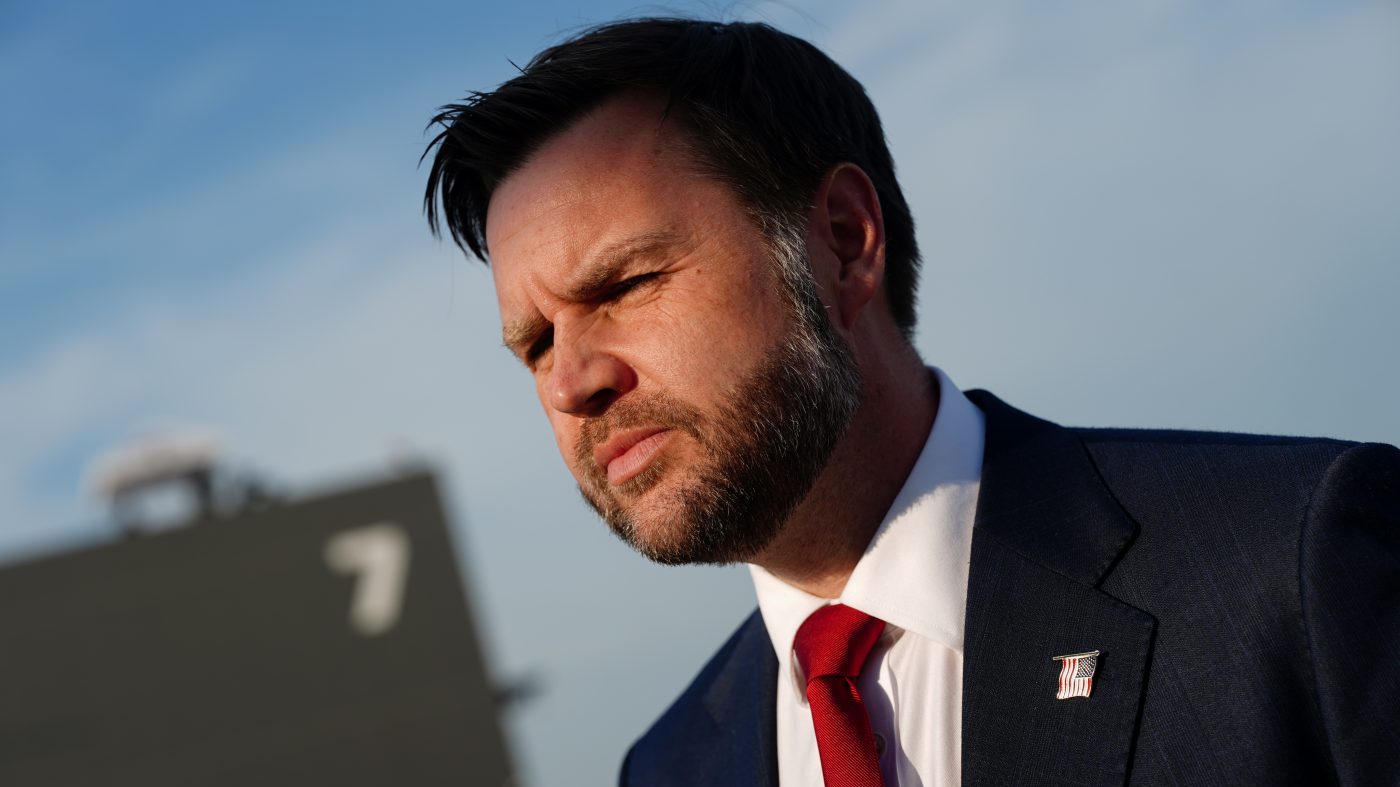
Vice President JD Vance on Friday strongly defended the administration's dual-track strategy toward Iran, arguing that the United States emerges victorious regardless of whether ongoing peace negotiations in Tehran produce a final agreement. Appearing on comedian Bill Maher's show, Vance framed the approach as a no-lose proposition for Washington.
"If we make the final deal, then great. If we don't make the deal, their nuclear program is still destroyed. They're still much weaker as a country," Vance told Maher. "So my attitude is, America wins either way."
The vice president's remarks come as the U.S. military and Iran traded fresh strikes that threaten to undermine the fragile 60-day ceasefire and the 14-point memorandum of understanding signed by President Trump and the Iranian regime. On Friday, the Pentagon hit Iranian missile and drone storage sites and coastal radar positions in response to an Iranian attack on a cargo vessel in the Strait of Hormuz. Hours later, Iran retaliated with drone strikes against Bahrain, home to the U.S. Navy's Fifth Fleet.
Maher pressed Vance on whether this round of diplomacy differs from past failed efforts to rein in Tehran's nuclear ambitions. The vice president pointed to declining oil prices—down to $73 a barrel from a peak of $126—and the resumption of shipping through the strategic strait, which carries roughly a fifth of the global oil supply, as evidence the current approach is working.
"If you look at oil right now, it's back down to $73 a barrel, got up to $126 a barrel," Vance said. "So, there's a signal that there's something real going on here."
The MOU, Vance explained, focuses on keeping the Strait of Hormuz open for maritime traffic and ensuring oil flows while maintaining the ceasefire. But he conceded that the truce "is always going to be a little messy when you're dealing with the Iranians."
The latest tit-for-tat strikes raise fresh doubts about the durability of the temporary deal, which was designed to halt hostilities and reopen talks on Iran's nuclear program. The agreement marked a sharp reversal from Trump's 2018 decision to withdraw from the Obama-era Joint Comprehensive Plan of Action.
Public opinion remains divided. A recent poll showed 59 million Americans oppose the Iran war as the truce holds, while a Gallup survey found 67% of Americans hit financially by surging gas prices amid the conflict. Vance's appearance on Maher's show also touched on broader political dynamics, with Maher pressing the vice president to abandon Trump's election lies.
Behind the scenes, Vance has been hosting GOP senators for dinner after a heated clash between Trump and Senator Bill Cassidy over Iran strategy. Cassidy later received a briefing from Vance following that confrontation. The administration's approach continues to face scrutiny from both hawks and doves as the 60-day ceasefire clock ticks.