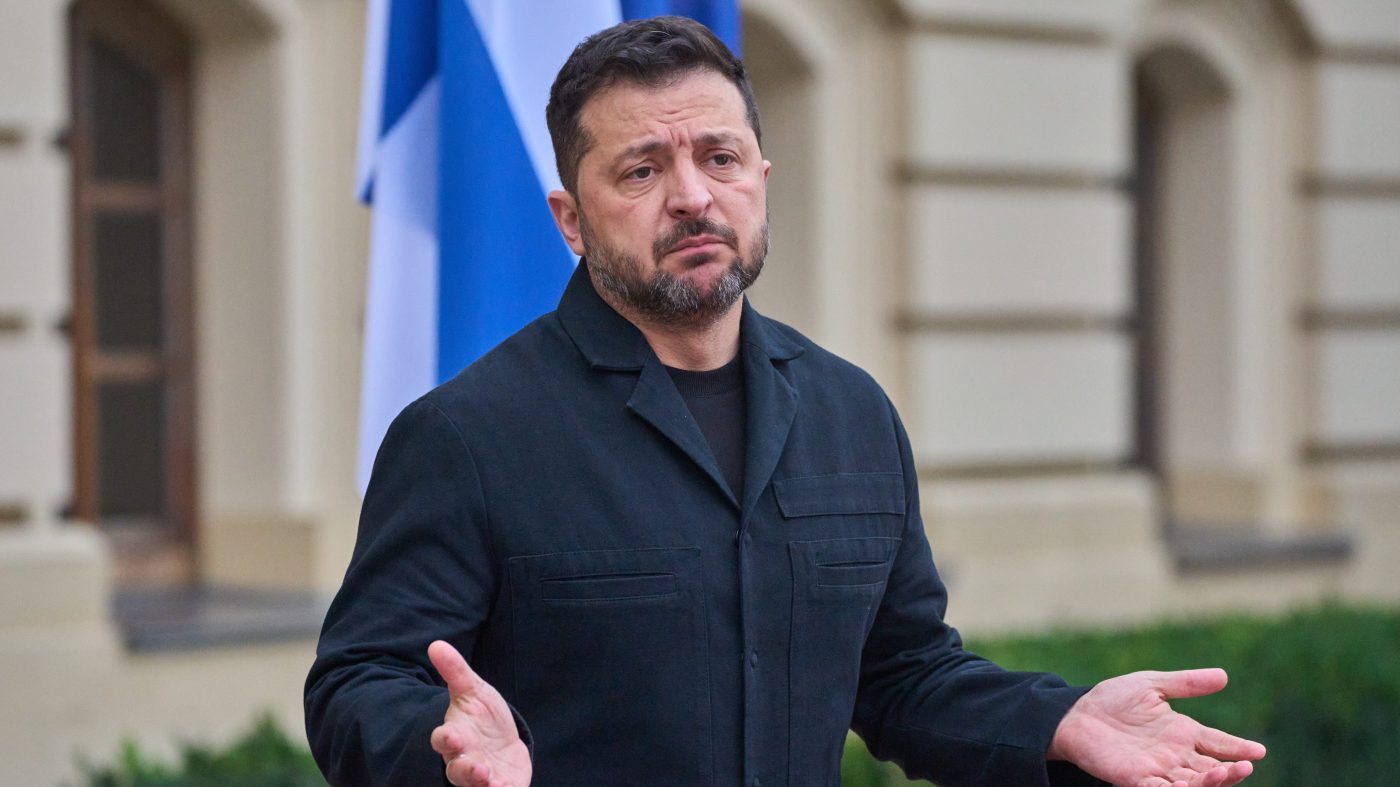
Ukrainian President Volodymyr Zelensky has cast doubt on whether Elon Musk single-handedly ordered the recent slowdown of Starlink services that hampered Ukraine's military operations, suggesting that the decision may have involved the U.S. government.
In an interview with PBS News, Zelensky said he was not convinced that Musk could have made such a move on his own regarding Starshield, the military-grade version of Starlink. "I'm not sure that he [Musk] can do it with Starshield because it's military. It's government version," Zelensky said. "I'm not sure that he could do it personally alone, without any representatives from American government."

The slowdown, which occurred last month, restricted Ukraine's access to Starshield and specifically targeted Starlink-supported Ukrainian military drones, airplanes, and helicopters operating at speeds exceeding 100 mph. This move drew sharp criticism from Kyiv, which relies heavily on the satellite internet service for battlefield communications.
Zelensky added that he did not know which U.S. officials might have been involved. "But I don't know who from American side from the government did it, who allowed him. I think it was a dialogue between some people, and in — during this dialogue, the decision was negative for us," he said.
Initially, Musk claimed that the U.S. military and ultimately the president have the final say on restricting Starshield's speed or usage. However, he later posted on social media that he was involved in the decision, writing, "Ukraine military violated Starlink terms of service and used it for offensive drone strikes to kill people. That loophole was closed last week."
Ukraine has used Starlink's commercial services since the start of the war with Russia, and later adopted Starshield through a SpaceX contract with the Pentagon. In his post, Musk acknowledged that Starlink is "critical to the defense of Ukraine."
Zelensky expressed gratitude for Starlink and said he wanted to speak with Musk after the incident. He also noted that if restrictions were lifted, Ukraine would use Starshield "in Russia just to find the points where ballistic launchers are."
Musk defended the restrictions, arguing that using the commercial service "for offensive drone strikes to kill people has never been allowed, nor should it be."
Top Trump administration officials, including Defense Secretary Pete Hegseth and Secretary of State Marco Rubio, have denied any White House involvement in the slowdown. Rubio told reporters that the matter is governed by a private commercial contract, saying, "The bottom line is that that is governed by a private commercial contract as to how their stuff can be used and what speeds they'll allow it to be used at."
The controversy underscores the growing influence of private tech companies in modern warfare. As SpaceX's Starlink restrictions expose Musk's global clout, questions arise about accountability and oversight. Meanwhile, diplomatic efforts continue, including a potential Russia-Ukraine talks at the White House, which could address such issues. The incident also highlights the fragility of Ukraine's reliance on private infrastructure, a topic explored in Ukraine's decentralized grid faces new fuel dependency risks.