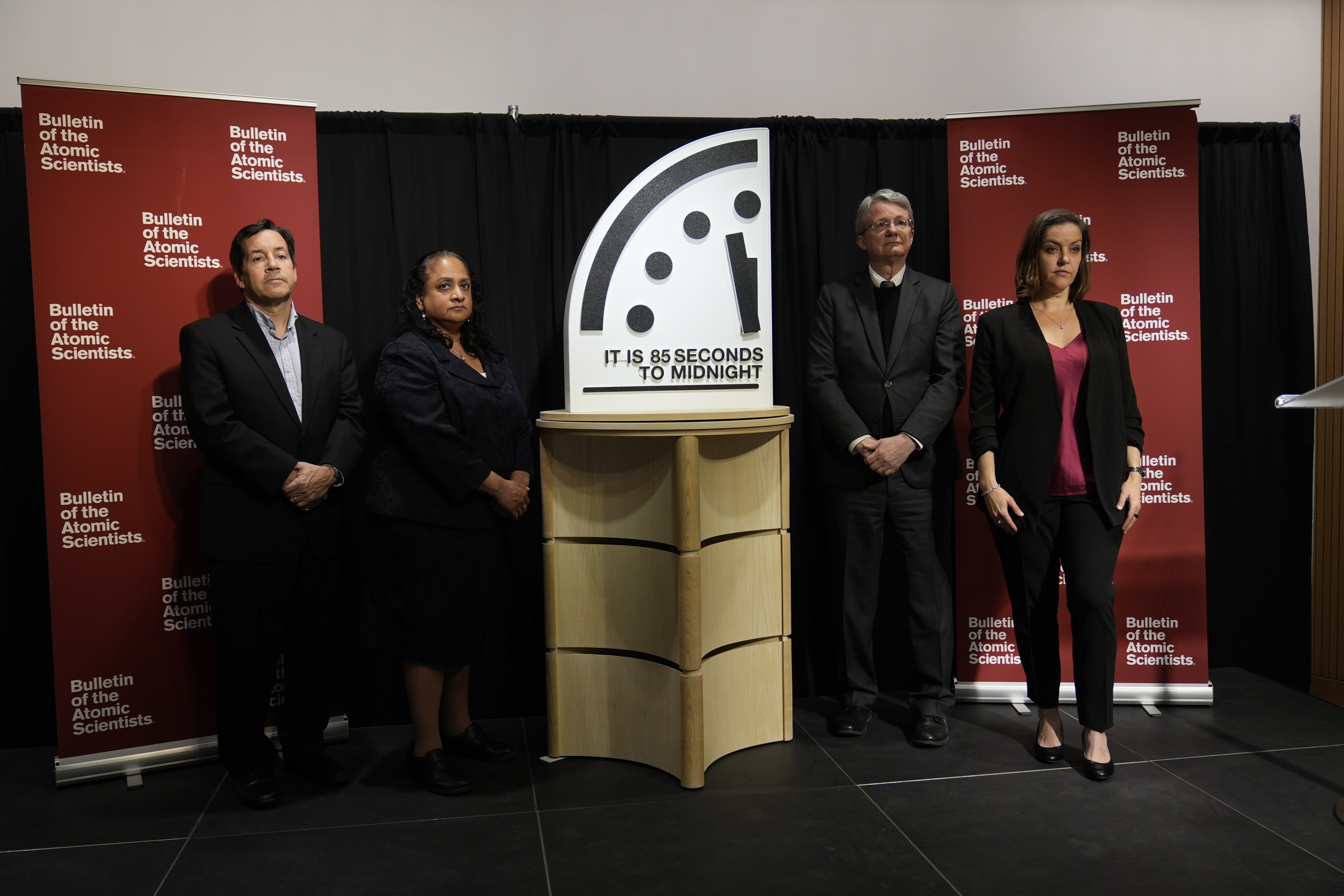
The Doomsday Clock, last adjusted in January, has not moved closer to midnight, but the rhetoric from world leaders and institutions suggests the world is edging toward catastrophe. The clock, maintained by the Bulletin of the Atomic Scientists, remains at 90 seconds to midnight, but the drumbeat of warnings from Silicon Valley to the Pentagon indicates that the threat landscape is more volatile than ever.
AI and Superintelligence Risks
Tech executives are increasingly vocal about the existential dangers posed by artificial intelligence. Anthropic CEO Dario Amodei has put the risk of human extinction from unchecked AI at 25 percent, while Elon Musk, head of xAI, estimates a 20 percent chance. President Trump's executive order rebranding AI as "super intelligence" has only amplified concerns, with these leaders warning that without robust safeguards, the technology could spiral beyond human control.

Pentagon's Fortress America
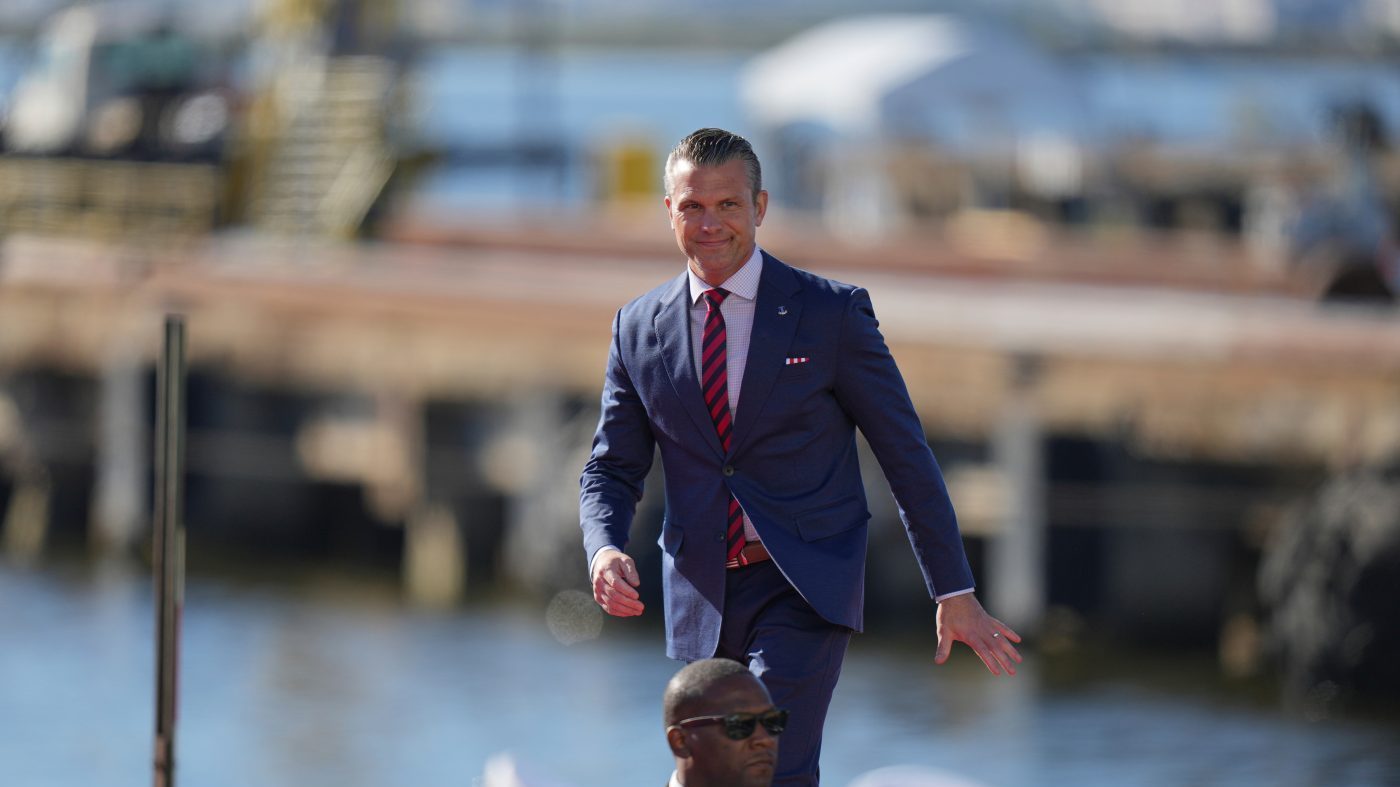
The Pentagon is also preparing for worst-case scenarios. In late September, Defense Secretary Pete Hegseth unveiled "Fortress America," a plan to ensure major military bases can operate for 90 days or more even if civilian power grids, supply chains, and critical infrastructure are knocked out. The initiative includes building micro nuclear reactors and hardening vulnerable networks. Sean Parnell, the Pentagon's chief spokesman, underscored the urgency, noting that "power is combat now. Without electricity, you lose communications, assembly lines, and just basic command structures." He added that the military cannot "rely on standard civilian municipal infrastructure to run our national defense."
Civilian Preparedness Campaigns
Governments are not waiting for the clock to move. The United Kingdom recently launched its "Be Ready" campaign, urging citizens to stockpile 72 hours of food, water, cash, medicine, and other essentials. Ireland followed with a "Be Emergency Ready" initiative in August, the Netherlands advised its people to "Think Ahead," and France reminded citizens of its 2025 campaign to prepare a 72-hour survival kit. Japan is set to introduce a new Disaster Management Agency on November 2. These moves reflect a growing sense that hybrid threats—from Russian aggression to cyber-attacks on critical infrastructure—could disrupt daily life.
Space: The New Battlefield
The domain of space is no longer just for surveillance and command; it is becoming a theater for potential conflict. Under Secretary of State Thomas DiNanno reported that a Russian military satellite has been "exhibiting threatening behavior by intentionally maneuvering dangerously close to a commercial satellite, behaviors consistent with on-orbit weapons operations." In response to Russian and Chinese efforts to "disrupt and degrade U.S. space-enabled capabilities," Chief of Space Operations Gen. Douglas Schiess announced that "guardians operate on-orbit weapons that can defend the joint force against space-enabled attacks."
The Defense Intelligence Agency's latest "Challenges to Security in Space" report warns that Russia is developing a satellite designed to carry a nuclear weapon, despite its obligations under the 1967 Outer Space Treaty, which prohibits placing nuclear weapons in orbit. This has raised alarms about a new arms race above Earth.
Immediate Perils: Russia and Ukraine
While these distant threats are sobering, the most immediate danger remains Russia's war in Ukraine. If Putin is allowed to win or Ukrainian President Volodymyr Zelensky is forced to capitulate, the consequences for Europe and the world would be existential. Europe is taking this seriously—three of the Royal Navy's four Vanguard-class ballistic missile submarines are unusually on patrol simultaneously, each carrying Trident II D5 missiles designed for nuclear delivery. This is a clear signal to the Kremlin that NATO will not abandon Ukraine.
Yet, the Trump administration's approach to Russia has raised eyebrows. Reports of a diesel deal and potential Alaskan oil agreements suggest the White House may be engaging in business with Moscow, even as it criticizes Europe for funding Russia's war through energy purchases. Trump's own envoy, Steve Witkoff, and Jared Kushner have been in talks with Kirill Dmitriev, head of Russia's Direct Investment Fund, leading to fears that Ukraine could be traded away for Russian riches—a fool's gold, as some see it.
As the clock is set back this weekend, the symbolism is potent. Trump would do well to heed the warnings and reset the Doomsday Clock further from midnight, rather than accelerating the march toward it.