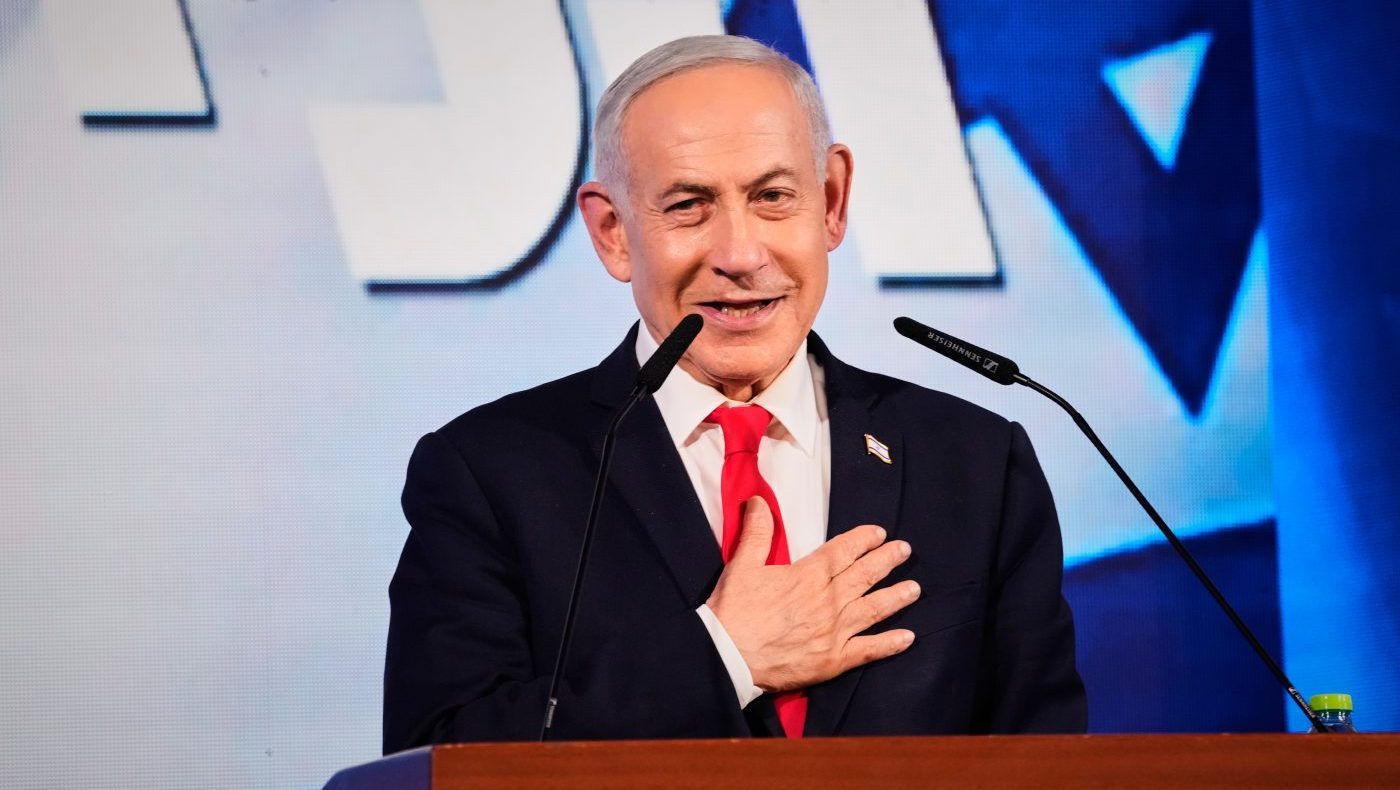
JERUSALEM — As vote counting in Israel's parliamentary election drew to a close Wednesday, Prime Minister Benjamin Netanyahu saw his political standing improve, with his Likud party and its allies pulling ahead of the main challenger, retired General Gadi Eisenkot. With over 80% of ballots tallied, Likud was projected to secure 26 seats in the Knesset, up from initial exit polls, while Eisenkot's Yashar party was on track for 21 seats.
Leading the largest party in parliament grants Netanyahu significant leverage, but he still falls short of the 61-seat threshold needed to form a ruling coalition unless he can attract defectors from Eisenkot's camp. Some analysts are increasingly floating the possibility of a power-sharing arrangement between the two rivals.
“What will be the other way? A second election,” said Udi Tenne, a strategic adviser and campaign strategist who has worked on Israeli elections across the political spectrum.
President Isaac Herzog, who will formally consult party leaders before nominating a candidate to form a government, stressed Wednesday that another round of elections must be avoided. Speaking at the President's House in Jerusalem, he urged lawmakers to keep an “open mind,” as reported by the Times of Israel. Herzog said he expects to receive the final results next week and will then begin consultations.
Tenne suggested that a second election could actually benefit Netanyahu, as voters who backed smaller right-wing parties that failed to cross the electoral threshold might shift their support to Likud. “It's very important to understand, the biggest party is the Likud party,” he noted.
Public opinion appears divided on the way forward. According to a poll by the Israel Democracy Institute, more than a third of Israeli-Jewish respondents would prefer a redo of the election in the event of a stalemate, while the second most popular option was a unity government with a rotating premiership. A majority—61%—also supported appointing the leader of the largest party as prime minister to enhance political stability.
Eisenkot, however, has given no indication he is ready to join forces with Netanyahu. His camp has framed the initial results as a rejection of the incumbent's leadership, noting that Netanyahu's bloc—currently projected at about 54 seats—falls short of the 68-seat coalition he currently commands. “The preliminary poll results point to complete distrust in Netanyahu and the government of October 7, of the Zionist majority and of the majority of Israeli citizens,” Eisenkot wrote on X Tuesday evening, when his bloc briefly led.
A minority government, which would rely on outside support from smaller factions, is seen as an unattractive option for both Jewish and Arab Israelis. The strong performance of Arab parties—Ra'am and the Joint List, together projected at 19 seats—could pressure Eisenkot to reconsider his refusal to cooperate with them. The surge in Arab voter turnout, which represents about 21% of the population, was largely driven by opposition to Itamar Ben-Gvir, Netanyahu's national security minister.
“I think that Ben-Gvir will go out of the government this time, he's a racist, he wants to kill as many Arabs as possible,” said a young Muslim woman from Abu Ghosh, who declined to give her name. “Bibi also, he killed people in Gaza, and here. Outside of that I don't mind to vote for anyone else, Jewish, Muslim – what's important is that it's not Ben-Gvir and not Netanyahu.”
Netanyahu responded on X by accusing Arab parties of election fraud, claiming they used “bribery, threats, violence, forgeries, and prohibited software” to mobilize voters. The Washington Post reported that Netanyahu's camp is lobbying President Trump to advocate for a unity government and to push for Ben-Gvir's exclusion from the coalition. Ben-Gvir, an ultra-nationalist who advocates for Palestinian displacement and Israeli sovereignty over the West Bank and Gaza, is seen as an obstacle to Trump's broader Middle East agenda, including containing Iran and expanding the Abraham Accords.
As the political maneuvering continues, the possibility of a deadlock remains real. Herzog's call for unity and the public's wariness of another election may pressure both leaders to find common ground, but the deep divisions exposed by this vote suggest that a stable government is far from assured.