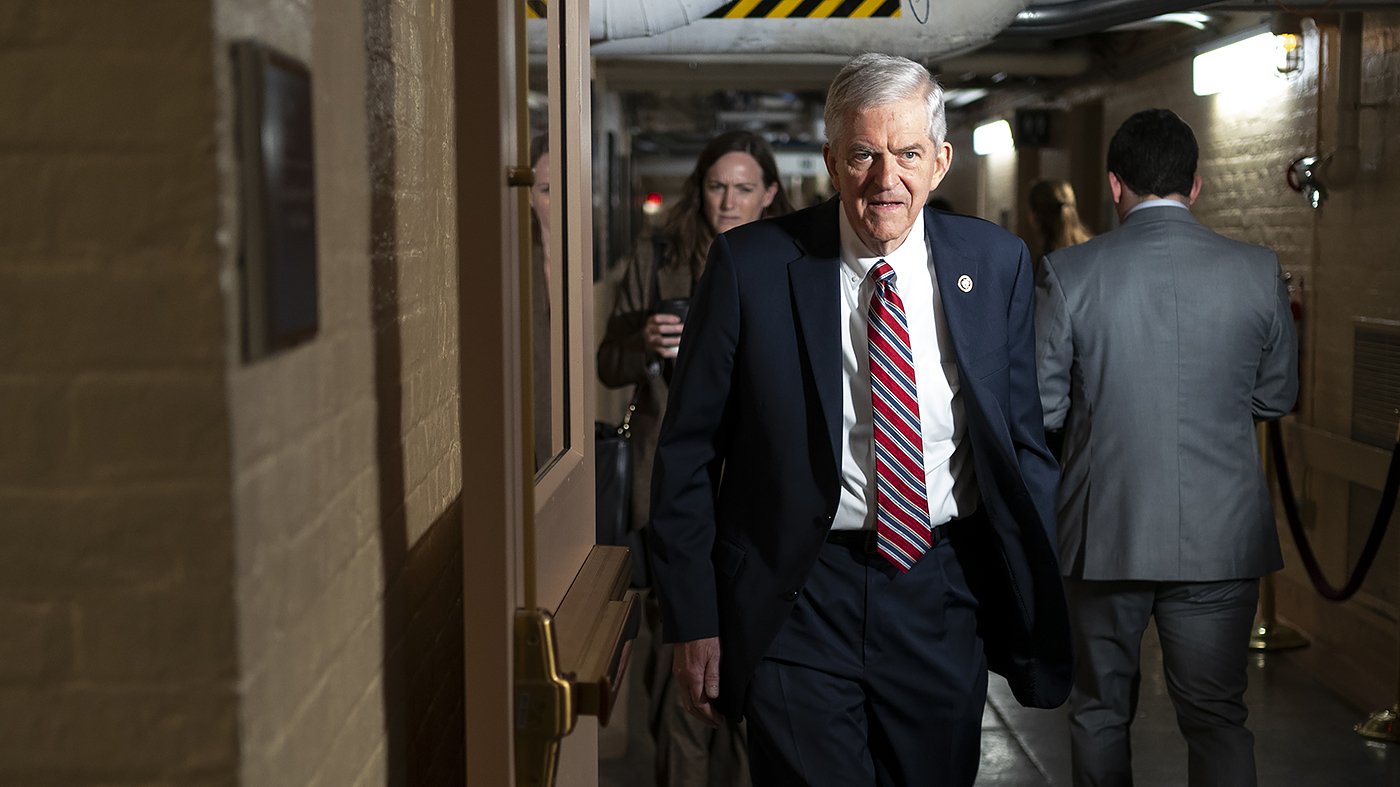
Republican Rep. Daniel Webster of Florida announced Tuesday that he will not seek reelection when his term ends, making him the 36th House Republican to step down this cycle as Capitol Hill grapples with legislative dysfunction and a razor-thin majority.
Webster, 77, said in a statement that “the time has come to pass the torch to the next conservative leader and spend more precious time with my wife, children and 24 grandchildren.” He emphasized he remains focused on finishing his term, particularly on infrastructure and space policy.
The exodus of House Republicans has already surpassed the record set in the 2018 midterms, when 34 GOP members chose not to run again and Democrats reclaimed control of the chamber. Many departing members have cited gridlock, family obligations, or a desire to make way for new leaders. A significant number are pursuing higher office, including gubernatorial and Senate bids.
Webster’s retirement adds to the pressure on Speaker Mike Johnson (R-La.), who is trying to fend off a Democratic wave in the 2026 midterms and preserve his party’s slim hold on the House. The growing list of open seats complicates his strategy, particularly in swing districts.
Among the 36 retiring Republicans, 10 are running for governor: Reps. David Schweikert (Ariz.), Tom Tiffany (Wis.), Nancy Mace (S.C.), Ralph Norman (S.C.), Dusty Johnson (S.D.), Randy Feenstra (Iowa), John James (Mich.), John Rose (Tenn.), Byron Donalds (Fla.), and Andy Biggs (Ariz.). Rep. Chip Roy (Texas) is seeking the attorney general post in his state.
Another group of departing members is eyeing Senate seats, including Reps. Kevin Hern (Okla.), Julia Letlow (La.), Harriet Hageman (Wyo.), Barry Moore (Ala.), Mike Collins (Ga.), Earl Carter (Ga.), Andy Barr (Ky.), and Ashley Hinson (Iowa).
Webster, who has served in Congress since 2017 and previously spent decades in the Florida legislature, said he is “fully focused on finishing strong.” He highlighted his work on the Transportation and Infrastructure Committee, noting a once-in-a-decade reauthorization bill for roads, bridges, transit, and rail. He also pledged to advance legislation that leverages private investment for public infrastructure, maintains U.S. leadership in space exploration, and protects American technological advantages.
The wave of retirements comes as Florida faces its own political turbulence. The state’s redistricting battles have left incumbents and candidates in limbo, with Governor Ron DeSantis pushing an aggressive map that could shift the GOP edge. Webster’s departure opens a reliably Republican seat in Florida’s 11th Congressional District, but the broader trend underscores the challenges facing Johnson’s leadership.
With dozens of open seats and a narrow majority, every retirement tightens the math for Republicans. The 2026 midterms are shaping up to be a critical test of whether the party can hold the line or whether Democratic gains will flip control of the House.