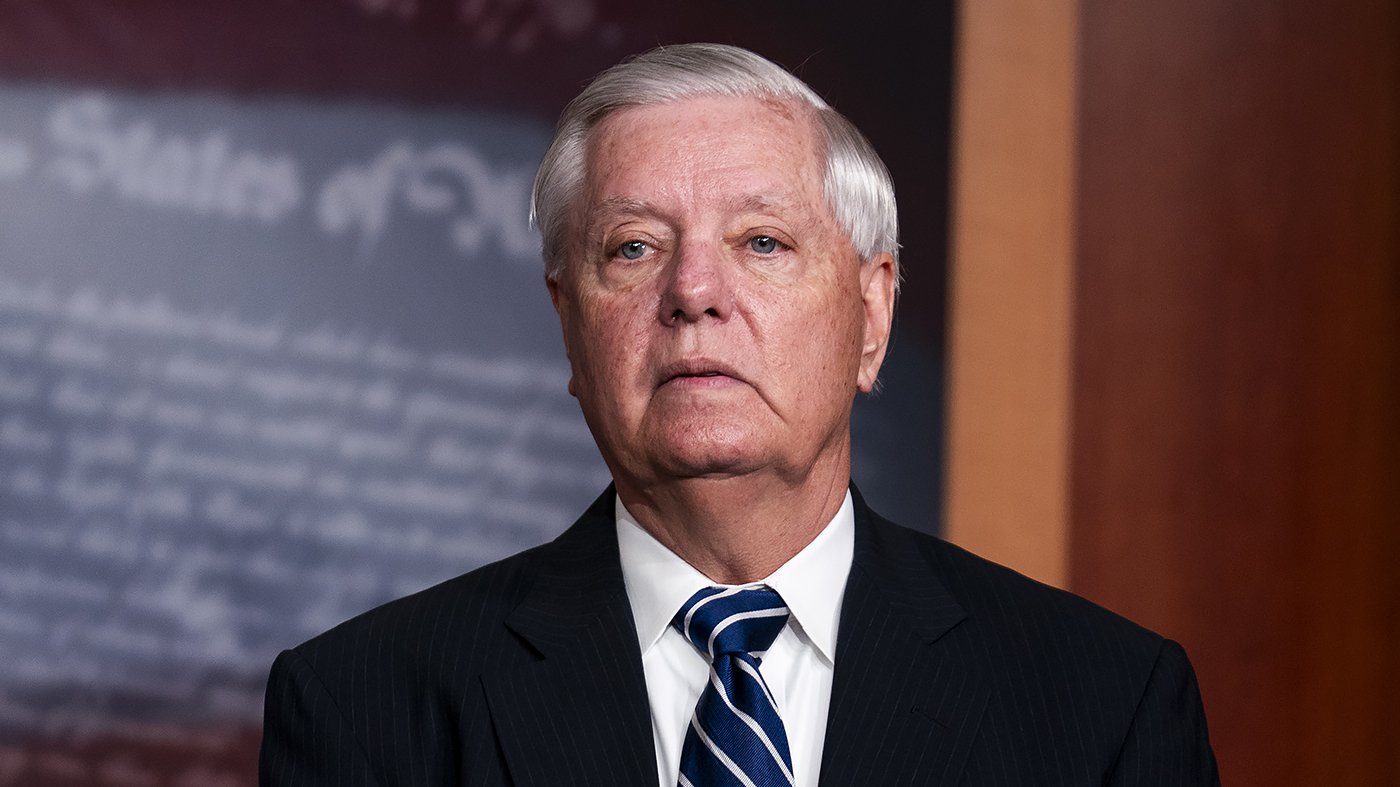
A band of Senate Republicans, led by Sen. Lindsey Graham (R-S.C.), has introduced legislation to authorize the construction of a sprawling, secure 90,000-square-foot ballroom at the White House, arguing the project is critical to national security following an armed man's attempt to breach the White House Correspondents' Association dinner on Saturday.
Graham, who first entered the House in 1994, asserted that the current threat environment demands a fortified venue on the grounds. “It’s very difficult to have a bunch of important people in the same place unless it’s really, really secure. The times in which we live are unusual. I’ve been up here for a while now, I’ve never felt the sense of threat that exists today,” he said. The incident, in which a 31-year-old assailant with a shotgun, handgun, and knives was tackled by Secret Service agents, also endangered President Trump, Vice President JD Vance, and Speaker Mike Johnson (R-La.)—the top three in the line of succession.
Graham dismissed criticism that the massive ballroom, which would dwarf the West Wing, is a vanity project for Trump. Instead, he framed it as a practical security upgrade. “A meeting space that is secured on the White House grounds that would allow people to do what they did at the Hilton hotel is necessary. I’m convinced that had there been a presidential ballroom adjacent to the White House, the guy would have never gotten in,” he said, referring to the attacker.
The bill, co-sponsored by Sens. Katie Britt (R-Ala.) and Eric Schmitt (R-Mo.), would authorize $400 million for the ballroom and an underground complex including a Secret Service annex and military-grade infrastructure. Schmitt told reporters that costs would be offset by national park user fees and customs fees, adding, “Private donations can be used but I think they should be used for buying [fine] china and stuff like that.”
Graham said he discussed the proposal with Trump on Sunday and that the White House backs it. The South Carolina senator, a close Trump ally, described the president as almost obsessed with the ballroom. “Every time, all the time. Like, ‘How are you doing?’ ‘Where’s the ballroom?’ ‘How you playin’ [golf?]’ ‘I don’t know, I’d play better if you built the ballroom.’ It’s all the time,” Graham said with a chuckle. “He understands what’s missing.”
Trump himself cited the Saturday shooting in a press conference to argue for the ballroom. Graham plans to ask Senate Majority Leader John Thune (R-S.D.) to fast-track the bill for a floor vote.
Some Democrats have shown openness. Sen. John Fetterman (D-Pa.) on Sunday urged his party to back the project, echoing a sentiment that security upgrades are warranted after the attack. However, Senate Democratic Whip Dick Durbin (Ill.) remains a firm “no.” “At this point no. There’s obviously a lot of questions about how much it costs, how many people will be accommodated,” Durbin said, noting the ballroom would be “dramatically smaller” than the Washington Hilton. “Who’s paying for this? What’s the arrangement? This administration has too many times come up with deferment of payment to special interest sources. We don’t know the details.”
Graham acknowledged he hasn’t formally pitched the bill to most Democrats. “I’m trying to jumpstart the conversation. I’ve talked to a few of them just out the hall. … Some of them were there. They’re rattled like the best of us,” he said. The debate now pits security urgency against fiscal and aesthetic concerns, as Trump allies use the near-miss to push a long-sought project.