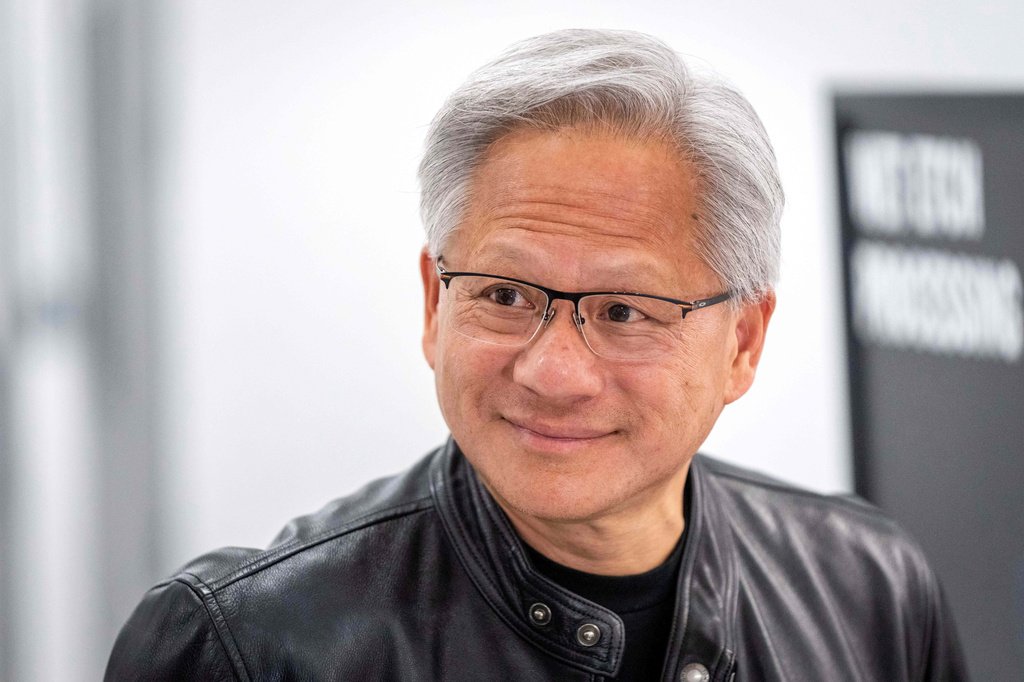
Nvidia chief Jensen Huang, a figure whose predictions carry weight in tech and policy circles, argues that artificial intelligence is forcing a brutal societal reckoning. The rules of survival are shifting, he says, and the country is sleepwalking into a two-tier caste system that will separate those who command AI from those who cannot.
Huang draws a stark historical parallel: the automobile. Early cars tore through cities designed for horse traffic, killing pedestrians and children who played in the streets. It took decades for society to catch up with sidewalks, traffic lights, and driving tests. The cost of delay was measured in body bags. AI, he argues, is forcing the same correction, but on a hyper-compressed timeline.
The coming wreckage won't be measured in broken bones, but in broken careers and erased bank accounts. A new underclass is emerging: a permanent, tech-illiterate substratum of the workforce. The defining divide of the next decade won't be rich versus poor, but those who can direct the machine versus those who cannot.
Consider the office version of this digital Darwinism. Rows of workers use AI to summarize reports, audit spreadsheets, and draft proposals. One worker refuses, clinging to "honest, human effort." By lunch, he is hopelessly behind. His colleagues have tripled his output, automated follow-ups, and taken an extra coffee break. In this reality, stubbornness is a professional suicide pact. The market is about to punish holdouts with a savagery not seen since the Industrial Revolution.
Huang's prescription is blunt: "Just go engage it." Today, someone with zero coding knowledge can build a website, dissect a legal contract, or project a corporate budget. Skills once locked behind a $100,000 degree are now available to anyone who can type a coherent sentence. The traditional corporate ladder is turning into a sheer cliff. The baseline assumption of modern employment is that any capable adult can steer these models. If you avoid AI, your salary may soon be eclipsed by a middle schooler who treats ChatGPT like a calculator.
History has never been kind to the nostalgic. The blacksmith who laughed at the Model T didn't slow Ford's assembly line. The travel agent who mocked the internet didn't stop Expedia. The future keeps its appointments, regardless of who refuses to show up. This is why Huang's warnings carry weight: he is describing a permanent realignment of human value.
For millions of Americans, AI remains a curiosity—something to play with for five minutes and mock when it hallucinates a fact. But the tools improve at a punishing, exponential pace. Work that recently required a specialist and a six-figure salary now requires one person and a clear request. The walls around professional expertise are being demolished in real-time. As polling shows broad public opposition to foreign entanglements, the domestic disruption of AI may prove equally divisive.
This leverage cuts both ways. A corner bodega can now deploy data analytics that once required a multinational infrastructure. A scrappy startup can launch with a solo founder and algorithms instead of a staff of 40. Power no longer tracks the size of the building you walk into each morning, but the ability to direct the machine. Meanwhile, political leaders warn of electoral consequences if they ignore the anxieties of voters left behind by rapid change.
Huang grew up playing in the streets before the cars took over. Now the robots are here. They are about to ruthlessly divide American society into two distinct groups: those who give the digital orders, and those who are made entirely obsolete by them. The choice, he insists, is not whether to adapt, but how quickly.