The financial underpinnings of the artificial intelligence boom have drawn increasing scrutiny, with recent turbulence at CoreWeave—a cloud provider heavily reliant on Nvidia hardware—highlighting the fragility of an industry built on massive debt and speculative bets. CoreWeave's stock has tumbled as its liabilities mount, reigniting fears that the AI sector may be inflating a dangerous bubble. Yet the company at the center of this storm, Nvidia, has largely escaped the spotlight.
Nvidia's origins as a gaming chip designer belie its current status as the linchpin of the AI economy. The company's graphics processing units (GPUs) proved ideal for training complex AI models, and a pivotal moment came in 2016 when co-founder Jensen Huang gifted a supercomputer to OpenAI, then a fledgling nonprofit led by Elon Musk and Sam Altman. That move, coupled with aggressive courting of researchers through hardware donations, cemented Nvidia's chips as the default standard for AI development. By mid-2025, Nvidia had become the world's most valuable public company.
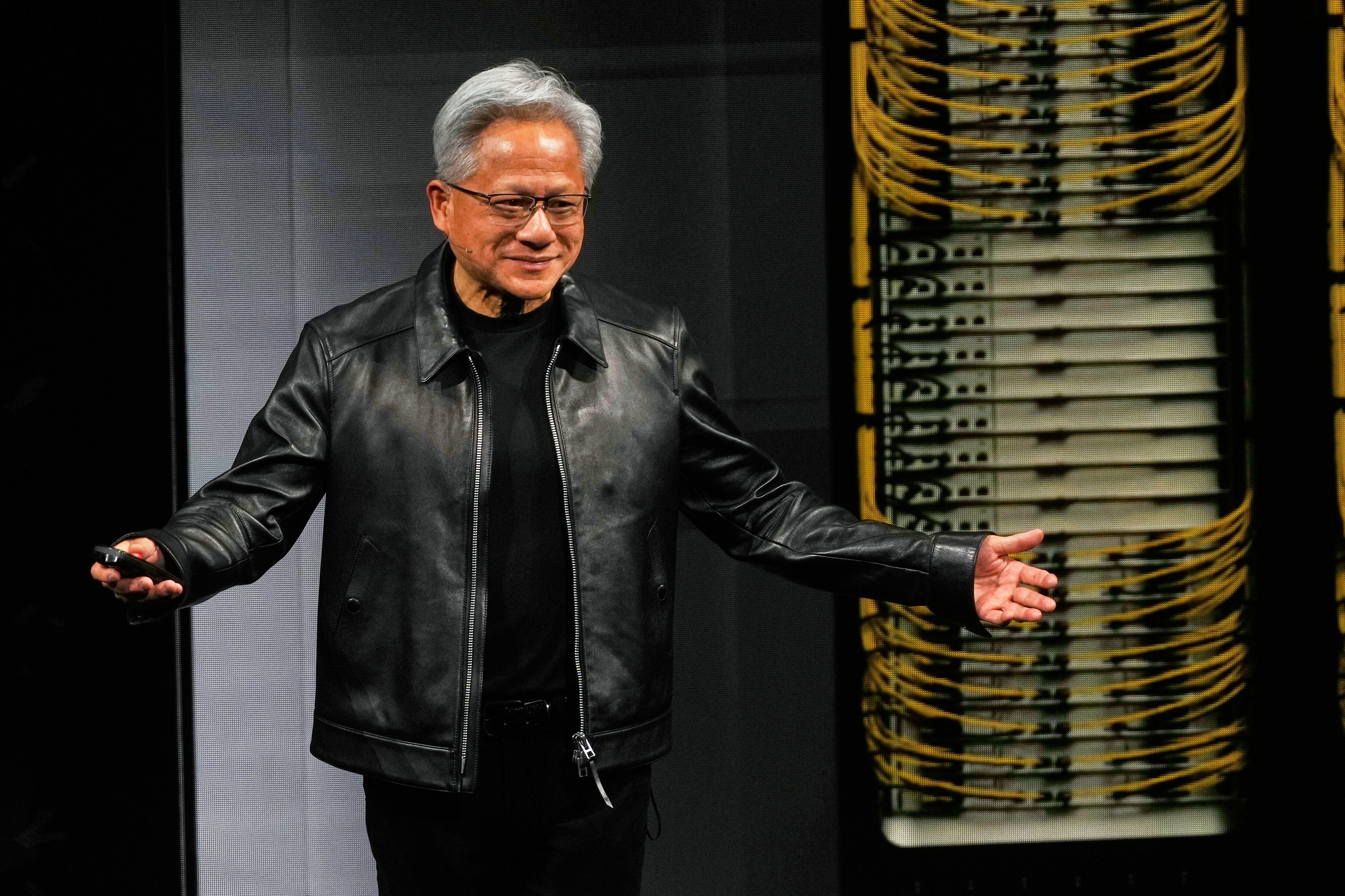
Central to Nvidia's dominance is its proprietary CUDA software, which is optimized for its chips and delivers far superior performance compared to alternatives. Although competitors have attempted to create translation layers that allow CUDA-based code to run on other hardware, Nvidia has tightened its grip by updating licensing terms in 2024 to prohibit such use on rival chips. The company also embeds engineers within hyperscaler data centers to optimize Nvidia-centric operations, making it impractical for most firms to switch. As Nvidia executives admitted on a recent earnings call, customers theoretically can mix and match, but few possess the expertise or inclination to do so.
This lock-in has yielded Nvidia a near-90% market share in GPU design and gross margins of 70-75%. But the company's ambitions extend far beyond selling chips. It has transformed into what The New York Times has called "Silicon Valley's central banker," offering complex financing arrangements that tie customers to its products and require regular upgrades. Nvidia has also invested heavily in so-called neoclouds—data centers that rent computing power to AI firms—often mandating that these providers purchase specific volumes of Nvidia hardware and refresh it on a set schedule. One notable beneficiary is CoreWeave, in which Nvidia holds a nearly 7% stake.
Nvidia's deal-making has accelerated. In late 2024, it acquired Run:ai, and its latest earnings call revealed commitments of $18 billion in equity investments for the remainder of the fiscal year. Private company holdings have nearly doubled year-over-year. Reports in August 2026 indicated Nvidia plans to acquire Hugging Face, a popular open-source AI model platform, for $12.9 billion. Huang has touted that AI agents consume 15 to 100 times more compute than a human using an AI model, suggesting that Nvidia-owned Hugging Face could steer the industry toward compute-intensive applications that benefit Nvidia's bottom line.
Perhaps most concerning is Nvidia's partnership with major financial institutions—Apollo, BlackRock, Goldman Sachs, and KKR—announced in August 2026. The collaboration aims to "turn Nvidia compute and full-stack AI infrastructure into an investable asset class for global capital," according to a press release, pooling funds to offer enterprises attractive rates for investing in Nvidia infrastructure. This moves Nvidia further into the realm of unregulated finance, raising systemic risks. As analysts warn about the potential for a systemic financial crisis, Nvidia's role as an unaccountable lender and investor could amplify the fallout if the AI bubble bursts.
The company's influence also extends to energy policy, as AI data centers demand enormous power. Western governors are pushing for regional grid plans to meet this surging demand, but the financial web Nvidia is weaving may outpace such efforts. Critics argue that Nvidia's actions are driven by a vested interest in perpetuating AI mania, regardless of the broader economic consequences. With no regulatory oversight, Nvidia is effectively shaping the U.S. economy in ways that could prove destabilizing.
The question is whether policymakers will act before the next shock. As Washington lags Beijing in AI strategy, the need for oversight becomes more urgent. Nvidia's unchecked power—both as a monopolist and as an unregulated financier—poses a threat not just to market stability but to the integrity of the financial system itself. Bringing "Silicon Valley's unregulated bank" to heel may be essential to preventing a broader economic collapse.