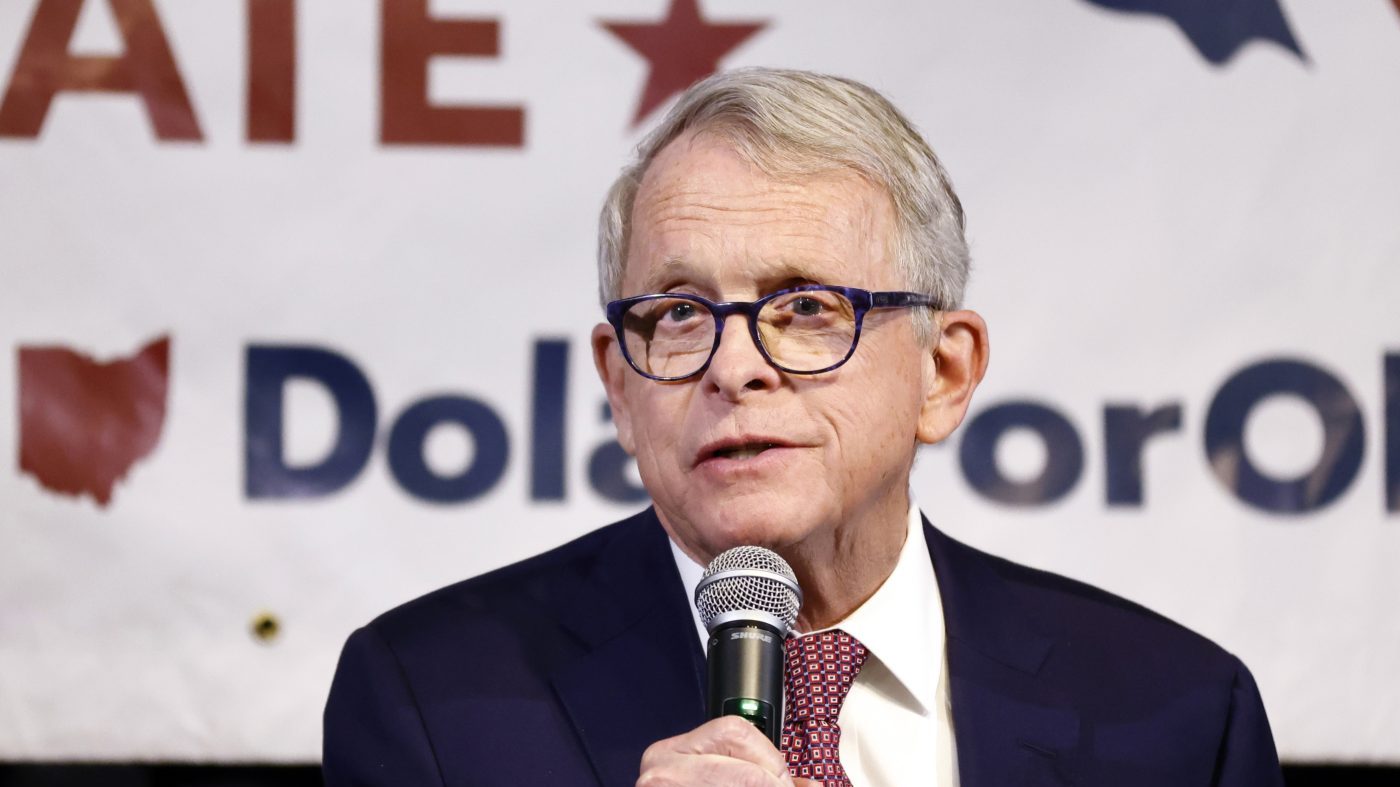
Ohio Governor Mike DeWine (R) on Sunday broke publicly with the Trump administration over its push to end temporary protected status (TPS) for Haitian migrants, urging a policy reversal in the wake of a Supreme Court decision that cleared the way for removals.
Appearing on CNN’s “State of the Union,” DeWine said the high court’s 6-3 ruling—which allows the administration to strip TPS from thousands of Haitians and Syrians—should not dictate what is sound public policy. “What I would hope is the Trump administration would reconsider this,” he told host Jake Tapper.

DeWine argued that ending the program would deal a severe blow to Ohio’s economy, particularly in manufacturing and food processing, where many Haitian TPS holders are employed. But he singled out healthcare as the most critical sector affected. “It’s Haitians who, many times, are taking care of your mom or your dad who has Alzheimer’s, taking care of family members who might be in a nursing home,” he said. “To say we’re going to pull all those out, it’s just not in our own self-interest.”
The governor noted that Republican mayors and lawmakers in Ohio with large Haitian constituencies have pressed for extending TPS, and he pointed to State Department travel advisories warning of widespread gang violence in Haiti as proof the country remains unsafe. “Haiti’s clearly not safe,” he said. But DeWine emphasized a broader argument: “It is not in the United States’ interest, certainly not in Ohio’s interest, to have people who are working every single day, who are supporting a family, who are buying houses, fixing up old houses, starting businesses, and then yank them out.”
DeWine made clear he accepts the Supreme Court’s ruling but insisted on separating it from the policy debate. “This is an administration that has focused a lot on jobs,” he said. “These are jobs that are being filled by Haitians who are filling jobs that would not be filled any other way.” The governor’s stance echoes concerns from other Republicans, including Rep. Mike Lawler (R-N.Y.), who warned last week that roughly one-third of the more than 350,000 Haitian TPS holders work in healthcare. Lawler said an abrupt termination would “create a crisis in our hospitals, nursing homes, and in the I/DD community.”
President Trump has long criticized TPS and has amplified false claims about Haitians, including the baseless assertion during his 2024 debate with then-Vice President Kamala Harris that Haitians in Springfield, Ohio, were “eating the dogs.” DeWine dismissed that claim at the time, telling CBS News the mayor of Springfield “says there’s no truth in that. They have no evidence of that at all.”
The Supreme Court’s decision on TPS came amid broader debates over immigration policy and the administration’s approach to legal protections for migrants. The ruling gave the green light to end protections for nationals from Haiti and Syria, affecting tens of thousands of people who have lived and worked in the U.S. for years.
DeWine’s appeal adds to a growing chorus of Republican voices urging caution, highlighting a rift within the party over the economic and humanitarian consequences of hardline immigration enforcement. As the Trump administration weighs next steps, the fate of Haitian TPS holders—and the industries that rely on them—remains uncertain.