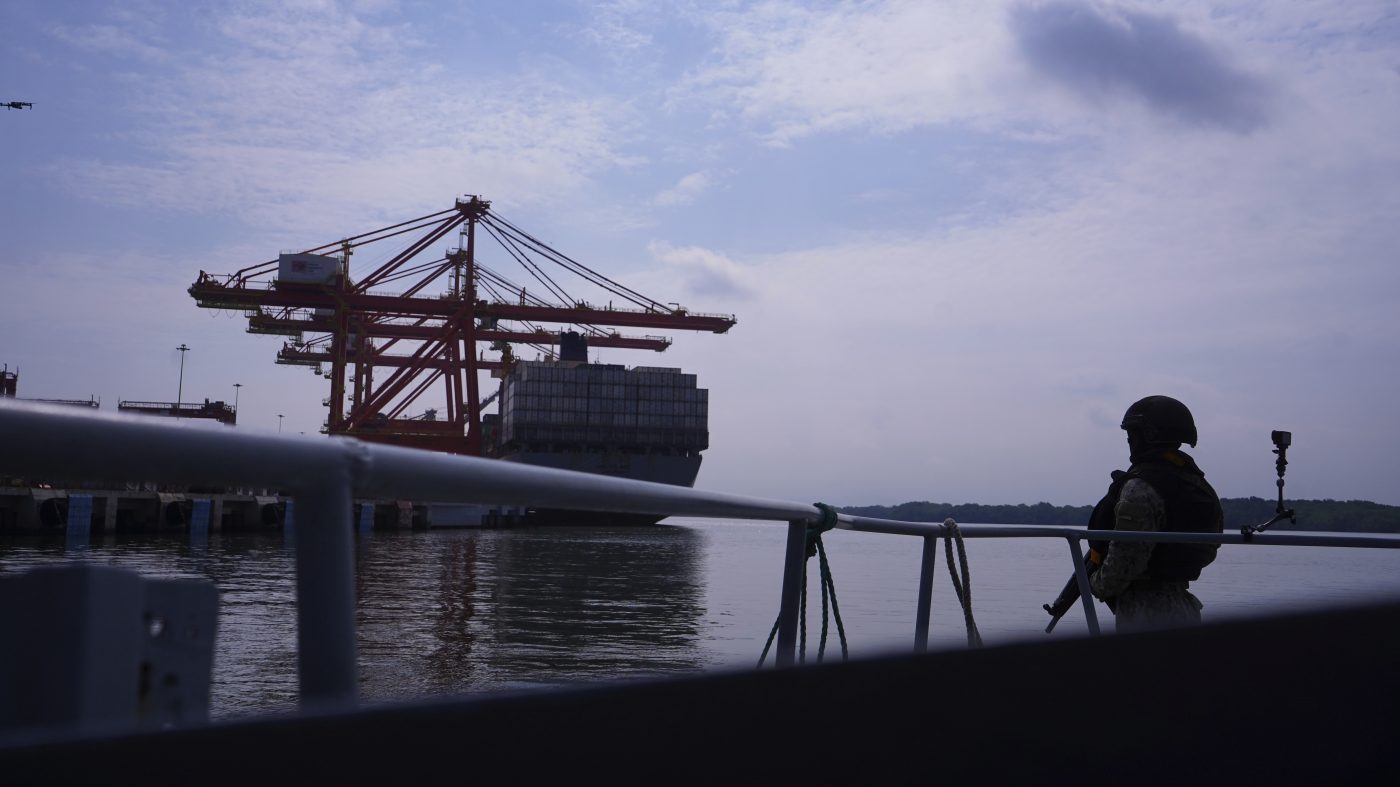
The Pentagon is financing a naval training facility in Ecuador's largest city, a move that underscores the deepening security partnership between Washington and Quito in the fight against drug cartels, according to two U.S. officials familiar with the matter.
The facility, to be built in the port city of Guayaquil, will be designed and constructed by Culmen International, a Virginia-based contractor. Once operational, it will be handed over to Ecuadorian security forces, said the officials, who spoke on condition of anonymity to discuss the arrangement.
The scope of the project remains unclear—how long construction will take, how many U.S. and Ecuadorian personnel will be stationed there, and how many naval vessels will be berthed are all open questions. The U.S. Southern Command (Southcom), which oversees military operations in Central and South America, declined to comment.
Funding for the facility comes through the Title 10 capacity building program, one official said. After it becomes operational, Ecuador will decide whether to allow U.S. service members to be present, they added.
Henry Ziemer, a fellow with the Americas Program at the Center for Strategic and International Studies (CSIS), said the funding mechanism could attract scrutiny from lawmakers in Washington. "Though this administration has definitely been willing to play fast and loose with how it gets funding for certain projects," Ziemer told The Hill, citing the Pentagon's Office of Strategic Capital as a prime example in the Venezuelan oil deal announced in August.
The Pentagon did not respond to a request for comment about the facility.
The new naval hub comes as the Pentagon escalates its multi-front campaign against drug cartels, with the Trump administration pressing regional governments to cooperate in joint operations against traffickers. U.S. personnel already have rotational access to Ecuadorian bases. In recent months, U.S. forces have destroyed suspected drug boats in the Caribbean and Eastern Pacific, killing scores of alleged traffickers—tactics that have drawn criticism from law-of-war experts and some congressional Democrats. U.S. forces have also interdicted refueling vessels off Ecuador's coast and have embedded with Ecuadorian troops in raids against suspected traffickers.
However, the expansion of U.S. military presence faces domestic hurdles. In November, more than two-thirds of Ecuadorians rejected a proposal to host foreign military bases, a setback for President Daniel Noboa, a Trump ally who has welcomed deeper defense ties and prioritized fighting organized crime.
Ziemer said the facility itself is not unusual for U.S. security cooperation, but the broader U.S.-Ecuador relationship—especially the question of bases—remains a key storyline. Historically, Washington has funded infrastructure projects in Latin America, including radar sites, hardened police stations, and airstrip improvements.
The new facility is another marker of the U.S. commitment to Ecuador, which has recently received MQ-9 Reaper drones. Additionally, the U.S. government programmed $52 million in Foreign Military Financing from European and Middle Eastern allies to four Latin American countries, including Ecuador. Ziemer drew a parallel to the State Department's approval of a potential $1.5 billion sale to Peru to modernize the port of Callao, that country's main naval port.
Culmen International earlier this month posted on social media that it was "proud to support" Southcom's counterdrug mission with the construction of the facility. The posts were later removed after The Hill reached out for comment on Oct. 16. Culmen did not respond to further requests.
Southcom will not run the facility, one source said, but it is "aligned with the U.S. partner objectives."