Senate Republicans on Tuesday voted down a Democratic-backed resolution aimed at preventing President Trump from ordering military action against Cuba without congressional authorization, escalating a partisan clash over the scope of executive war powers.
The measure, introduced by Senators Ruben Gallego (D-AZ), Tim Kaine (D-VA), and Adam Schiff (D-CA), sought to invoke the 1973 War Powers Act to block any unilateral military operations against the island nation. Democrats argued it was a necessary check after Trump ordered a naval blockade of Cuba and made public statements suggesting further escalation.
Republicans, however, rallied behind a procedural objection raised by Senator Rick Scott (R-FL), which defeated the discharge motion by a 51-47 margin. Scott dismissed the resolution as irrelevant, stating, “President Trump has never suggested we put troops on the ground in Cuba. So this entire effort is moot.”
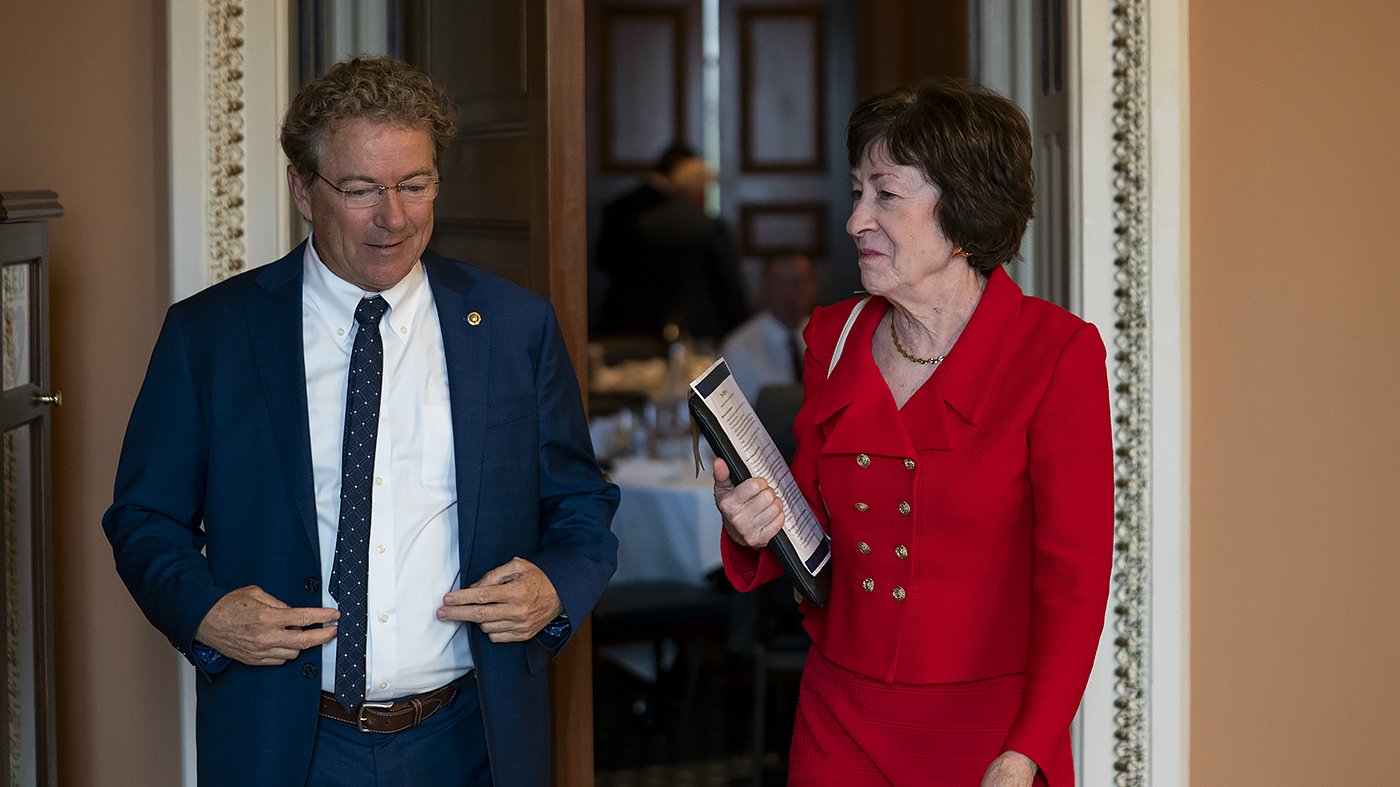
Only two Republicans—Senators Susan Collins (R-ME) and Rand Paul (R-KY)—crossed party lines to support the Democratic war powers resolution. Collins faces a tough reelection in a Democratic-leaning state, while Paul has consistently backed congressional oversight of military engagements. On the Democratic side, centrist Senator John Fetterman (D-PA) was the sole member to vote for the point of order against the resolution.
Democrats warned that Trump’s rhetoric and actions signal a dangerous drift toward conflict. Gallego pointed to the recent naval blockade and Trump’s remark at a Miami summit last month that “Cuba’s next” as evidence of a looming military campaign. “The American people want nothing to do with it—they want lower prices, good health care and affordable homes, not a new war to satisfy neoconservatives in South Florida,” Gallego said in a statement before the vote.
Kaine argued that Cuba poses no direct threat to the United States, making any military action a pure regime-change endeavor that requires congressional debate. “What would the American public say about a war against Cuba?” he asked, noting the blockade’s humanitarian toll. “This would be a war for one thing: regime change. That’s not a reason for the United States to go to war, certainly without a congressional debate.”
Tuesday’s vote marks the sixth time Senate Republicans have defeated Democratic War Powers resolutions aimed at curbing Trump’s military actions, following similar efforts related to Iran. Paul has been the lone Republican to consistently support those measures.
Democrats saw their best chance to rein in Trump’s commander-in-chief authority earlier this year, when five GOP senators—including Collins, Paul, Lisa Murkowski (R-AK), Todd Young (R-IN), and Josh Hawley (R-MO)—voted to advance a resolution blocking military operations in Venezuela. However, Young and Hawley later reversed their positions after Secretary of State Marco Rubio assured them the administration would not deploy troops there without congressional approval.
The blockade and Trump’s “Cuba’s next” comment have heightened tensions, with critics accusing the White House of pursuing a neoconservative foreign policy agenda. For now, the Senate’s Republican majority has effectively blocked any legislative check on potential military escalation in Cuba.