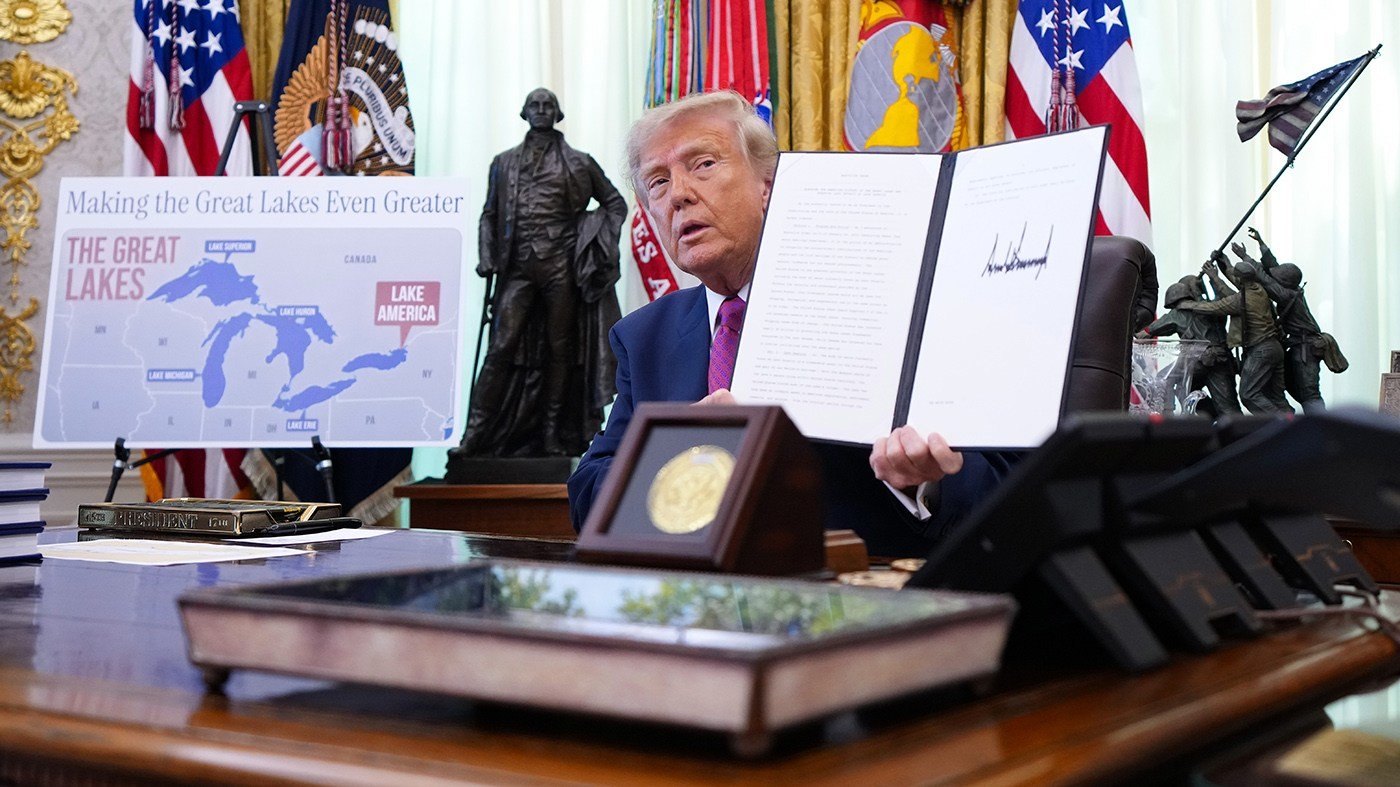
Seneca Nation President J. Conrad Seneca on Friday urged President Trump to rescind his executive order renaming Lake Ontario as “Lake America,” arguing that the move breaches a 225-year-old treaty between the Haudenosaunee Confederacy and the U.S. government.
In a statement, Seneca said the Thursday order violates the 1794 Treaty of Canandaigua, signed by President George Washington and Haudenosaunee leaders, which recognizes Seneca territory as “beginning on Lake Ontario.” The treaty was meant to affirm a shared commitment to peace and mutual respect.
“The President cannot assert ownership over our culture or erase it through irresponsible political action,” Seneca said.
The lake’s name derives from the Huron-Wendat word “oniatarí:io,” meaning “lake of shining waters.” In the Seneca language, it is called “sga:nyodai:yoh,” or “beautiful lake,” according to the nation’s president.
Trump signed the renaming order amid an escalating trade conflict with Canada, following last year’s similar move to rename the Gulf of Mexico as the “Gulf of America.” During Thursday’s signing ceremony, Trump joked: “If you think about it, we have a gulf, now we have a lake, now all we need is an ocean. Maybe we’ll have to change the name of the Atlantic and/or the Pacific. Maybe we’ll change them both.”
New York Governor Kathy Hochul, a Democrat whose state borders the lake, said she will not honor the renaming request. Canadian Prime Minister Mark Carney also condemned the change, noting the lake’s Indigenous heritage. “The name Lake Ontario comes from the Wendat word Ontari’io, which, appropriately, means ‘the lake is beautiful, the lake is big,’” Carney wrote on X, adding that “Canadians also know that naming reality means calling it Lake Ontario – then, now and always.”
The dispute has drawn bipartisan criticism, with Wisconsin politicians mocking the order and legal experts questioning the president’s authority to unilaterally change geographic names. The Seneca Nation’s appeal adds a treaty-rights dimension, potentially setting up a legal challenge.
Observers note that the renaming is part of a broader pattern of nationalist gestures by the administration, including the broader trade war tactics and military-themed initiatives. Whether the order will withstand legal scrutiny remains to be seen, but the Seneca Nation’s invocation of the 1794 treaty underscores the deep historical and cultural stakes involved.