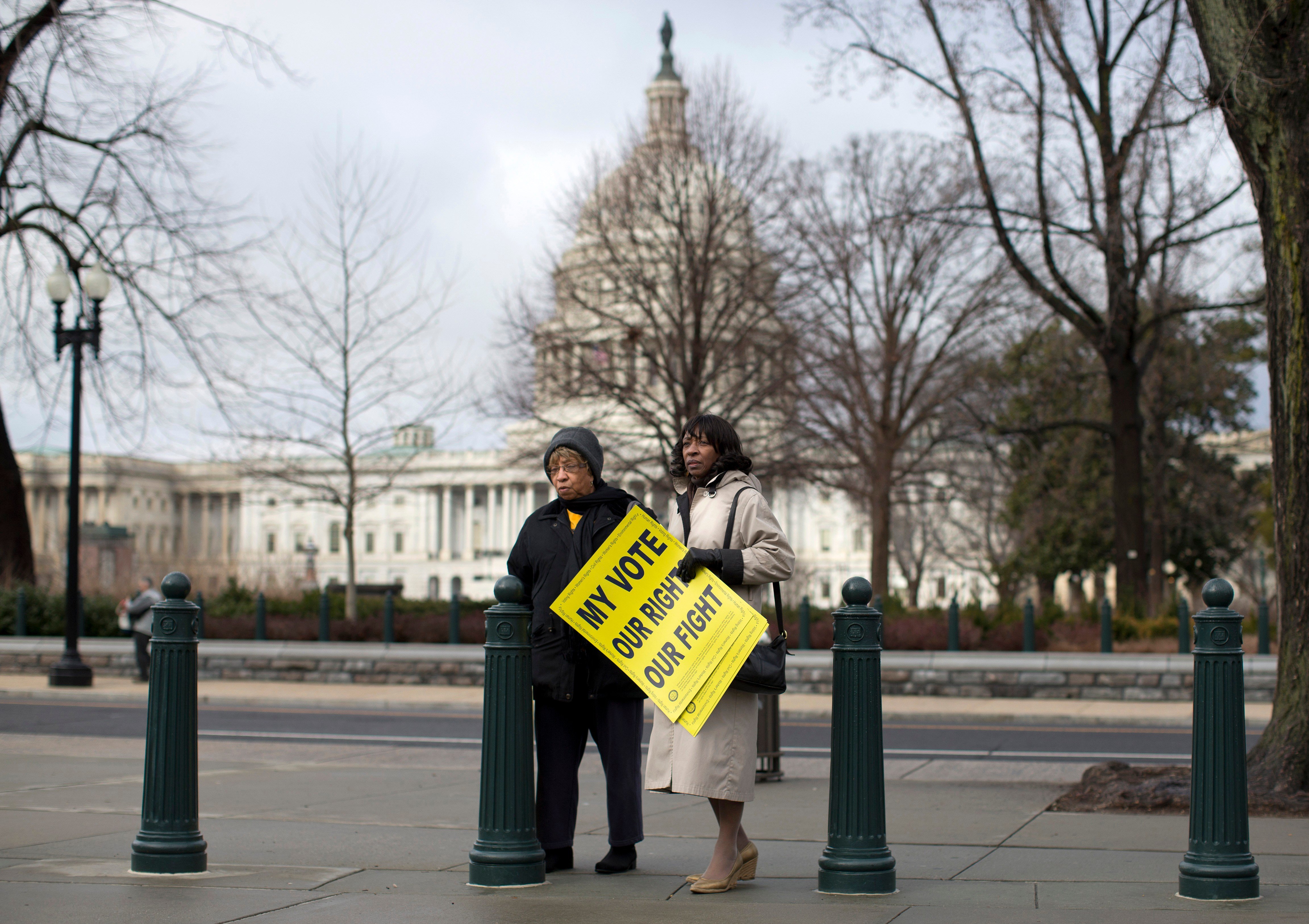
Thirteen years after the Supreme Court gutted a cornerstone of the Voting Rights Act, the consequences are stark: states once required to clear election changes with the federal government have enacted a wave of restrictions that sharply reduce minority voting power. That is the central argument of a new book, An American Problem: How the Country Built — and the Supreme Court Broke — the Voting Rights Act, by political scientists Michael G. Miller and Kevin T. Morris.
In Shelby County v. Holder (2013), the Court's 5-4 conservative majority struck down the formula used to determine which states and localities had to submit voting changes for federal preclearance. Writing for the majority, Chief Justice John Roberts acknowledged that preclearance had dramatically curbed racial discrimination in the covered jurisdictions, but insisted that "things have changed" because "the tests and devices that blocked access to the ballot have been forbidden nationwide for over 40 years." With Black voter registration and turnout surging, Roberts concluded that a formula based on old conditions could no longer justify singling out certain states.
Justice Ruth Bader Ginsburg, in a memorable dissent, warned that discarding preclearance because it worked was like "throwing away your umbrella in a rainstorm because you are not getting wet." She noted that voting discrimination had evolved into "more subtle second-generation barriers," making preclearance as vital as ever to prevent backsliding. Miller and Morris marshal extensive evidence that Ginsburg was right.
Immediate Effects
Within minutes of the ruling, Texas Attorney General Greg Abbott tweeted that the state's strict voter ID law—previously blocked under preclearance—"should go into effect immediately." Less than 24 hours later, Texas required photo identification at the polls. In 2021, Texas redrew legislative districts in ways that "never would have taken place" under preclearance, and imposed new voting restrictions that disproportionately harm minority voters. More than 10 percent of mail-in ballot applications in 2022 were rejected—an order of magnitude higher than the national average. In 2023, after Democratic officials tripled polling places in Harris County, the Republican legislature stripped the county of its authority to run its own elections.
Other states followed suit. North Carolina lawmakers sought racial data on voting patterns before adopting early-voting cuts and ID requirements that a federal appeals court later found targeted Black voters "with almost surgical precision." Georgia shortened absentee ballot request periods and limited drop boxes; South Carolina banned drop boxes and tightened absentee rules; Montana ended same-day voter registration.
Litigation Burden
Before Shelby, covered jurisdictions had to prove that proposed changes would not discriminate. Now the burden falls on voters and civil rights groups to sue—an expensive, slow, and uncertain process. States can implement restrictive rules, hold elections under them, and litigate for years, even if courts eventually strike them down. A district court in Florida found intentional discrimination in that state's registration and drop-box restrictions and imposed a 10-year preclearance order, but the 11th Circuit overturned it.
The Supreme Court has compounded the problem. In Brnovich v. Democratic National Committee (2021), it made Section 2 challenges harder to win. This year, in Louisiana v. Callais, it limited the ability of minority voters to challenge district maps that dilute their strength. Together, these rulings have crippled both pillars of the Voting Rights Act: preventing discriminatory rules before they take effect and challenging them after the fact.
Miller and Morris estimate that if preclearance had remained, "Americans of color would have made up a majority of voters in 15 more lower-house legislative districts in 2022." The cumulative effect, they argue, has been to undo much of the progress of the civil rights era.
Democrats in Congress have proposed restoring preclearance with a new coverage formula based on recent discrimination, but President Trump has vowed to veto such legislation. Unless the Court revisits its assumption that America has moved beyond the need for these safeguards, the damage is likely to persist. Voting rights advocates are pushing bold reforms even as the federal rollback continues, and Justice Kagan has blasted her conservative colleagues for fueling polarization with such rulings. The fight over the ballot box is far from over.