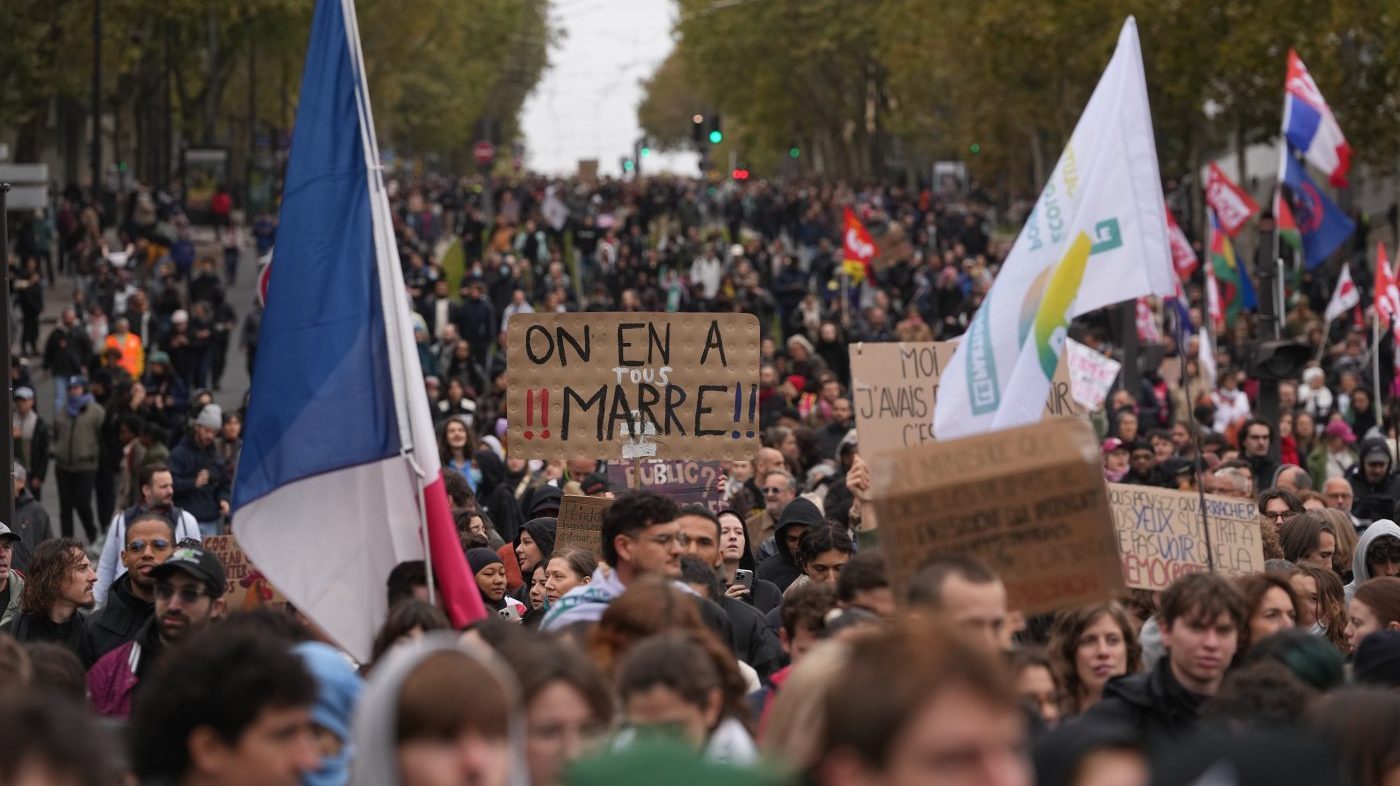
The NFL was forced to shut down its fan engagement space in Paris on Saturday as street demonstrations intensified across the French capital. The league's decision came just a day before the New Orleans Saints and Pittsburgh Steelers are scheduled to make history with the first NFL game ever played in France, a matchup that remains on the calendar despite mounting security concerns and political pressure.
Fans holding tickets or planning to visit the league's pop-up venue, dubbed "NFL House," received an alert through the NFL's OnePass app informing them of the closure due to "accessibility issues," according to The Associated Press. The Saints also announced on social media platform X that their own fan event in Paris had been pushed to Sunday, aligning with the game day.

President Trump weighed in on the situation Friday, telling reporters outside the White House that the NFL "probably could have postponed" the game, adding that Saturday "is going to be a bad day in France." He went further, linking the unrest to the country's political direction: "France is really in trouble. That's what happens when you go left."
Trump's remarks appeared to contradict earlier assurances from Secretary of State Marco Rubio, who told reporters Wednesday that U.S. officials believed it would be "fine" to proceed with the game. The State Department, however, has issued a security alert for Americans traveling in France, warning of "violence and rioting" that "may continue." The alert advises travelers to "avoid demonstrations and areas of unrest" and to "stay away from areas with large crowds or significant police activity."
The protests, which have erupted in Paris and other French cities, are being driven largely by young people angry over the state of the education system and the soaring cost of living. The demonstrations have drawn comparisons to the student-led unrest that has gripped the country, with athletes and public figures weighing in on the grievances.
Despite the chaos, the Steelers and Saints are still slated to kick off at 9:30 a.m. EDT Sunday at Stade de France. The game is one of nine international matchups the NFL is hosting this season, part of a broader push to expand the league's global footprint. The decision to proceed comes even as Rubio expressed confidence earlier in the week that the event would go on as planned.
The NFL's handling of the situation highlights the delicate balance between maintaining a global brand and ensuring safety in volatile environments. The league has not commented on whether additional security measures are being implemented for the game, but the closure of NFL House suggests that crowd control remains a major concern.
For fans who made the trip to Paris, the cancellation of the fan zone is a disappointment, but many are still hopeful the game will proceed. "I came all the way from Pittsburgh for this," said one fan outside the closed venue. "I understand the safety issue, but I'm keeping my fingers crossed for Sunday."
The political dimension of the event has also drawn attention, with Trump's comments adding a layer of tension to an already fraught situation. His suggestion that the game should have been postponed echoes his broader criticism of European governance, but it also raises questions about the extent to which the White House should weigh in on sporting events.
As Paris braces for another day of potential unrest, the NFL's decision to keep the game on schedule will be closely watched. The league has not announced any contingency plans, but officials are likely monitoring the situation in real time. For now, the focus remains on whether the first NFL game in France will actually take place—and whether the protests will overshadow what was meant to be a celebration of American football's global reach.