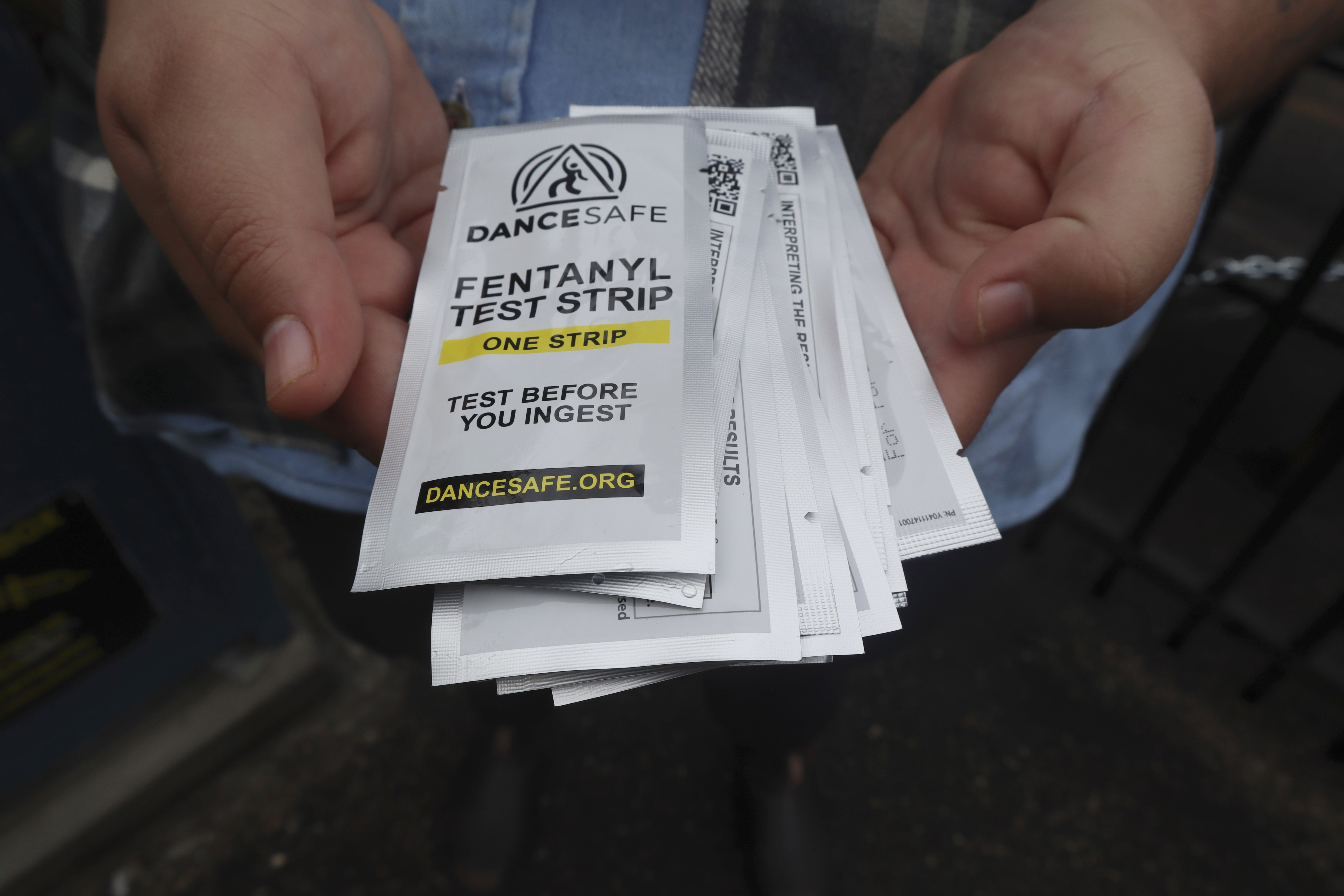
The Trump administration has abruptly ended the use of federal funds to buy or distribute test strips that detect fentanyl and other dangerous additives in street drugs, marking a clear shift away from harm reduction policies that had been in place since 2021.
In a letter to federal grantees, the Substance Abuse and Mental Health Services Administration (SAMHSA) stated that the strips are “intended for use by people using drugs,” and therefore no longer eligible for federal funding. The move reverses a policy championed by the Biden administration and initially left untouched after President Trump returned to office last year.

However, the notice clarifies that federal funds can still be used for test strips employed by public health officials, law enforcement, and medical professionals in their work.
Test strips, which cost roughly $1 each, can identify the presence of fentanyl or animal tranquilizers like xylazine and medetomidine. Many states have legalized them as a tool to reduce overdose deaths.
The Biden administration first permitted federal funding for these strips in 2021, a practice the Trump administration did not immediately challenge upon taking office. But the reversal is the latest example of the administration’s deliberate pivot from harm reduction to an abstinence-first model.
Harm reduction advocates argue that measures making drug use safer can save lives and open pathways to treatment. The Trump White House, however, has described such policies as “facilitat[ing] illegal drug use and its attendant harm.” In a statement, the administration said, “To finally bring an end to this crisis and achieve the Great American Recovery, it is essential that the use of federal funding is aligned to common-sense public health strategies that focus on prevention, treatment, and long-term recovery.”
Officials have characterized harm reduction as “an ideological concept … which has been used to advocate for policies that are incompatible with federal laws and inconsistent with this Administration’s priorities.”
The SAMHSA letter encouraged grantees to direct funds toward naloxone, opioid overdose reversal medication, sharps disposal kits, and testing and vaccination for infectious diseases like hepatitis and HIV. This policy shift comes amid ongoing political battles over public health approaches, including criticism from some lawmakers about the administration's priorities.
The decision also reflects a broader ideological divide, with the administration signaling a tougher stance on drug use even as overdose deaths remain a pressing concern. Critics argue the move undermines proven life-saving measures, while supporters say it aligns with a recovery-focused agenda.