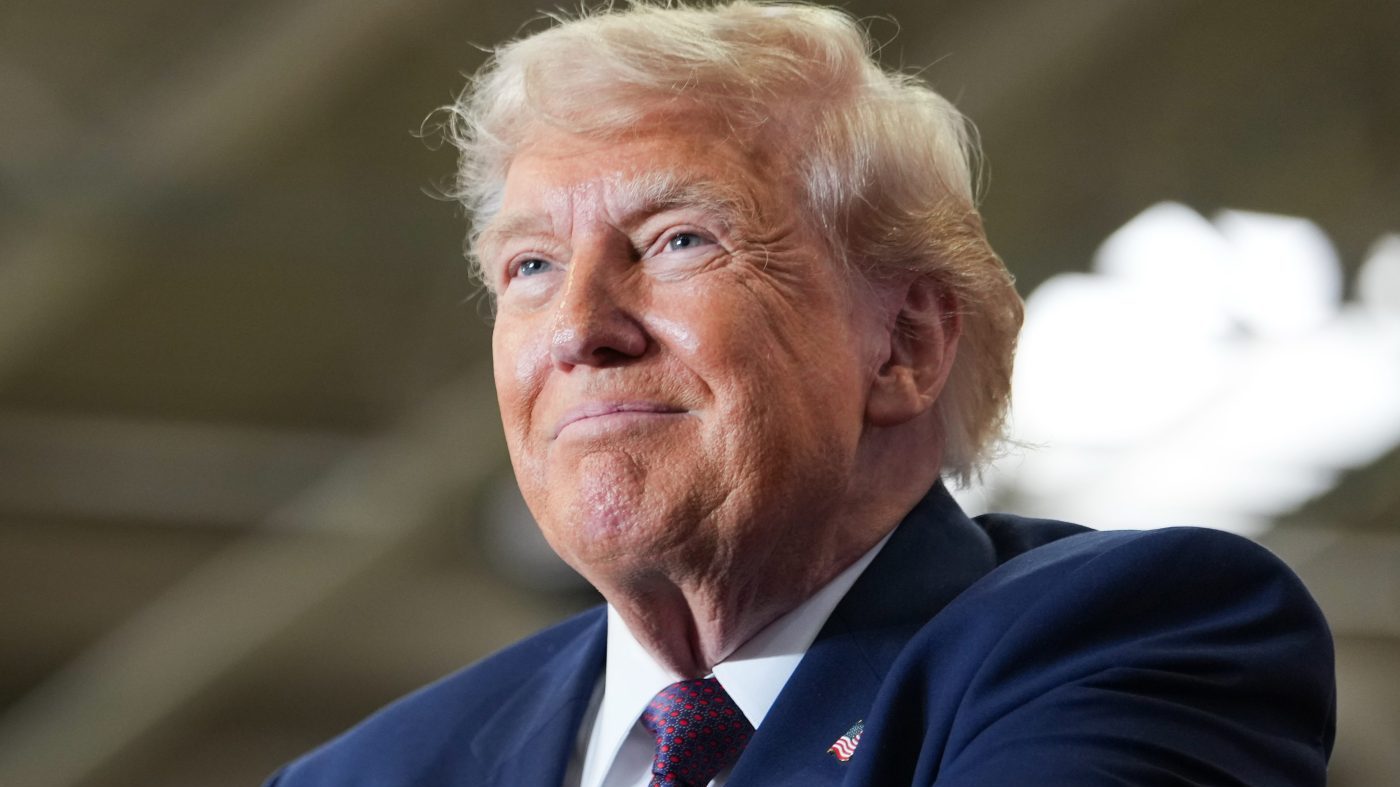
President Trump on Monday celebrated a major expansion of presidential authority after the Supreme Court ruled 6-3 that he has the right to fire members of independent agencies, overturning a nearly 90-year-old precedent. The decision, one of the final rulings of the term, empowers the White House to remove officials from bodies like the Federal Trade Commission (FTC) at will.
“BIG WIN just moments ago at the Supreme Court, in the Slaughter Case, confirming Presidential Power in our Country to remove Executive Branch Officers and Agency Appointees, or Representatives, under Article II,” Trump wrote on Truth Social. “This Decision was long sought by United States Presidents, dating all the way back to the 1930s.”
The case centered on Rebecca Slaughter, a Democratic FTC commissioner whom Trump fired last year after she was renominated by former President Biden. Slaughter’s term was set to run until 2029. The conservative majority sided with Trump, arguing that the president’s removal authority is inherent under Article II of the Constitution.
Chief Justice John Roberts, writing for the majority, declared that “if anything more is left of Humphrey’s, we overrule it,” referring to the 1935 case Humphrey’s Executor v. United States. That landmark ruling had protected certain quasi-judicial and quasi-legislative agencies from presidential interference, a safeguard that now lies overturned.
The decision effectively dismantles the independence of roughly two dozen multimember federal agencies, including those overseeing federal employee rights, workplace discrimination, product safety, and aviation accident investigations. Critics argue this opens the door for presidents to install loyalists and politicize regulatory enforcement.
Trump called the ruling “such an Honor to be the sitting President who won this Historic and Unprecedented Ruling, one of the most important ever given with respect to Presidential Powers.” The decision builds on earlier moves by the Court, such as the recent expansion of presidential firing authority and a temporary block on Trump’s removal of a Federal Reserve governor.
The FTC, the agency at the heart of the original 1935 case, now stands as a symbol of the shift. In that earlier dispute, President Franklin D. Roosevelt had tried to fire Commissioner William Humphrey, a Coolidge appointee who opposed the New Deal. The Court then ruled that Congress could limit presidential removal of officials in agencies with mixed functions.
Monday’s ruling also carries implications for other ongoing battles, including the dispute over Trump’s firing of Fed Governor Lisa Cook and broader questions about the balance of power between the executive and legislative branches. Legal experts expect challenges as the administration moves to reshape regulatory bodies.
While Trump hailed the decision as a victory for executive power, Democrats and watchdog groups warned it undermines the independence of agencies designed to operate without political pressure. The ruling is likely to be a flashpoint in the coming election cycle, as voters weigh the scope of presidential authority.