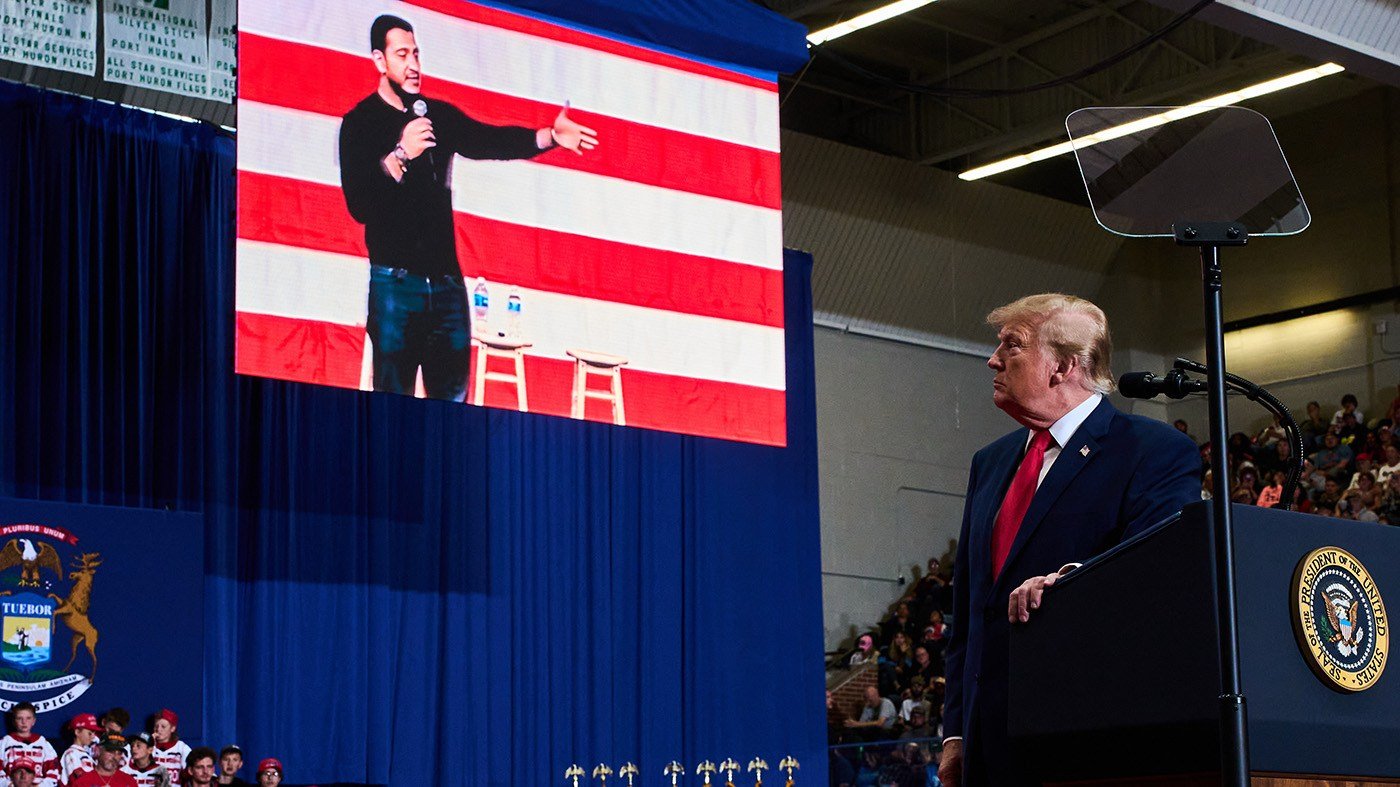
In the closing days of Michigan's Senate race, President Trump has escalated his rhetoric against Democratic nominee Abdul El-Sayed, unleashing a barrage of Islamophobic attacks that have drawn sharp criticism and raised questions about their political impact.
At a Sunday rally in Michigan, Trump accused El-Sayed of being "on the side of the terrorists" and warned that a Democratic victory would "open the floodgates and invite hordes of jihadis to our shores." He also suggested that El-Sayed should undergo a metal detector screening before entering the Senate, and implied a connection between El-Sayed's worldview and the 9/11 hijackers.
These remarks mark a stark departure from the tone set by President George W. Bush after the September 11 attacks, when he visited the Islamic Center of Washington, D.C., and declared that "Islam is peace." Trump's repeated use of the term "jihadist" to describe El-Sayed and his mocking references to the candidate's middle name, Mohamed, echo his past attacks on former President Obama's full name.
El-Sayed has largely shrugged off the attacks, responding at a rally with a defiant quip: "I'll be Senator Mohamed to you, bro." Former President Obama, campaigning alongside El-Sayed, drew parallels to his own experiences with Trump, saying, "We have seen this movie before. I starred in it."
Supporters of El-Sayed argue that Trump's vitriol is a sign of desperation and could backfire. Matt Duss, executive vice president at the Center for International Policy, said, "It's just a sign of desperation on Trump's part... They have no achievements to run on. It's trying to scare their base to the polls."
Michigan is home to one of the largest Arab American populations in the country, and the community could be galvanized by these attacks. Abdelhalim Abdelrahman, communications director for American Muslims for Palestine, called the attacks "horrible, disgusting and incendiary," but noted that "whenever we endure these kinds of hateful attacks, I think it hardens the resolve of the community."
El-Sayed's Republican opponent, former Rep. Mike Rogers, has stopped short of Trump's rhetoric, saying on NBC's "Meet the Press" that he has "never called him a terrorist." However, Rogers did suggest that El-Sayed had a "relationship with the thinking of the Muslim Brotherhood," referencing an open letter El-Sayed signed in 2012 supporting Egypt's democratically elected President Mohamed Morsi. Rogers himself had previously acknowledged "moderate Muslim Brotherhood individuals" worth engaging.
Despite the controversy, El-Sayed holds a slight lead in the race, with Decision Desk HQ giving him a 67 percent chance of winning. Richard Czuba, a Michigan-based pollster, suggests that Trump's attacks may consolidate Democratic support, drawing parallels to how Trump's jabs at Gov. Gretchen Whitmer backfired.
As Election Day approaches, the question remains whether Trump's divisive strategy will energize his base or mobilize a broader coalition against him. For now, El-Sayed's campaign appears resilient, and the outcome in Michigan could hinge on whether voters reject the politics of fear.