President Donald Trump has ordered a reduction in joint military exercises with South Korea and signaled his intention to meet with North Korean leader Kim Jong Un. For those who followed Trump's first term, these moves are hardly surprising—the only real shock is that it took this long into his second term to get here.
Trump's approach in his first term broke with more than two decades of failed diplomacy. His predecessors—two Democrats and a Republican—relied on a familiar formula: sanctions, promises of relief, and incentives aimed at persuading the Kim family to abandon its nuclear ambitions. Bill Clinton and George W. Bush each struck variations of that deal with Kim Il Sung and Kim Jong Il, but those agreements proved easily reversible when Pyongyang felt pressured or when a new administration took office.
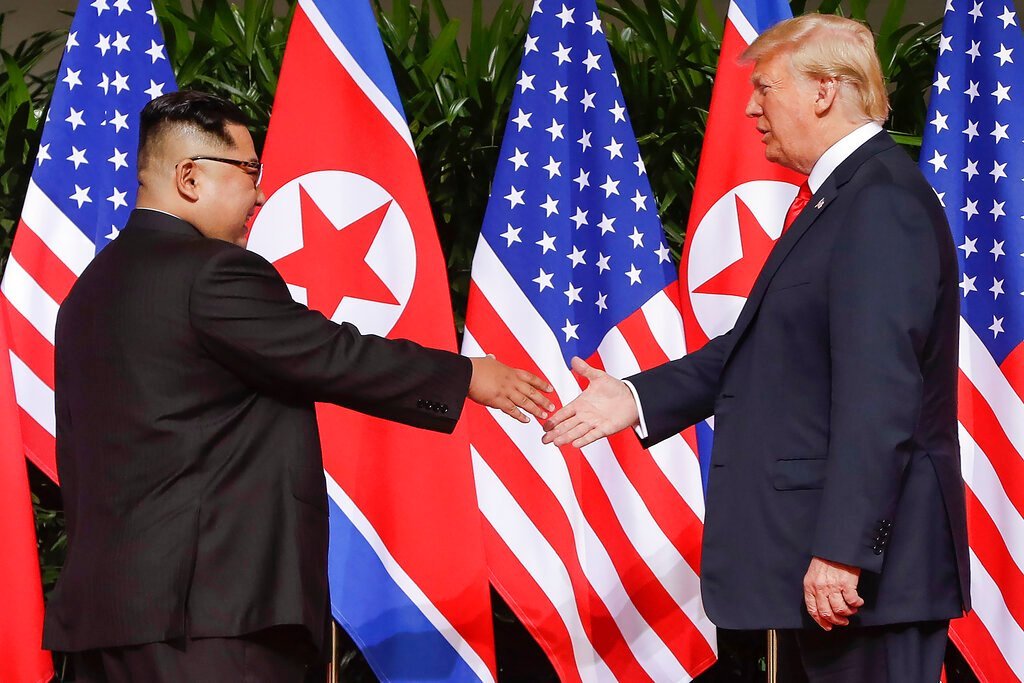
Trump upended that playbook. He imposed a maximum pressure campaign that choked North Korea's economy, even compelling China to close Pyongyang's bank accounts—a move Beijing had never before allowed. He also chose to meet Kim directly, bypassing the Chinese mediation and lower-level diplomatic channels that Clinton, Bush, and Obama had used. Since North Korea's decision-making is concentrated in its leader, Trump cut out the middlemen to engage the man who actually held the power.
But the president enters this new round of talks in a weaker position than in his first term. The Biden administration publicly criticized North Korea's military assistance to Russia for its war in Ukraine but did little to stop it or to force Kim to choose between helping Vladimir Putin and preserving his own strategic programs. That inaction has given Pyongyang both financial relief and a stronger bargaining hand.
To restore leverage, Trump could sanction North Korean operatives in China and Chinese firms that facilitate sanctions evasion. Such measures would not necessarily upset his broader engagement with Xi Jinping, as they mirror existing U.S. efforts against Chinese teapot refineries that process Iranian oil. The president's willingness to strike Iran's nuclear program last year—dubbed the Midnight Hammer strikes—also gives him added flexibility, though negotiations with Kim will likely require at least tacit acceptance of North Korea's existing arsenal.
That acceptance carries risks. Allies and partners might read it as a signal that Washington could tolerate their own nuclear programs down the road. But the administration retains both incentives and disincentives to prevent such proliferation, and Tehran's dire financial straits raise doubts about its long-term survival.
Negotiating with Pyongyang will not be easy. Despite the image of a reclusive hermit kingdom, North Korea has three decades of experience negotiating with the United States—and has largely come out ahead. Trump could offer a formal end to the Korean War, improved political and economic ties, a permanent halt to military exercises with Seoul, and a role in facilitating inter-Korean dialogue. In exchange, he should demand verifiable limits on long-range missiles and nuclear weapons, as well as the withdrawal of all North Korean troops and military support from Russia's war in Ukraine.
Success would add to Trump's list of second-term diplomatic achievements and potentially weaken Putin, opening the door to a negotiated settlement in Ukraine. A summit with Kim—whether in Pyongyang or at a neutral venue—would also provide another made-for-television moment for the president.
Critics will decry this approach, especially any implicit recognition of North Korea's nuclear status. But Trump should be credited for pursuing a realistic outcome rather than repeating the same failed strategy and expecting different results.