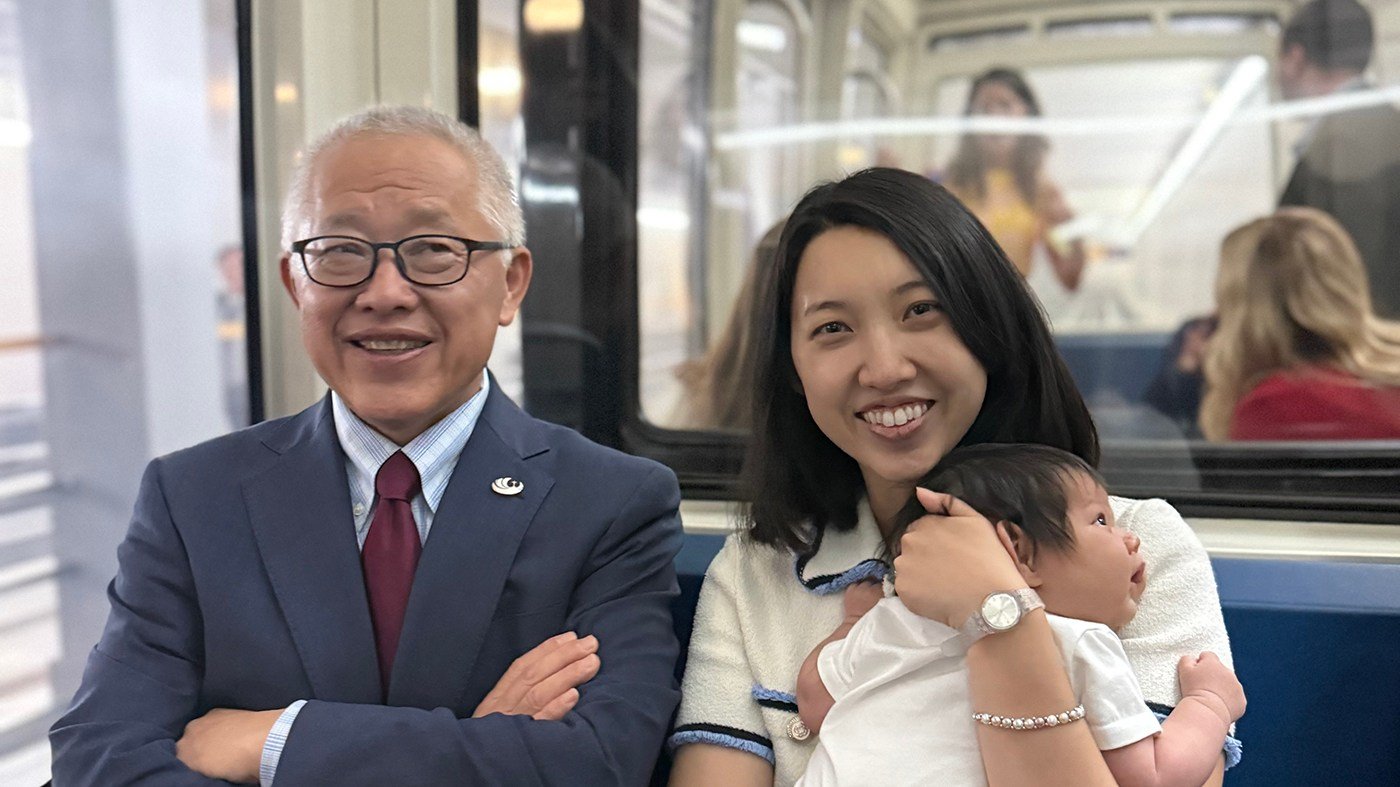
For seven agonizing months, Grace Jin Drexel lobbied relentlessly for her father's freedom from a Chinese prison. Then, in early May, a friend told her to check her phone—it was blowing up. President Trump, responding to a question from The Hill, had just said he would personally raise the case of Ezra Jin, the leader of the Zion Church in China arrested in October, during his upcoming meeting with Chinese President Xi Jinping.
“Huge, huge!” Drexel recalled in an interview in Washington, holding her 2-month-old son, named Ezra after her father. The president's commitment marked a turning point in her campaign. She quickly appeared on Fox News to thank Trump, a move she believes helped secure her father's release in July—just two months after Trump raised the issue directly with Xi in Beijing.
The episode has become a template for how to win Trump's intervention: bring the case to his attention personally, reinforce it through friendly media, and demonstrate that he can claim a concrete victory. Now, as Trump and Xi prepare to meet again in Washington on September 24, Drexel is urging the president to press for the release of at least eight other Zion Church leaders still held in China on religious freedom grounds.
“From my perspective, why not ask for the stars? If not me, who is going to be asking? There are so many people still detained in China,” she said.
A White House official told The Hill that Trump is “always concerned about Americans detained abroad,” adding that the president “raised Pastor Jin's detention directly with Xi Jinping” and “will always champion religious freedom around the world.” But whether that formula can be repeated remains uncertain, as the two leaders are set to tackle thornier issues like trade policy, artificial intelligence regulation, and the wars in Iran and Ukraine. Trump has also threatened Beijing with sanctions unless it cuts financial ties with Tehran.
Despite these complications, Drexel remains hopeful. “We're really grateful for what he did and showed us that our nation is great in taking care of and becoming a voice of the voiceless in this way,” she said.
Jin's release was extraordinary, but other cases have not fared as well. Trump also raised the case of Youlin Chen, a Chinese-born American seismologist jailed since 2024. The U.S. designated Chen as “wrongfully detained” in March but initially kept quiet, hoping quiet diplomacy would work. When Trump left China without Chen, the administration and Chen's family went public in July, but there is little sign Xi is bending. Instead, Beijing has detained more Americans, including academic Min Zin, arrested in June while traveling to a conference.
Still, families of other detainees have taken note of Trump's personal involvement. Rayhan Asat, a Uyghur human rights lawyer whose brother Ekpar disappeared in 2016 after returning to Xinjiang from a State Department exchange program, said the president's role in Jin's release shows that “sustained advocacy at a high level, it does work and diplomacy does work.” Asat has met with officials in the second Trump administration and remains optimistic, but stressed that Trump needs to keep raising cases to maintain momentum.
Dr. Gulshan Abbas, a Uyghur American activist's sister, has been imprisoned since 2018, days after her sister criticized China's treatment of Uyghurs at a Washington event—a pattern of transnational repression that families say is all too common. Drexel and her mother have experienced harassment and surveillance, including a chilling phishing call that transferred her mother to unknown parties.
As the summit approaches, Drexel and others hope Trump will again use his unique diplomatic style to free more Americans. For them, the president's willingness to intervene personally is a lifeline.