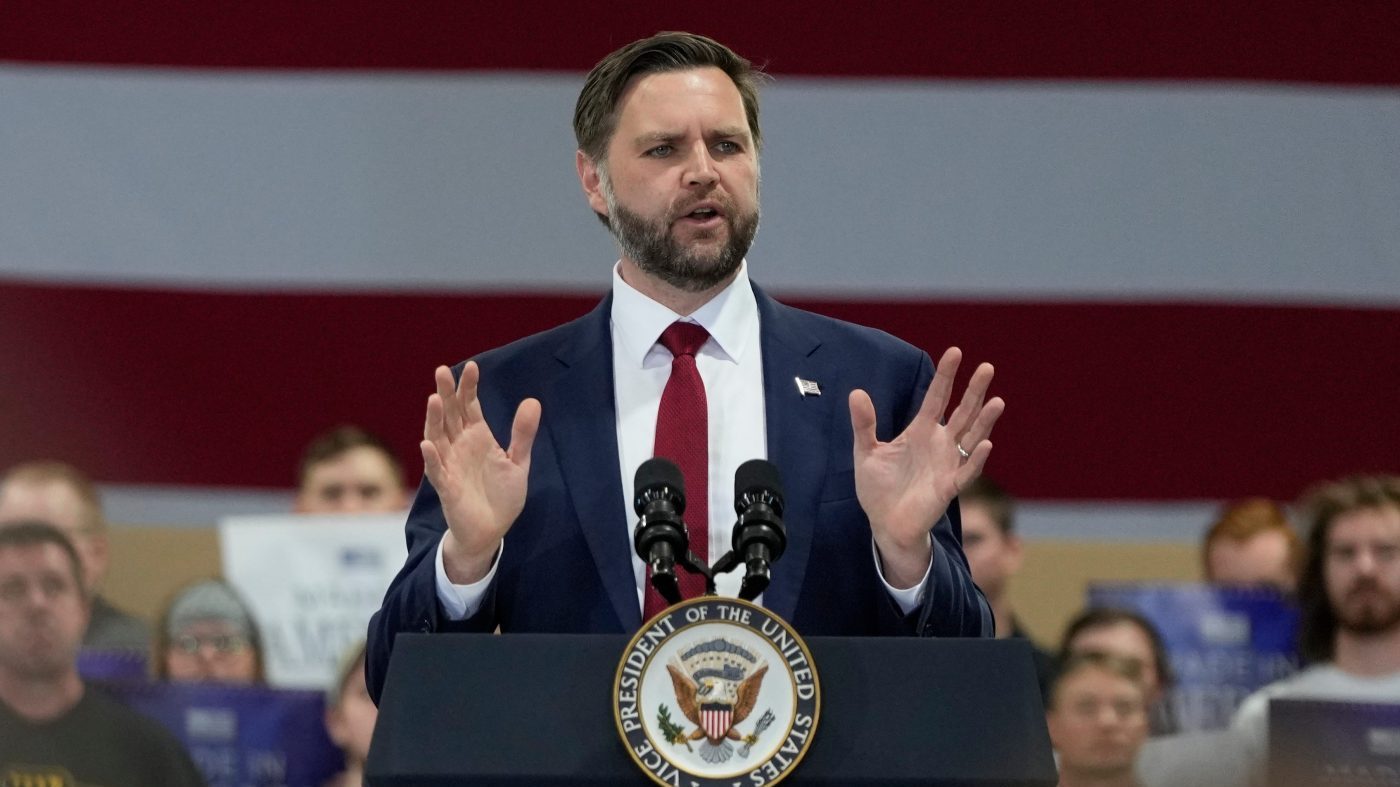
Vice President Vance is back in Iowa on Friday, delivering the Republican midterm message to a state where the party's candidates are wrestling with internal divisions over trade and foreign policy just months before the November elections.
The stop in Council Bluffs marks Vance's second visit to the Hawkeye State this cycle, part of a broader GOP push to hold its narrow majorities in both chambers of Congress. He is expected to be joined by Republican gubernatorial nominee Zach Lahn, who is running in a race that has tightened in recent weeks as Midwest races tighten.
But notably absent from the event is Senate nominee Rep. Ashley Hinson, who is vying to replace retiring Sen. Joni Ernst. Hinson has publicly distanced herself from the Trump administration on two fronts: the president's controversial beef import plan and the White House's handling of the escalating conflict with Iran.
Her decision to skip the rally underscores a broader unease among Iowa Republicans, some of whom have questioned the administration's war strategy as costs mount. The Iran engagement has become a flashpoint in the campaign, with Democrats warning that Trump's second term has reversed post-9/11 security reforms and accusing the president of recklessness.
Vance's visit is designed to project party unity, but the split over Hinson's absence tells a different story. Political analysts say the GOP's ability to keep control of the House and Senate may hinge on how well it navigates these internal fractures, especially in swing states like Iowa.
The event in Council Bluffs is scheduled to begin at 1 p.m. EDT, with Vance expected to hammer home the administration's economic and immigration record while urging Republicans to turn out in force. However, the shadow of the Iran war and the beef import dispute looms large, and some voters are looking for candidates who will stand up to the White House when necessary.
Hinson's break with Trump on the beef plan—a proposal that would allow cheaper imported beef to flood the U.S. market—has resonated with Iowa's cattle farmers, a key constituency. Her stance on Iran, where she has joined other Republicans in questioning the administration's strategy, reflects a growing unease within the party about the costs of the conflict.
As Vance takes the stage, the message from national Republicans is one of confidence. But the reality on the ground in Iowa is more complicated, with candidates having to balance loyalty to the president with the concerns of their constituents. The outcome in November may well depend on how they strike that balance.