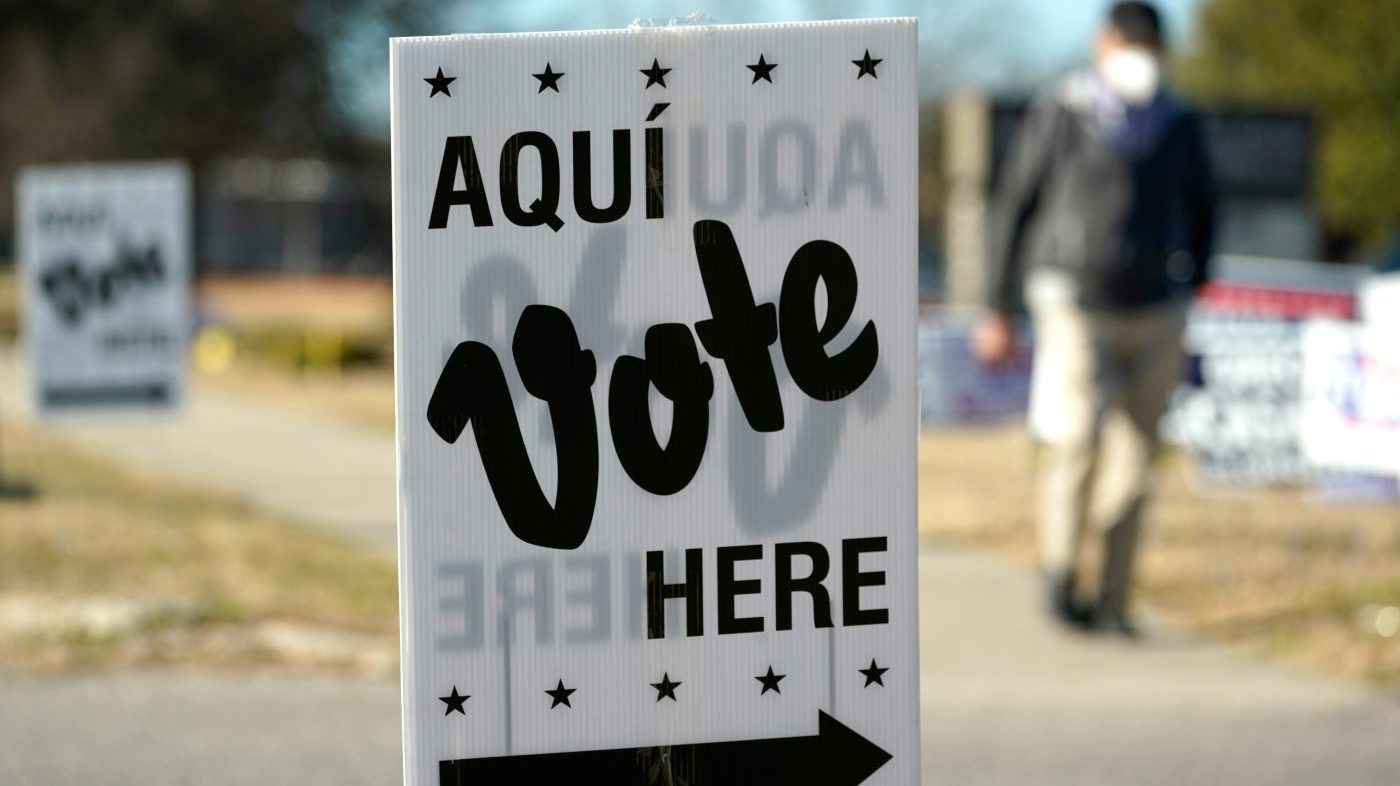
With early voting set to begin in Texas next week, the civic engagement group Voto Latino has announced a new six-figure investment aimed at mobilizing Latino voters across the state. The organization revealed Friday that it is putting more than $500,000 into Texas, a move that comes as the group prepares to host an event in the Rio Grande Valley with several Democratic candidates running in competitive midterm races.
Maria Teresa Kumar, Voto Latino's president and co-founder, framed the investment as a direct response to the growing political influence of Latino voters in Texas. “We are heading straight to the epicenter of the Latino vote to make sure every voter is ready to cast their ballot,” Kumar said in a statement. “Latinos are on the brink of changing the political landscape of Texas and the nation.”
The group's Oct. 25 event will feature three Democrats locked in tight contests: Gina Hinojosa, who is challenging Republican Gov. Greg Abbott; James Talarico, running against state Attorney General Ken Paxton; and Bobby Pulido, a Latin Grammy-winning singer from the Rio Grande Valley who is competing for the 15th Congressional District against GOP Rep. Monica De La Cruz.
Hinojosa, who has been campaigning on a platform of economic fairness and public investment, said the Rio Grande Valley is the ideal venue to close out her run. “For too long, Texans have been paying more and getting less under Greg Abbott,” she said. “I’m proud to be joining Voto Latino, making sure every family in the Valley has the information and the power to make their voice heard from now until Election Day.” Her campaign has previously highlighted Abbott’s refusal to debate, including a stunt with an empty podium outside the governor’s mansion.
Talarico, a state representative known for his progressive stances and willingness to engage in unconventional political discourse, echoed the importance of voter engagement. “Latino families in Texas have always carried this state forward, and they should have leaders who listen and deliver,” he said. “Our democracy works best when every neighbor has a seat at the table, and I’m grateful to Voto Latino for bringing us together for these final days.” Talarico has also made headlines for his controversial theological comments and his recent solo CNN town hall after Paxton declined to participate.
Pulido, who has leveraged his music career to connect with voters, emphasized kitchen-table issues over partisan labels. “What I hear from families isn’t about left or right. They want good jobs, affordable health care, and schools that give their kids a real shot,” he said. “Our community has always shown up for one another, and I’m proud to be here with Voto Latino to make sure every voice in the Valley is heard.”
The investment arrives amid broader concerns about Republican support among Latino voters. President Trump, who carried Texas in 2024 with significant Latino backing, has seen his standing slip in recent polls, and he has repeatedly urged Americans to vote as if he were “on the ballot” in the upcoming midterms. Democrats see Texas as a potential pickup opportunity, particularly in districts with large Latino populations.
Voto Latino’s effort includes digital ads, on-the-ground organizing, and voter education initiatives, all designed to counter what the group describes as systemic barriers to Latino participation. The organization has targeted Texas as a key battleground, with Kumar calling it “ground zero for change.”
As early voting kicks off, the race in Texas remains fluid. The presence of high-profile candidates like Hinojosa, Talarico, and Pulido—along with significant outside spending—underscores the stakes in a state that has not elected a Democrat to statewide office in decades. Whether the Latino vote can tip the balance will be one of the key questions of the 2026 midterms.