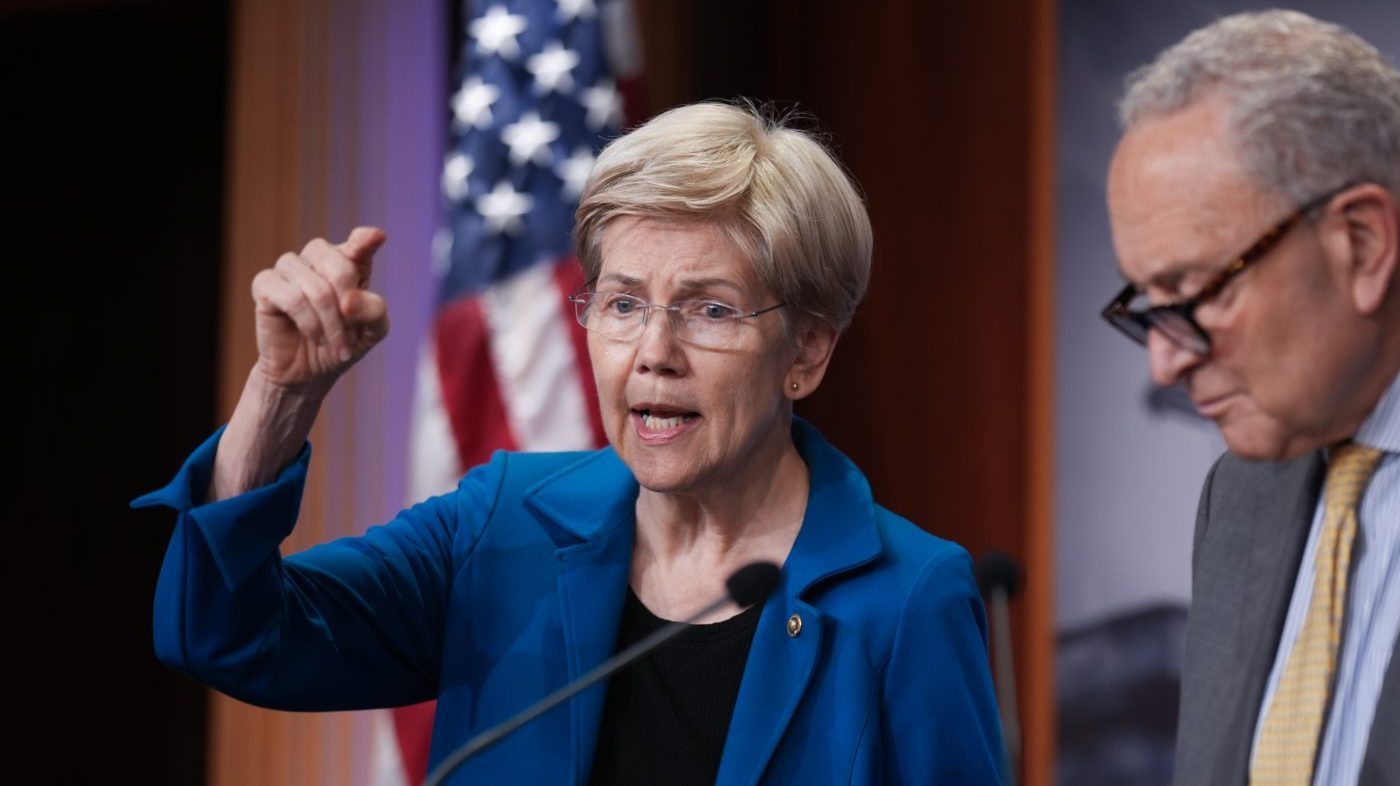
Sen. Elizabeth Warren (D-Mass.) issued a sharp warning Sunday about the proposed merger between food distributors Sysco and Restaurant Depot, saying the deal could make dining out more expensive for American families and squeeze independent restaurants.
“Watch out: going out to eat at your favorite restaurant could become even more expensive,” Warren wrote on X. “The Trump administration might approve a merger between Sysco and Restaurant Depot — threatening higher supply costs for small businesses and higher prices for you.”
Warren, the top Democrat on the Senate Banking, Housing, and Urban Affairs Committee, is positioned to chair the panel if Democrats regain the Senate majority in November. Her comments align with her broader push for aggressive antitrust enforcement and consumer protection.
Sysco, a multinational food distributor, agreed in March to acquire Restaurant Depot, a supplier to independent food service operators. The all-cash-and-stock transaction is valued at $29.1 billion, with Restaurant Depot shareholders receiving $21.6 billion in cash and 91.5 million Sysco shares. The companies expect the deal to close by the third quarter of fiscal 2027.
Executives have touted the merger as a way to expand access to Sysco’s high-volume customers — including restaurants, hospitals, schools, and stadiums — while also serving Restaurant Depot’s independent operators. But critics, including Warren, argue the consolidation could reduce competition in the food distribution market, giving the combined entity outsized pricing power.
Under federal law, the Justice Department’s Antitrust Division and the Federal Trade Commission review mergers for potential antitrust violations. The Hill has reached out to both agencies for comment on their review of the deal.
Sysco CEO Kevin Hourican has insisted the company will not raise Restaurant Depot’s prices after the merger. “It would harm the Restaurant Depot business if we did that,” he said in an August statement. “We would lose share if we did that.” Hourican added that there is “no economic incentive” to increase prices.
Still, recent government data shows consumers are already feeling pressure at restaurants. The Bureau of Labor Statistics reported that prices for food away from home rose 0.2% from August to September and were up 3.5% year-over-year. By comparison, annual inflation for groceries was 1.8% over the same period.
Warren’s warning comes as the political debate over corporate consolidation intensifies, with some lawmakers urging regulators to block or condition large mergers that could harm consumers. The outcome of the antitrust review could have broader implications for the food service industry and for Democratic Senate wins in 2026 that could reshape the political landscape.