Military Family Faces Separation After Base Detention
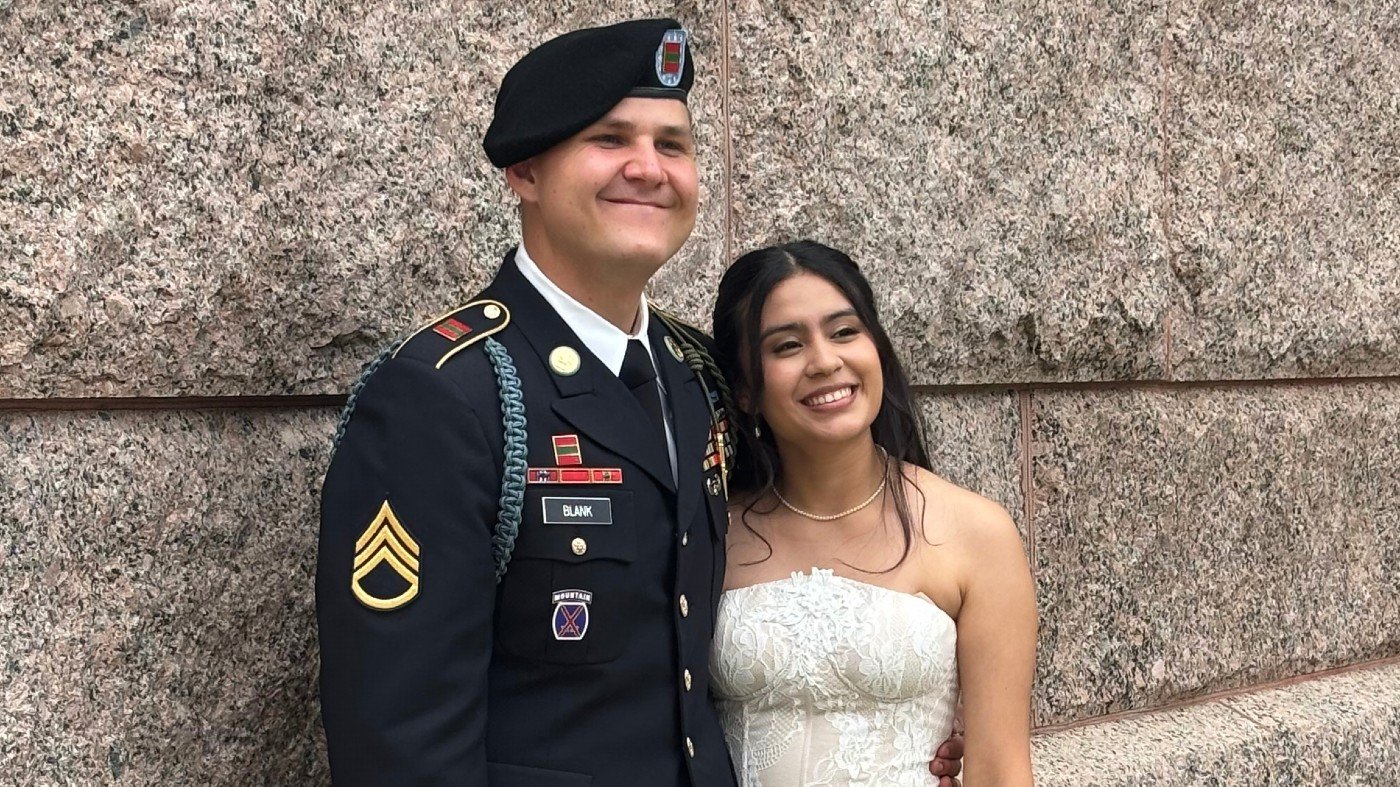
A U.S. Army staff sergeant stationed at Fort Polk, Louisiana, is engaged in a urgent legal and political battle to prevent Immigration and Customs Enforcement from deporting his wife. The woman, Annie Ramos, was taken into custody last Thursday during what was supposed to be a routine appointment to secure her military spouse credentials at the base where they intended to live.
Staff Sgt. Matthew Blank and Ramos, who married in March, had recently arrived at Fort Polk. Blank is scheduled to begin training for a deployment at the end of April, and the couple was in the process of applying for Ramos's lawful permanent resident status. Ramos, who was born in Honduras, entered the United States as a young child in 2005 and lacks legal immigration status.

‘She Got Ripped Away From Me’
According to Blank, the couple arrived for a 2 p.m. appointment, presenting their marriage certificate, his military identification, his birth certificate, and her Honduran passport. A base attendant reviewed the documents and inquired about Ramos's visa or green card. "Our plan was to drive over, bring her to the office to get her military ID and activate her military spouse benefits," Blank told The New York Times. "She was going to move in after the Easter weekend. Instead, she got ripped away from me."
Blank described his wife as tearful but respectful as officials made a series of phone calls. They were eventually informed by an officer from the base's criminal investigation division that Ramos would be detained. She was handcuffed and taken to what appeared to be an interrogation room. Blank's mother, Jen Rickling, who was present, said she pleaded with the officers. "I begged them not to take her," she said. "They said the higher-ups made them do it."
Ramos had applied for the Deferred Action for Childhood Arrivals program, but her application was stalled amid ongoing legal challenges to the policy. She is now held at a detention center in Basile, Louisiana. In a phone call with the Times, Ramos stated, "I grew up here like any American."
DHS Defends Action, Citing ‘Rule of Law’
A spokesperson for the Department of Homeland Security defended the detention, stating Ramos had been issued a final order of removal by a judge. "The administration is not going to ignore the rule of law," the spokesperson said, adding that DHS encourages undocumented individuals to depart voluntarily and that "being in detention is a choice." This stance reflects the administration's broader controversial immigration enforcement policies.
Staff Sgt. Blank has vowed to continue the fight. "I will free my wife and fight with everything I have," he said. "I am going to be with her and serve my country." The case highlights tensions between military service and immigration enforcement, occurring against a backdrop of other contentious debates regarding military leadership and policy.
The incident raises significant questions about protocols on military installations and the treatment of military families. It also underscores the complex legal landscape for immigrants married to U.S. service members, a situation that can become entangled in wider geopolitical tensions, such as those discussed in analyses of shifting military advantages in ongoing conflicts.
As Blank prepares for potential deployment, his personal crisis illustrates a collision between personal commitment, national service, and federal immigration policy, with his wife's future in the country now dependent on a fraught legal and political process.