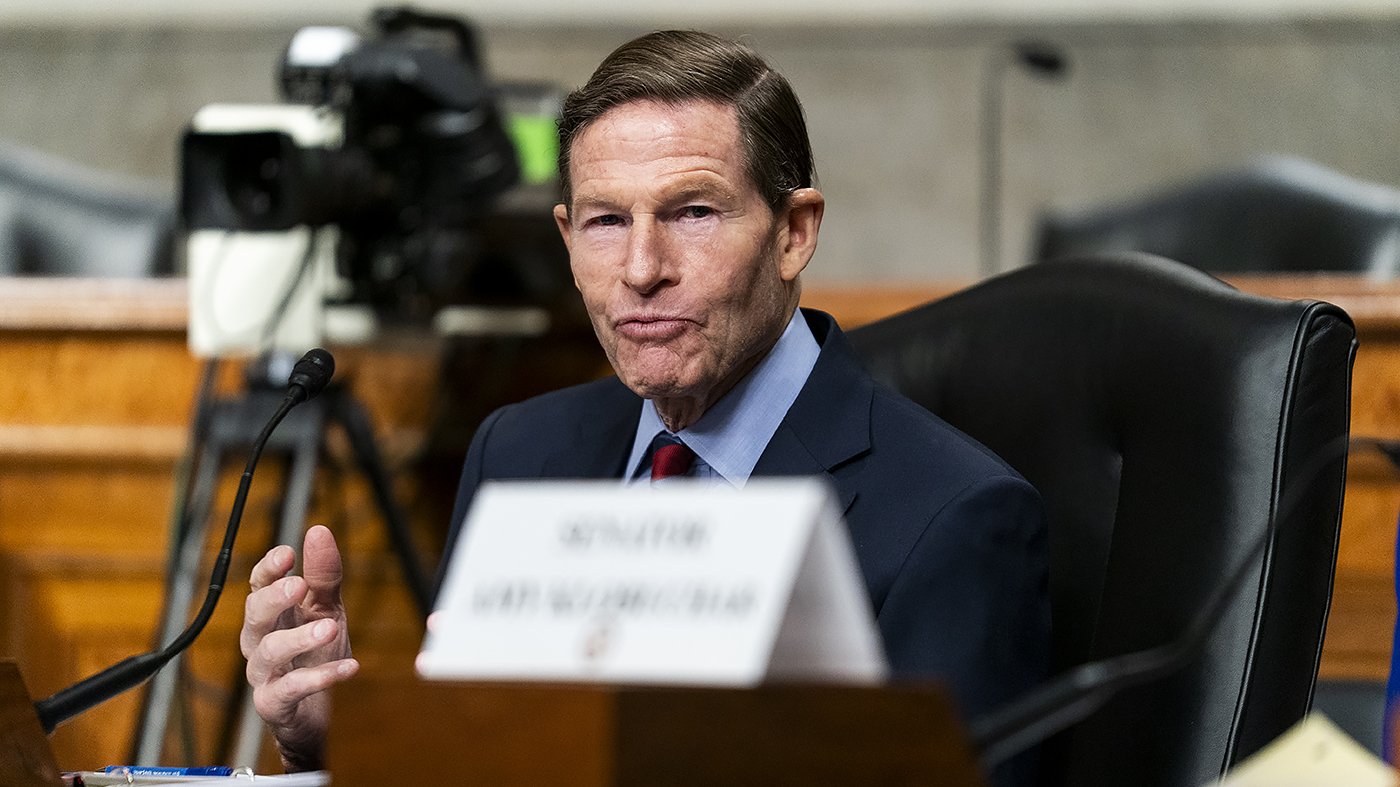
Senator Richard Blumenthal, a Connecticut Democrat and member of the Senate Armed Services Committee, issued a stark warning Tuesday that President Trump's reliance on military threats against Iran is strategically insufficient. Blumenthal argued that aerial bombardment cannot achieve the administration's stated goals, whether regime change, nuclear containment, or fostering internal political shifts.
"The hard truth is that bombing alone can't accomplish any of President Trump's objectives here," Blumenthal told CNN. He challenged assertions of total U.S. air dominance, noting that "Iranians still have the capacity to attack our aircraft" and retain operational drones and missiles. "We have not destroyed completely their capacity," he added.
Trump's Dire Ultimatum
Blumenthal's critique came as Trump issued a dramatic ultimatum to Tehran, warning on Truth Social that "a whole civilization will die tonight" unless "something revolutionarily wonderful" occurs. The president set an 8 p.m. EDT deadline tied to Iran reopening the Strait of Hormuz, a critical global oil transit route, or facing strikes on power plants and infrastructure.
Trump's message contained contradictory tones, simultaneously threatening annihilation while suggesting potential for positive transformation under "Complete and Total Regime Change." This escalation follows weeks of heightened rhetoric since conflict with Iran entered its second month, with Trump repeatedly threatening infrastructure destruction.
Iranian Response and Domestic Criticism
Iranian authorities reportedly urged citizens Tuesday to form human chains around power facilities as Trump's deadline approached. The administration's approach has drawn sharp rebukes from congressional Democrats, with House Minority Leader Hakeem Jeffries demanding Republicans halt what he called strategic recklessness.
Some Republicans have defended the president's posture, arguing it targets infrastructure rather than civilian populations. However, other GOP voices have expressed concern, including Senator Ron Johnson, who has publicly urged restraint regarding civilian infrastructure.
Broader Political Repercussions
The escalating situation has triggered extraordinary political reactions, including calls from Representative Marjorie Taylor Greene for Cabinet members to invoke the 25th Amendment over what she termed dangerous rhetoric. This reflects deepening divisions within the Republican coalition as personal loyalty to Trump increasingly supersedes traditional party affiliation in some quarters.
Blumenthal's assessment underscores fundamental questions about the administration's strategic planning. His argument suggests that even successful strikes would fail to address Iran's underlying military capabilities or achieve political transformation, potentially leaving the U.S. entangled in prolonged conflict without clear objectives.
The White House had not responded to requests for comment at the time of reporting. As the deadline passed, attention turned to whether Trump would follow through on his threats or seek diplomatic off-ramps, with regional stability and global energy markets hanging in the balance.