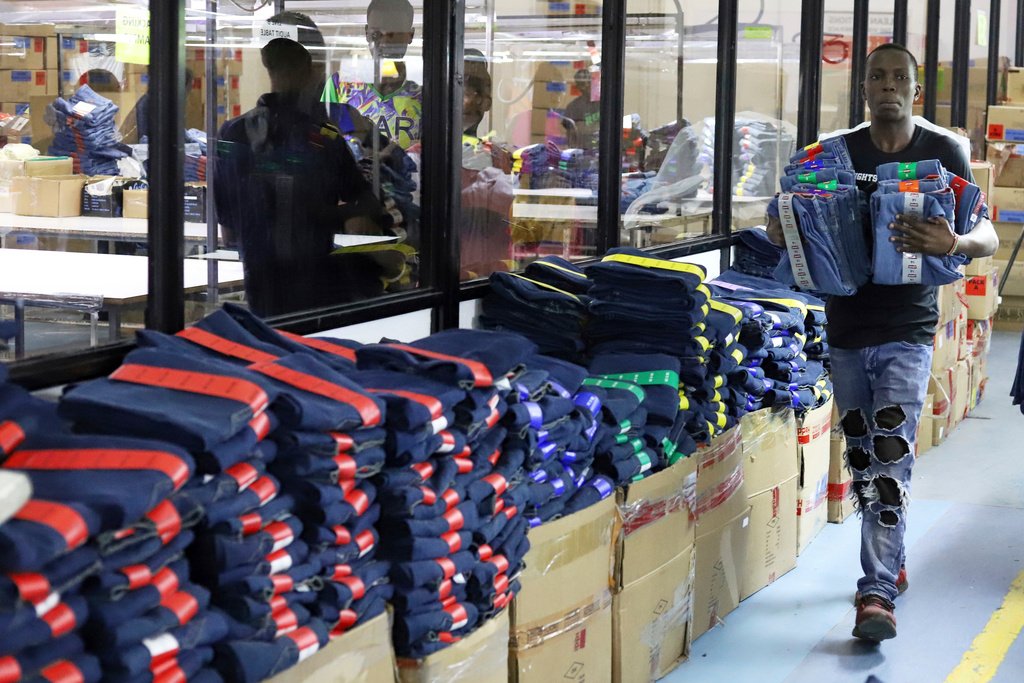
In a stark demonstration of competing economic strategies, China has permanently expanded duty-free access for imports from 53 African nations, while the United States has extended its primary African trade program for only one year. The move creates a clear divergence in approach: Beijing offers long-term commercial certainty, while Washington injects fresh uncertainty into its economic relationship with the continent.
A Continent of Strategic Importance
The economic stakes are substantial. Africa represents the world's second-fastest growing region, home to 12 of the 20 fastest-growing economies globally. Its population is projected to reach 2.5 billion by 2050, with total business and consumer spending expected to hit $6.7 trillion by 2030. The continent is increasingly vital as a source of production, consumption, energy, and critical minerals. For global powers, being sidelined from these opportunities carries significant strategic costs.
China has aggressively seized this initiative, establishing itself as Africa's dominant trading partner. Chinese exports to Africa surged by nearly 26 percent in 2025, reaching $225 billion. The trade relationship, however, remains largely imbalanced: Africa primarily exports raw materials like crude oil and minerals to China, while importing manufactured goods such as machinery, electronics, and vehicles, resulting in a persistent trade deficit for African nations.
American Policy Creates Uncertainty
The United States' primary vehicle for African trade, the African Growth Opportunity Act (AGOA), was enacted in 2000 to provide duty-free access for 1,800 products from eligible countries. The program has supported significant growth, with American exports to Africa quadrupling since its inception, supporting approximately 450,000 U.S. jobs and generating $1 billion annually in consumer benefits.
Yet Congress allowed AGOA to expire last September before passing a temporary extension signed by President Trump just weeks ago. The one-year reprieve has muted any celebration, leaving both American and African businesses uncertain about future market access. This uncertainty is compounded by the new 15-percent global tariff imposed by the administration, which means African exports to the U.S. currently do not enjoy duty-free treatment despite the AGOA extension.
The contrast with China's approach could not be more pronounced. Days after the U.S. temporary extension, Beijing announced its permanent expansion of duty-free treatment from 33 to 53 African countries—with no expiration date. This creates a powerful signal about which economic partner offers greater stability.
The Path Forward for U.S. Engagement
Analysts argue the United States has an opportunity to offer Africa a more balanced partnership than China's resource-focused model, one that supports African aspirations for value-added growth rather than perpetual commodity dependence. This would require not just extending AGOA but expanding its product coverage, adding agreements on critical minerals, digital trade, and services, and simplifying rules of origin to enhance accessibility.
President Trump has stated he wants more benefits from AGOA, a goal experts endorse. However, achieving those benefits requires long-term commitment. "If the U.S. wants to compete effectively with China in Africa," observers note, "it must offer what markets value most: stability." A permanent or long-term extension would signal America's intention to be a reliable economic partner rather than a fair-weather one.
This trade policy uncertainty occurs alongside other international pressures on the administration, including mounting deadlines in U.S.-Iran tensions and growing concerns about strategic dependencies in critical sectors like pharmaceuticals. The administration's approach to AGOA reflects broader patterns in its foreign economic policy, where short-term maneuvers sometimes undermine long-term strategic positioning.
The coming year will test whether Washington can match Beijing's long-game approach in a continent whose economic and demographic weight will only increase. For African nations choosing economic partners, the contrast between a one-year extension and permanent access may prove decisive.