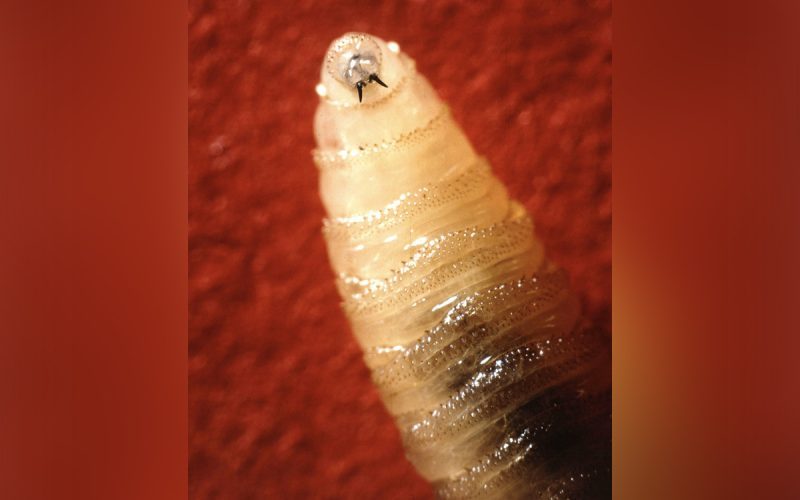
The U.S. Department of Agriculture has confirmed the first known case of New World screwworm in American wildlife, detected in an elk from a Texas game ranch. The announcement marks a significant escalation in the federal response to an invasive parasite that has been spreading northward from Central America.
The USDA's Animal and Plant Health Inspection Service said Tuesday that the screwworm was found in an elk harvested by a hunter on a private game ranch. The agency did not disclose the exact location or the date of the harvest, but officials said the case has triggered heightened surveillance and containment protocols in the region.

New World screwworm is a parasitic fly whose larvae infest open wounds of warm-blooded animals, feeding on living tissue. If left untreated, infestations can be fatal. The pest was eradicated from the United States in the 1960s through a decades-long sterile insect technique program, but it has re-emerged in recent years in Mexico and Central America, with sporadic detections in livestock near the U.S.-Mexico border.
This is the first time the parasite has been confirmed in wild U.S. animals, a development that Texas officials and agricultural experts have been bracing for as the fly's range expands. The finding raises concerns not only for wildlife but also for the state's massive livestock industry, which generates billions of dollars annually.
Federal and state agencies are now working to assess the scope of the infestation. The USDA has increased trap placements and is coordinating with Texas wildlife and agricultural authorities to monitor the spread. The agency is also reminding hunters and ranchers to report any suspicious wounds or maggot infestations in animals.
"This detection underscores the importance of vigilance at the border and beyond," said a USDA spokesperson, who emphasized that the agency's top priority is to prevent the screwworm from establishing a permanent foothold in the U.S. "We are deploying all available tools, including the sterile insect technique, to contain this threat."
The news comes as Texas politics are already focused on border security and agricultural resilience. Some lawmakers have called for increased funding for border inspection and pest control programs, arguing that the screwworm is another consequence of inadequate border enforcement.
Wildlife biologists note that the elk case could be an isolated incident or the tip of a larger problem. The screwworm's presence in wildlife complicates eradication efforts, as wild animals cannot be treated as easily as livestock. The USDA is urging hunters to inspect harvested animals for signs of infestation and to report any findings to state wildlife agencies.
For now, the USDA has not imposed any quarantine or movement restrictions, but officials said they are prepared to take such measures if additional cases emerge. The agency is also working with Mexico and Central American countries to strengthen regional control programs, but the spread of the parasite has outpaced those efforts in recent years.
The detection has renewed attention on the broader challenges facing rural and agricultural communities, which are already dealing with drought, inflation, and trade uncertainties. Ranchers are being advised to maintain strict biosecurity measures, including regular inspection of animals and prompt treatment of any wounds.
Federal officials have stressed that the public health risk to humans is minimal, as the screwworm rarely infests people. However, the economic and ecological stakes are high. The USDA's sterile insect technique program, which once successfully eradicated the pest, remains the primary defense, but its effectiveness depends on early detection and rapid response.
As the investigation continues, Texas game ranch operators and hunters are being asked to cooperate with federal and state authorities. The USDA has set up a hotline for reporting suspected cases, and officials say they are committed to keeping the public informed as more information becomes available.