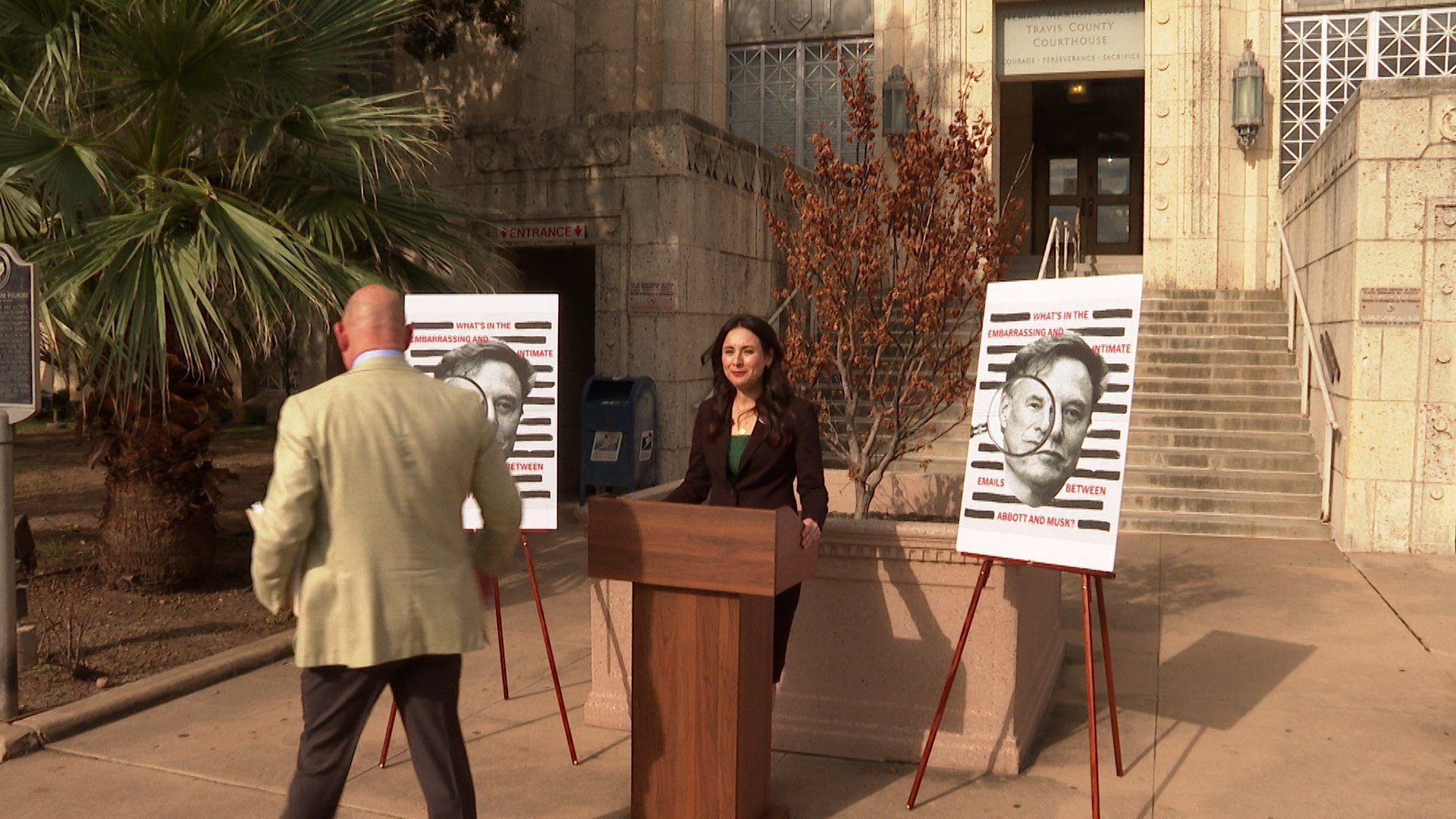
State Representative Gina Hinojosa, the Democratic nominee for Texas governor, has filed a lawsuit against Governor Greg Abbott to force the release of more than a thousand pages of communications between Abbott's office and representatives of Elon Musk. The documents were previously withheld after being deemed confidential due to their “embarrassing” and “intimate” nature.
Speaking outside the Travis County courthouse on Monday, Hinojosa dismissed any suggestion of a personal relationship between Abbott and Musk. “Nobody here is accusing Greg Abbott of having a torrid love affair with Elon Musk,” she said. “What this is about is we have the world's only trillionaire getting massive tax breaks from this governor after giving him over $500,000 in campaign contributions.”
The lawsuit stems from a public records request filed by The Texas Newsroom in 2025. The governor's office initially objected to releasing the communications, citing “the state's competitive business interests, attorney-client privilege, and deliberative-process privilege,” according to the filing. In August 2025, Texas Attorney General Ken Paxton upheld those objections but ordered partial release. The governor's office subsequently produced 1,374 pages, but only around 200 pages were unredacted.
On September 29, Hinojosa wrote to Abbott's office, invoking a Texas law that allows legislators to review confidential documents for “legislative purposes.” She offered to sign a confidentiality agreement that would bar her from publicly disclosing the contents. Her letter argued that “the people of Texas and the people of House District 49 are concerned over the growing power of tech giants in Texas regarding our tax dollars, resources, and data,” and stressed that “transparency is essential for accountability.”
According to the lawsuit, Abbott's office denied her request. Hinojosa is now seeking a temporary restraining order to prevent the governor's office from blocking her access to the documents. “People have a right to know, and I, as their representative, have the right to see them,” she said.
The case highlights the deepening ties between Musk's enterprises and the Texas government. Musk's companies—including SpaceX, Starlink, Tesla, X, The Boring Company, Neuralink, and xAI—have received substantial public incentives. Hinojosa's filing lists a $1.7 billion school property tax incentive for Musk's Terafab project through the state's Jobs, Energy, Technology and Innovation program, a $17.3 million grant for SpaceX in Bastrop in March 2025, and a $7.5 million grant from the Texas Space Commission for SpaceX's Starbase operations in Brownsville in February 2025.
Campaign finance records from the Texas Ethics Commission show Musk contributed $500,000 to Abbott's campaign and an additional $250,000 to Texas House Speaker Dustin Burrows in 2026. Those contributions have fueled criticism that Abbott is too cozy with tech billionaires, a theme Hinojosa has hammered on the campaign trail. The dispute also echoes broader concerns about government transparency and accountability.
Legal experts note that the lawsuit could set a precedent for legislative oversight of executive communications. If Hinojosa succeeds, she would gain access to the redacted material, albeit under a confidentiality order. Her campaign has framed the fight as a test of whether Texas elected officials can be held accountable when corporate interests intersect with public policy.
The governor's office has not yet responded to requests for comment. The case is expected to move quickly, with a hearing on the temporary restraining order likely in the coming weeks. For now, the sealed communications remain out of public view, but the legal battle over them is now squarely in the open.