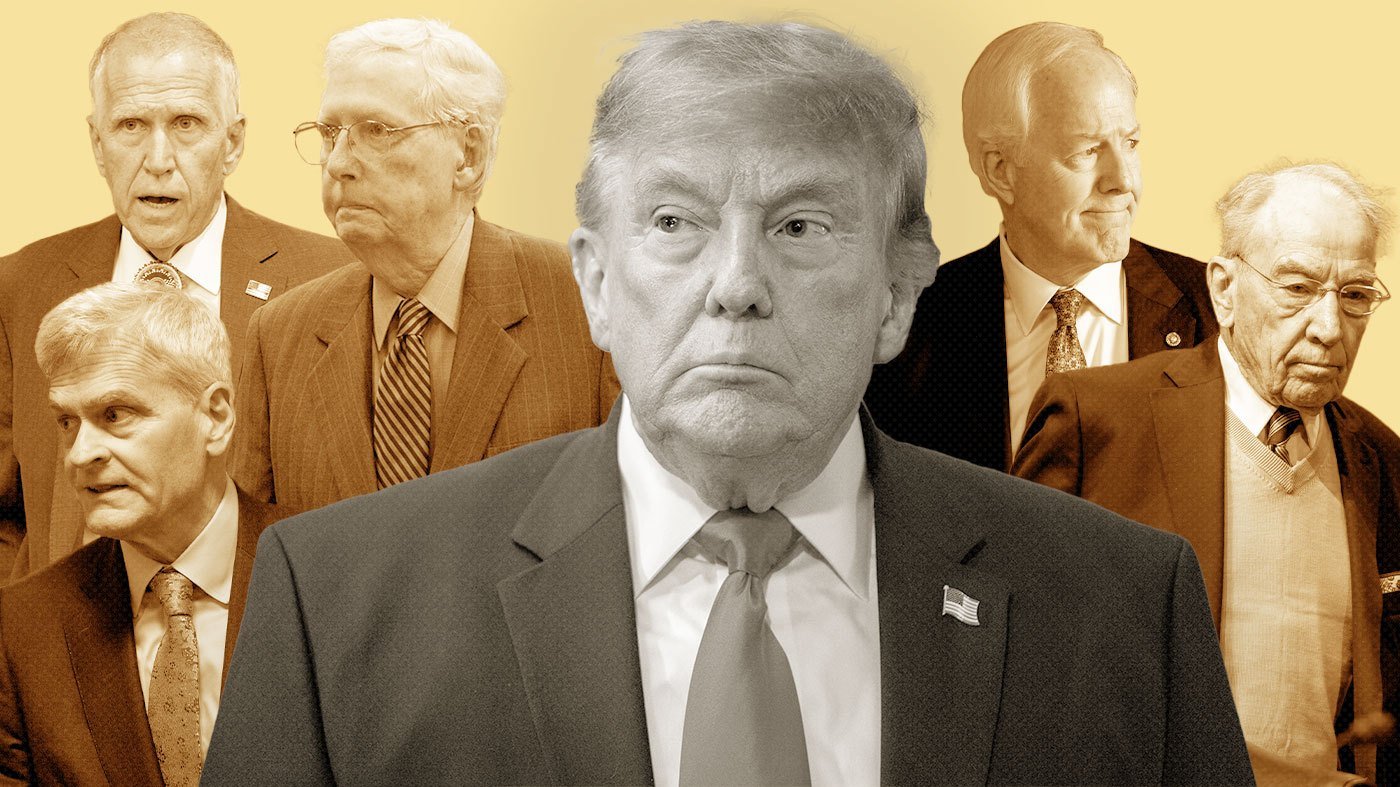
For years, the conventional wisdom on Capitol Hill has been that Republican senators privately cringe at many of President Trump's policies and appointments but dare not oppose him for fear of primary voters. Yet a small group of senators now face no such electoral threat—and their behavior suggests the real obstacle to resistance runs deeper than political survival.
Sen. Mitch McConnell (R-Ky.) retires in January. Sens. Bill Cassidy (R-La.) and John Cornyn (R-Texas) both lost primaries to Trump-backed challengers and won't seek reelection. Sen. Thom Tillis (R-N.C.) chose not to run again after Trump threatened to back a primary opponent. Together, they've been dubbed the “Wounded Bear” or YOLO caucus—lawmakers with nothing left to lose. But despite a new willingness to gripe about Trump's nominees and policies, they almost never cast a decisive “no” vote.
The confirmation of Todd Blanche as attorney general laid the pattern bare. Cornyn and Tillis demanded a written commitment to scrap Trump's proposed $1.8 billion anti-weaponization fund—a pot widely criticized as a slush fund for Trump allies, including possibly January 6 rioters. Cornyn called it “politically tone-deaf” and a “payout pot for punks.” Tillis dubbed it “stupid on stilts,” and McConnell called it “utterly stupid, morally wrong.” Cassidy accused Blanche of showing “poor judgment” and questioned his independence, worrying about the Justice Department pursuing political enemies.
Yet when the vote came, all four backed Blanche. Democrats and Republicans Susan Collins and Lisa Murkowski opposed him, but one more “no” would have sunk the nomination. McConnell, hospitalized, stayed silent. Cornyn and Tillis voted yes after Blanche ordered the fund rescinded—an order Trump could easily reverse. Cassidy, holding back tears, cast the deciding vote, arguing an acting attorney general might be worse.
McConnell has voted against some of Trump's most controversial picks—Defense Secretary Pete Hegseth, intelligence chief Tulsi Gabbard, and HHS Secretary Robert F. Kennedy Jr.—as well as Trump's tariff “emergencies.” But his votes never changed outcomes, and he rarely lobbied colleagues to join him.
Cornyn, after losing his primary, briefly blocked two ambassadorial nominees but let them advance after receiving “assurances” on AIDS funding. Tillis delayed—but didn't stop—Ed Martin's nomination as U.S. attorney for D.C. over his January 6 comments, and later stalled Fed chair nominee Kevin Warsh until the Justice Department dropped its investigation of Jerome Powell.
Cassidy, a physician, helped block Casey Means for surgeon general and declined to schedule hearings for FDA nominee Heidi Overton, calling her support for Trump's vaccine executive order “almost disqualifying.” He joined Democrats in trying to block Bill Pulte as acting DNI, but the effort failed in a 49-49 tie.
Yet Cassidy folded on Blanche, and after initially backing a war powers resolution against military action in Iran, he backed down following a heated briefing with Trump. The timid Republican votes for Blanche illustrate a broader capitulation. Even with nothing to lose, these senators seem unwilling to defend the Senate's institutional role or challenge a president who has shown eroding approval among his own base.
The result, as critics note, is that the constitutional checks the Senate is supposed to provide have become optional. As senators demand action on military conditions and watchdog probes go nowhere, the pattern holds: loud objections, quiet votes.