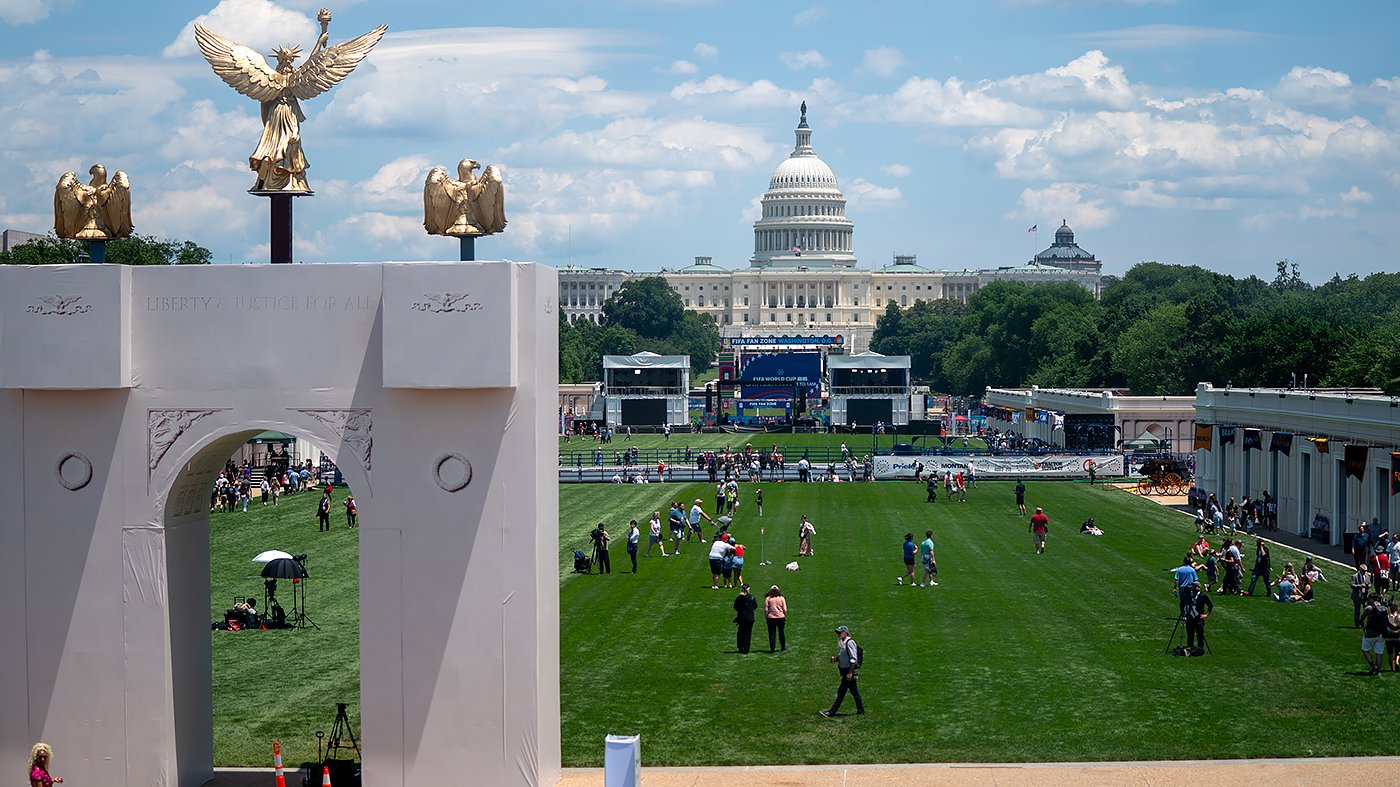
Pennsylvania has become the eighth Democratic-led state to decline participation in the Great American State Fair, a 16-day event on the National Mall organized by a Trump administration commission to mark the nation's 250th anniversary. State officials cited prohibitive costs for taxpayers and an inability to secure private sponsorship as the reasons for the decision, but also pointed to the event's increasingly partisan character under President Trump.
A spokesperson for Pennsylvania's Department of Community and Economic Development confirmed the state's withdrawal to The Hill on Friday, noting that despite efforts to recruit businesses through the Pennsylvania Chamber of Commerce, no companies were willing to sponsor a booth. Governor Josh Shapiro told The New Republic that the president's heavy involvement made patriotism feel "partisan and personal," and that the fair had become a vehicle for Trump's political messaging rather than a bipartisan celebration.
Trump kicked off the fair with a speech on the National Mall and is planning a rally on July 4th, which he promoted on Truth Social as "the most spectacular TRUMP RALLY of them all." This blending of official anniversary events with campaign-style appearances has irked Democratic governors and deepened concerns about the fair's neutrality. The organizing group, Freedom 250, insists it is nonpartisan and says all states and territories were invited. Spokesperson Rachel Reisner told The Hill the group's "track record of collaboration across red, blue, and purple states speaks for itself."
Yet the optics tell a different story. Pennsylvania, Massachusetts, North Carolina, Washington, Illinois, Oregon, Connecticut, and Maine have all opted out, most citing budget constraints or political discomfort. The fair's hefty price tag—states were asked to cover booth costs and find sponsors—was a barrier for many. Shapiro noted that businesses themselves were reluctant to associate with an event so closely tied to the president.
The boycott fits a broader pattern of Democratic resistance to Trump-era commemorations. Earlier this year, a Senate demand to preserve 2026 election records reflected similar distrust of the administration's handling of impartial institutions. Meanwhile, the political climate remains charged, with progressive primary wins in New York and elsewhere reshaping the Democratic landscape—a trend that has alarmed Trump and his allies.
Supporters of the fair argue that critics are overreacting. Freedom 250 officials maintain that the event is designed to showcase each state's history, tourism, and traditions, and that the president's involvement is natural given the milestone anniversary. But for many Democrats, the fair has become a symbol of how Trump has co-opted national celebrations for political gain.
The controversy also echoes earlier fights over federal spending and partisan events. As the midterms approach, the divide over such commemorations is likely to widen. Pennsylvania's decision underscores a growing reluctance among blue states to participate in federal festivities they view as politicized—a sentiment that could affect future collaborations on infrastructure, disaster relief, and other joint efforts.
For now, the Great American State Fair will proceed without Pennsylvania and seven other states. Organizers say they will still have exhibits representing all 50 states and six territories, but the absence of official delegations from nearly a fifth of the country raises questions about the event's unifying ambitions. As Shapiro put it, "This president routinely makes patriotism partisan and personal—and it shouldn't be that way."