American political journalism is operating with a flawed navigation system. The traditional three-party framework—Democrats, Republicans, and independents—no longer accurately charts the political landscape, leading to unexpected electoral outcomes and a public that perceives media coverage as disconnected from reality.
The New Sorting Mechanism
The most significant fault line in contemporary American politics is not between the two major parties. It is between alignment with former President Donald Trump and opposition to him. This division transcends party registration and, on numerous critical issues, serves as a more precise predictor of voter attitudes than party affiliation alone.

Opposition to Trump now constitutes a broad coalition encompassing Democrats, independents, and a notable segment of Republicans. Concurrently, Trump-aligned voters form a distinct bloc whose policy preferences often depart from traditional conservative orthodoxy. In analytical terms, loyalty to Trump has become the primary variable for sorting the electorate, reducing party labels to a secondary—and frequently misleading—indicator.
Policy Realignments Expose the Divide
This realignment is starkly visible in foundational attitudes toward democratic institutions. Surveys from the Pew Research Center indicate that only about a quarter of Americans express confidence that Trump respects the nation's democratic values, with that confidence declining even among Republicans. Republicans who view Trump unfavorably align more closely with Democrats and independents in their support for democratic norms than with their pro-Trump party colleagues.
The segmentation repeats across policy domains typically framed as purely partisan. On climate and clean energy, polling shows a majority of Republicans support development when framed around innovation and energy independence, challenging the rigid left-right narrative. The true opposition often stems from perceptions of elite cultural signaling, not party identity.
Abortion policy further reveals the inadequacy of party-only analysis. Majorities across party lines, including 53% of Republicans, oppose banning FDA-approved medication abortion, according to the Public Religion Research Institute. Yet media narratives persistently describe the issue as a clean partisan split.
Trade policy underscores the shift. Once a Republican orthodoxy, support for free trade has been supplanted by tariffs as a signal of loyalty to Trump. While a 60% majority of Americans overall disapprove of recent tariff increases, about 7 in 10 Republicans approve, driven largely by Trump-aligned voters. This creates clear divisions, such as when Speaker Mike Johnson urges caution on aggressive foreign economic measures, highlighting tensions within the GOP coalition.
The Cost of Outdated Analysis
Relying on party affiliation as the dominant lens distorts political understanding. It exaggerates polarization, masks emerging cross-party coalitions, and misidentifies the true sources of policy disagreement. In market research, analysts would abandon a segmentation model that fails to predict outcomes. In politics, the model persists despite its flaws.
This does not render political parties irrelevant—they remain essential for elections and governance—but they no longer reliably proxy for belief systems. Treating them as such is convenient but inaccurate.
Improved coverage would segment within parties. For example, reporting on tariffs would distinguish between Trump-aligned Republicans who support them as nationalist loyalty signals, business-oriented Republicans who quietly oppose them, and Democrats who object on free-trade principles. This reveals a latent cross-party coalition that standard framing obscures. Similar dynamics are evident in national security debates, where senators like Lindsey Graham warn of escalating military action while others urge restraint, creating fractures that party labels alone cannot explain.
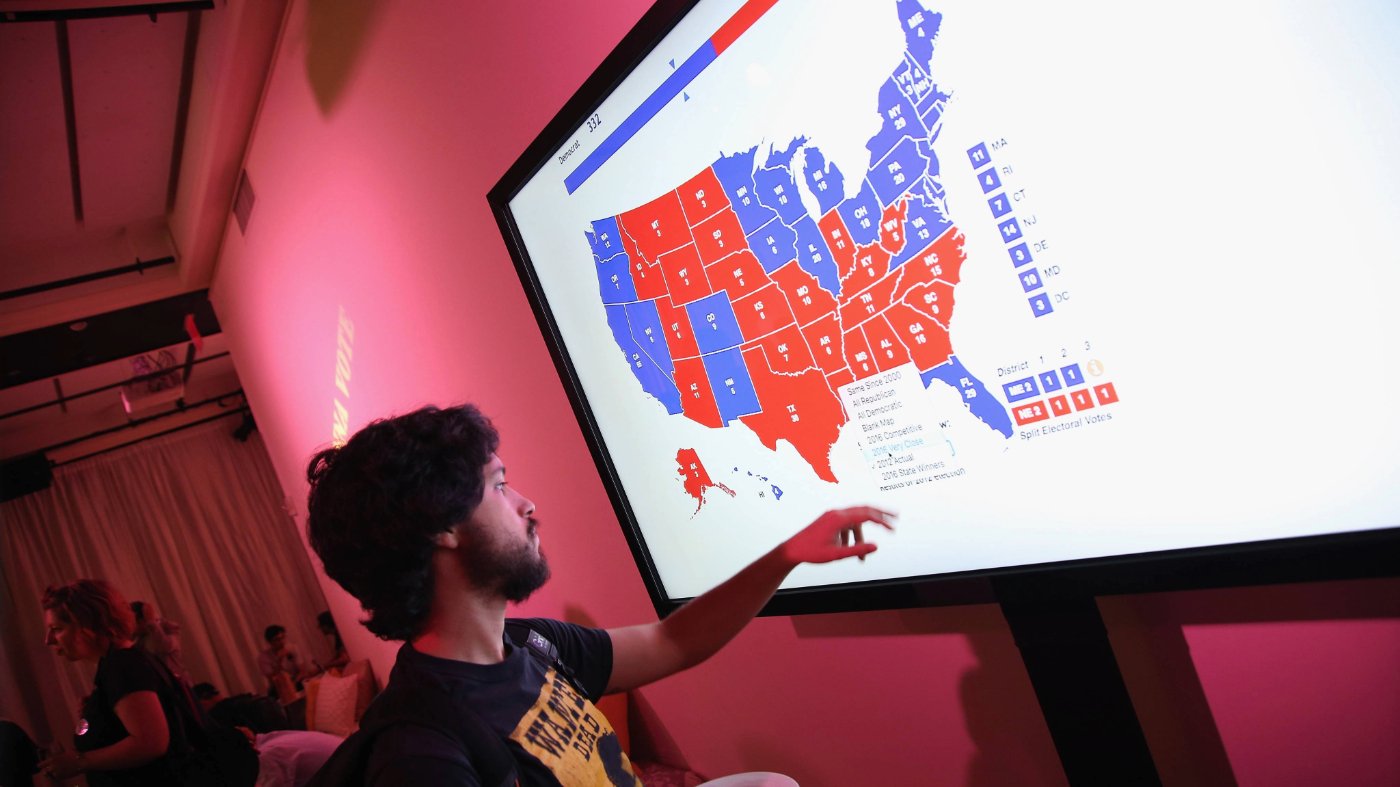
The United States has entered a new political reality. Continuing to analyze it through outdated categories offers familiarity, not accuracy. As in other fields, when segmentation changes, analysis must adapt. The map must be redrawn.