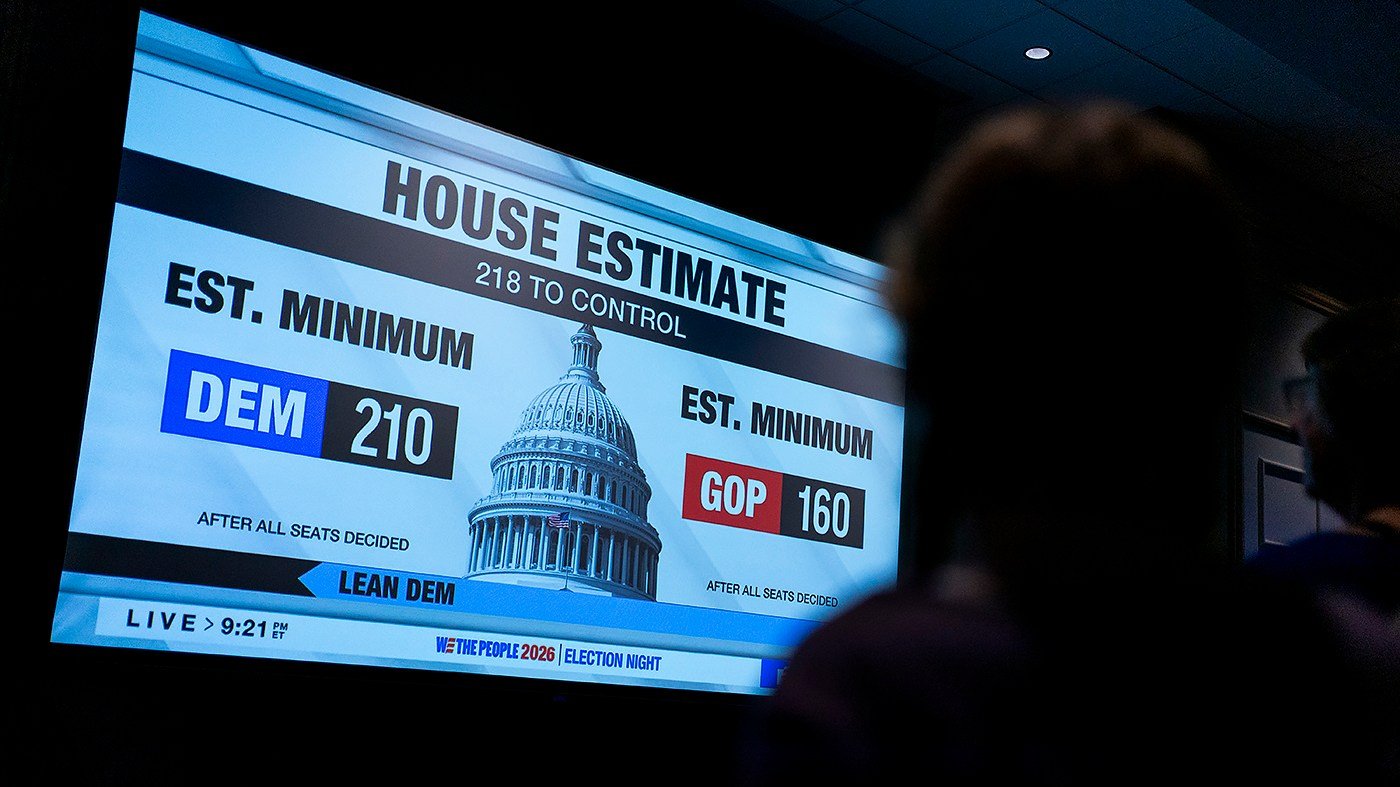
Tuesday's midterm elections delivered a sweeping Democratic victory, but for those watching prediction markets, the outcome was no surprise. Platforms like Kalshi and Polymarket, which allow users to wager on political events, had already signaled Democratic dominance hours before the first polls closed.
The accuracy of these platforms was striking. Kalshi reported that its markets correctly predicted 98 percent of House, Senate, governor, attorney general, lieutenant governor, and secretary of state races, based on favorites at 5 p.m. EST. Polymarket claimed a 98.4 percent accuracy rate in resolved races, with 97 percent in Senate and governor contests and 98.6 percent in House races.
Ross Dahlke, a computational social sciences expert at the University of Wisconsin-Madison, noted that prediction markets react to new information more quickly than traditional media. "The markets just react so quickly to new information in a way that a lot of traditional media isn't set up to do, particularly with their concern over accuracy, fact-checking — for better or for worse," he said.
The speed of these calls was notable. Polymarket CEO Shayne Coplan pointed out on X that his platform often calls races hours before TV networks, which hold out for absolute certainty. "It's now routinely hours between when prediction markets call it versus the TV networks," he wrote, adding that many people want real-time information.
The surge in trading volume reflects growing interest. Kalshi's election market trading nearly doubled from $1.3 billion in the 2024 cycle to $2.5 billion this cycle. A Washington Post analysis estimated nearly $2 billion was wagered on Tuesday's elections across platforms.
Despite these successes, prediction markets have had notable misses. Polymarket gave Brazilian candidate Flavio Bolsonaro an 80 percent chance of winning last month, but he lost. Kalshi traders favored Republican Spencer Pratt in the LA mayoral primary, yet the race went to Democrats. And in Wisconsin's Democratic gubernatorial primary, Francesca Hong was heavily favored but lost.
Dahlke cautioned that the current numbers only include resolved markets, which may be easier to predict. Still, the industry sees the midterms as a validation of its model. "This creates a powerful incentive to participate again, potentially converting casual observers into active traders," he said.
The growing accuracy comes as lawmakers scrutinize prediction markets over insider trading and gambling concerns. But with such strong results, the platforms are likely to attract even more users and investment, further entrenching them in the political landscape.
For now, the Democratic sweep has reshaped Washington, and prediction markets have proven they can read the political tea leaves better than most. As the markets rallied on the news, the platforms' credibility got a boost that could outlast the election cycle.