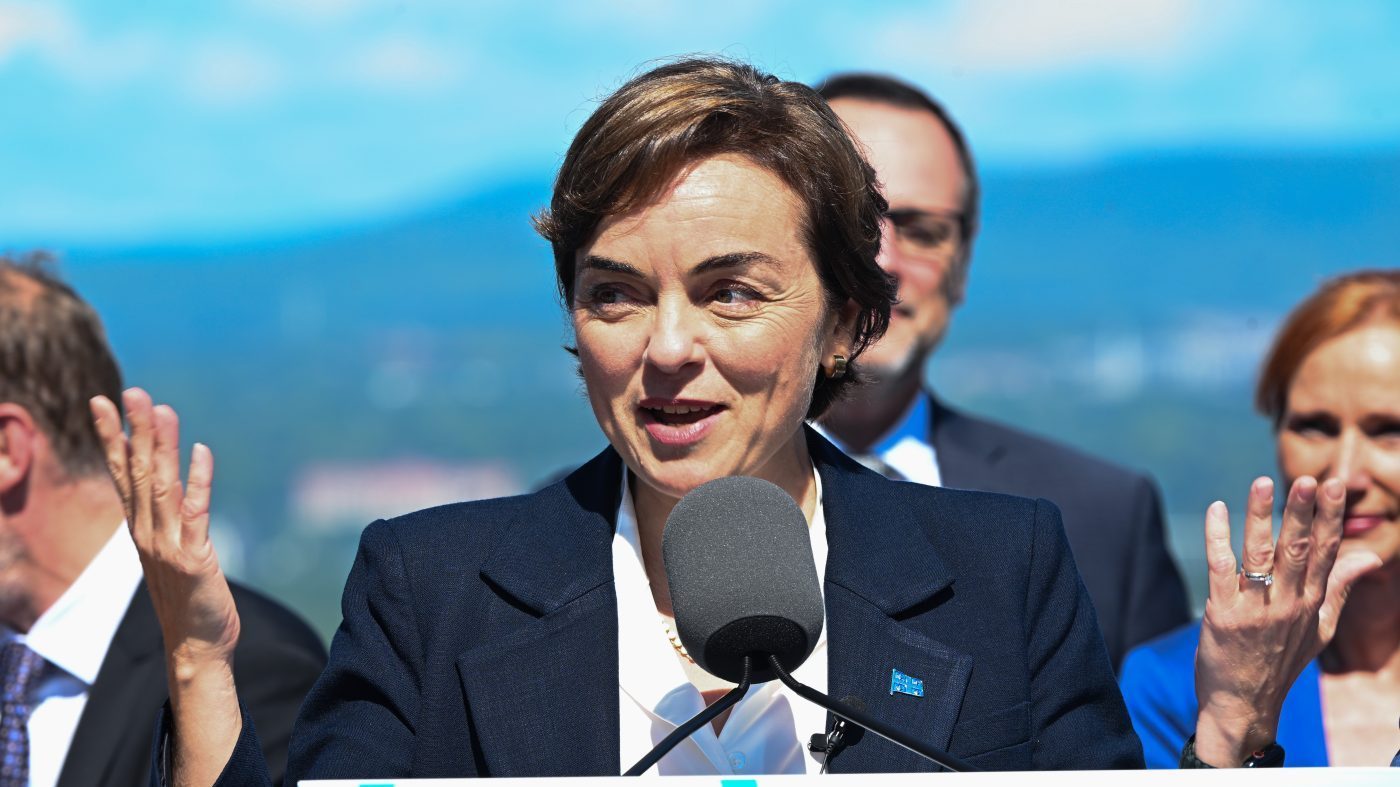
Quebec's governing party leader, Christine Fréchette, launched her election campaign on Thursday by casting U.S. President Donald Trump as the province's primary opponent, pointing to the escalating trade conflict between the two countries.
“My opponent is named Donald Trump,” Fréchette, who leads the right-leaning Coalition Avenir Québec (CAQ), told supporters. “He's the real adversary.”
Féchette took over the party in April after former Premier François Legault stepped down, ending an eight-year run at the helm. The October vote will be her first electoral test as leader.
The campaign kickoff came just hours after Trump signed an executive order renaming Lake Ontario—shared by New York and Ontario—as “Lake America,” the latest in a series of provocations following failed trade talks. Canadian Prime Minister Mark Carney has publicly rejected the name change, insisting the lake will keep its historic name.
Féchette framed the election as a choice about who can best steer Quebec through the economic turbulence triggered by the tit-for-tat tariffs. She argued her government is best equipped to protect local businesses and workers. “I'm asking for a mandate to move forward through a storm,” she said.
The trade war has escalated sharply since Canada walked away from negotiations. Trump imposed 50 percent tariffs on $20 billion worth of Canadian imports, and Carney responded with “dollar for dollar” retaliatory tariffs set to take effect September 8. Trump then announced additional tariffs on Canadian automobiles starting January 1.
Canadian sovereignty has become a central issue in the provincial race, as Trump has repeatedly floated the idea of making Canada the 51st U.S. state. Fréchette's main rival, Parti Québécois leader Paul St-Pierre Plamondon, pushed back on her focus on Trump, arguing it distracts from more pressing domestic concerns.
“Let's not let the tariffs of Donald Trump's administration confiscate this important debate from us,” Plamondon said. “Let's not let him confiscate our election.”
The clash over Trump's trade tactics has also drawn commentary from other political figures. Some analysts argue that Trump's confrontational approach toward Canada may actually bolster support for Canadian independence, a dynamic that could shape the campaign. For more on this, see a critique of Trump's Canada strategy.
As the campaign unfolds, voters will weigh economic anxieties against national pride, with the CAQ seeking to position itself as the steady hand in uncertain times. The outcome could hinge on whether Fréchette's anti-Trump message resonates or whether Plamondon's call for a more locally focused debate gains traction.