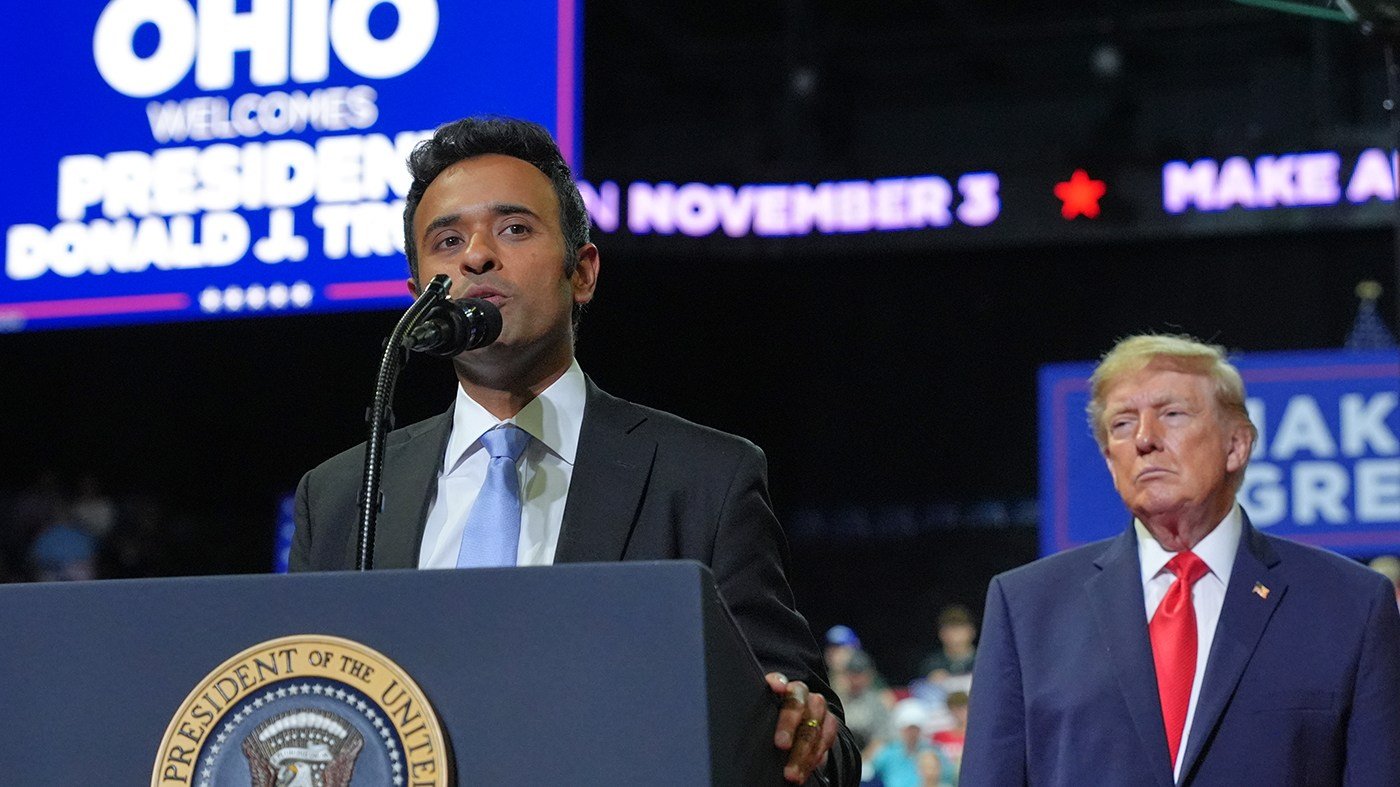
President Trump waded into the controversy surrounding a hard-hitting political advertisement in Ohio on Thursday, offering his full-throated endorsement of the spot and intensifying an already bitter intraparty fight. The ad, which targets Democratic gubernatorial nominee Amy Acton by featuring her estranged mother, has drawn sharp rebukes from several prominent Republicans, but Trump's backing signals that the White House sees political advantage in the attack.
The commercial, created by GOP candidate Vivek Ramaswamy, centers on Donna Arthur, Acton's mother, who accuses her daughter of being a 'liar' with a 'serious problem.' Acton has previously spoken publicly about a traumatic childhood that included sexual abuse by her stepfather, who was charged but fled the state before trial and later died. The ad's use of a family member to attack a candidate over such personal history has stunned political observers and even some Republicans.

Among those voicing disapproval is Ohio's outgoing Republican Governor Mike DeWine, who called the ad 'wrong' and 'deeply troubling.' Senator Jon Husted, locked in a tight race, said he would not have run it, and former Governor John Kasich described the reaction as 'disgust.' Kasich, speaking on MSNBC, said there is 'nothing appropriate' about the commercial.
But the criticism from within the GOP has not swayed the president. In a lengthy social media post, Trump praised the ad as 'very powerful' and suggested DeWine 'probably' wants the Democrat to win. He dismissed press coverage as an attempt to discredit a successful attack, writing, 'Who wouldn't use such an Ad? I would, it's called hitting pay dirt.' When asked by reporters whether he was aware of Acton's abuse allegations, Trump claimed, 'I don't know what the daughter said.'
Vice President Vance, who represented Ohio in the Senate, also defended the ad, criticizing Republicans who are 'whining more about that advertisement' than about Democratic policies. The administration's unified stance has widened a split within the Ohio GOP, pitting national figures against state leaders as the midterm campaign enters its final stretch.
The controversy is part of a broader pattern of Trump's aggressive rhetoric on the trail. He has repeatedly used derogatory nicknames for Democratic candidates, including calling Michigan Senate hopeful Abdul El-Sayed a 'jihadist' and using an anti-trans slur against South Carolina's Annie Andrews. He has also invoked El-Sayed's middle name, Mohamed, in a manner critics see as Islamophobic, drawing parallels to his treatment of Barack Obama. White House spokesperson Davis Ingle defended the president's approach, saying Trump 'doesn't care about being politically correct' and that voters appreciate his authenticity.
Democrats, meanwhile, have pointed to the ad as evidence of a party willing to exploit personal trauma for political gain. The race in Ohio is seen as a bellwether for the midterms, with control of Congress at stake. Trump's involvement, however, may complicate efforts to unify the party, as Trump and Vance back Ramaswamy, while other Republicans distance themselves.
The ad has also overshadowed other campaign issues, including education decisions on midterm ballots and Trump's midterm bargains. As the president doubles down, the question remains whether this strategy will energize the base or alienate swing voters.