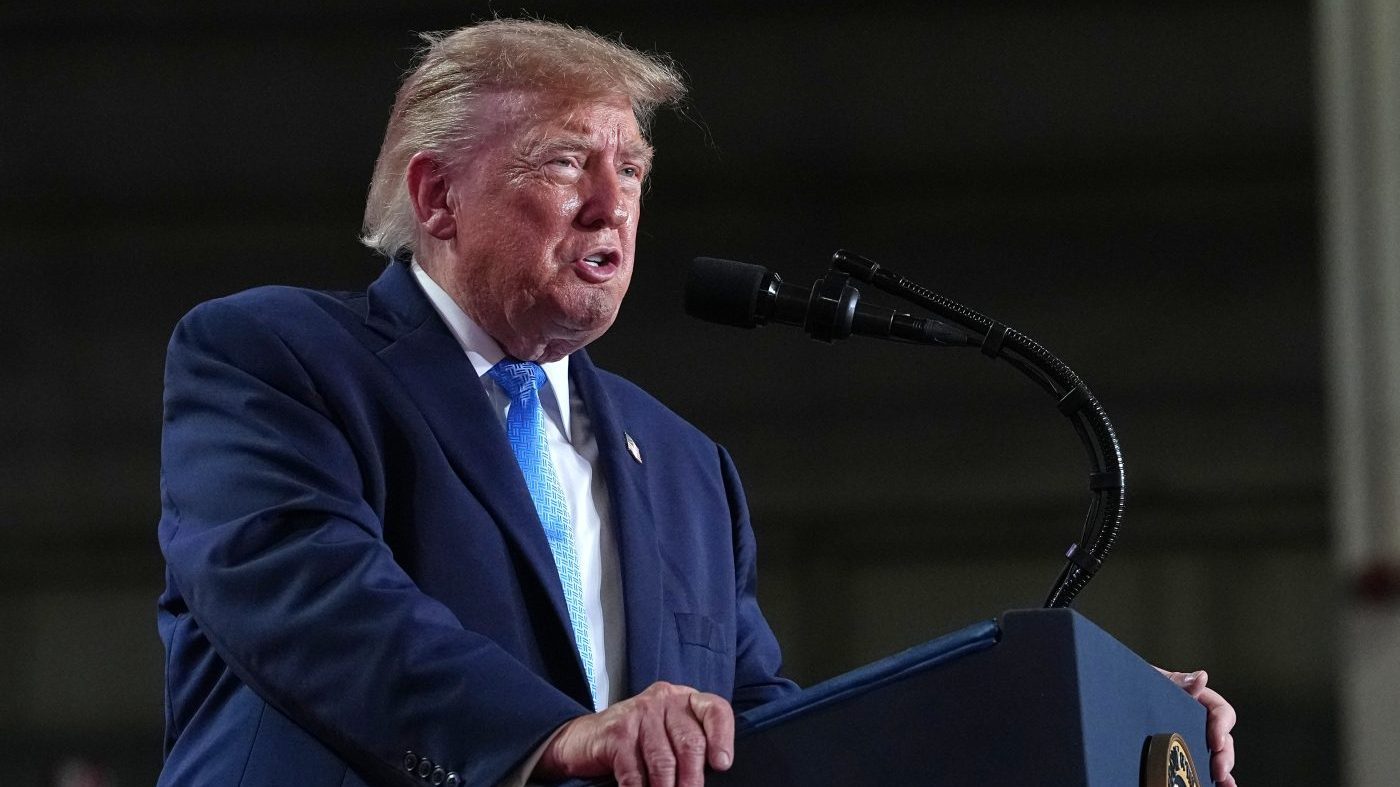
President Trump announced Tuesday that he is ordering a formal ban on the term “artificial intelligence” in all official government communications, calling the phrase inaccurate and mandating the use of “super intelligence” in its place. The directive, delivered via his Truth Social platform, marks the latest escalation in his campaign to rebrand the technology across federal agencies and beyond.
“In short order, we will be officially BANNING the term, ‘AI/Artificial Intelligence,’ in all relevant documents, and everything else, due to its inaccuracy,” Trump wrote. The move follows an executive order signed in September that already instructed the executive branch to adopt “super intelligence” in all official references.
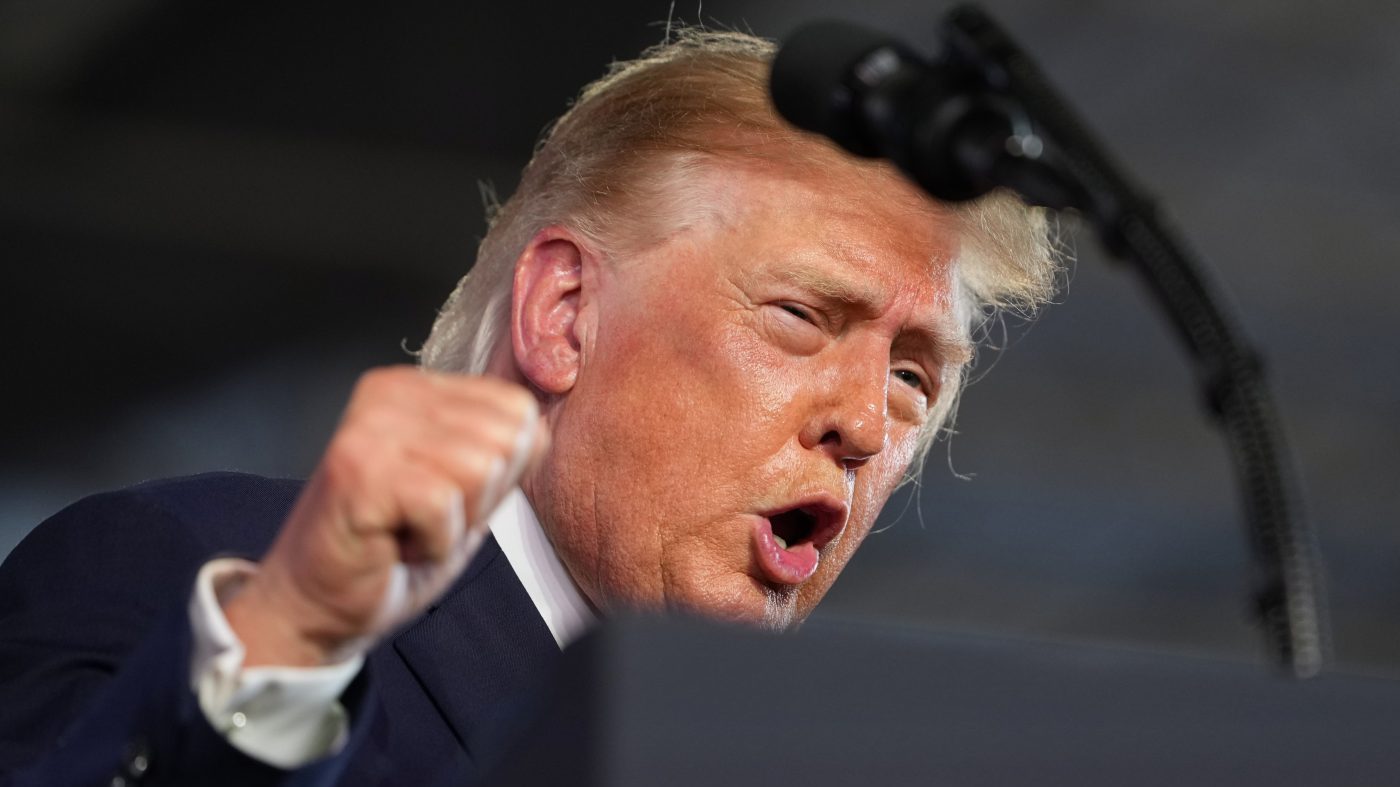
The president has repeatedly criticized mainstream media outlets, particularly The Wall Street Journal, for continuing to use the term “AI.” In a separate post, he demanded: “When will The Wall Street Journal start calling Artificial Intelligence (AI), a very bad and inaccurate name, SI (Super Intelligence), the name which virtually everyone else is using, or soon will be?”
Trump’s insistence on the new terminology has taken on an increasingly confrontational tone. Earlier this month, he declared that the White House “considers anyone that uses the term, ‘Artificial Intelligence,’ as opposed to the highly accepted new and more accurate term, ‘Super Intelligence,’ THE ENEMY!” The remark drew sharp criticism from technology policy experts and opposition lawmakers, who accused the president of prioritizing linguistic battles over substantive AI regulation.
The push for a nomenclature change was also showcased on the international stage. During his address to the United Nations General Assembly last month, Trump announced that the United States would formally rename AI to “super intelligence” in all official documentation. “The United States also totally rejects any attempt to construct a globality scheme to control for the artificial intelligence being spoken of so much now, hereinafter called super intelligence,” he told world leaders.
Trump justified the shift by arguing that the word “artificial” unfairly diminishes the technology’s capabilities. “The use of the word artificial makes intelligence sound fake,” he said. “It is not fake. It’s actually amazing. But we have to be careful. In fact, it is exactly the opposite of what it purports.”
To institutionalize the change, Trump announced the creation of a new “Super Intelligence Force,” to be led by Director of National Intelligence Jay Clayton. The president described the unit as tasked with coordinating federal efforts to ensure American leadership in the field, which he called “bigger than the Industrial Revolution, and the Internet.” The group is also directed to engage with consumers, public interest groups, religious organizations, critical infrastructure providers, and companies developing the technology.
Critics argue that the terminology battle distracts from more pressing policy questions, including AI safety, workforce disruption, and international competition. Some legal scholars note that the executive order and the new ban carry no enforcement mechanism beyond federal agencies, leaving private-sector usage largely unaffected. Nevertheless, the president’s rhetoric has already influenced some government communications, with several agencies quietly updating their style guides to reflect the new preferred term.
The announcement comes amid broader debates over election integrity and political messaging, as well as ongoing tensions with international bodies over technology governance. Trump’s insistence on “super intelligence” has also drawn comparisons to his criticism of international institutions, with some analysts viewing the rename as part of a broader effort to assert U.S. dominance in emerging technologies.
Whether the term “artificial intelligence” will truly vanish from federal documents remains to be seen. But for now, the president has made clear that in his administration, “super intelligence” is the only acceptable phrase.