President Trump escalated his linguistic crusade on Tuesday, declaring that the term "artificial intelligence" will be officially banned in all relevant federal documents and communications. In a post on his Truth Social platform, Trump wrote, "In short order, we will be officially BANNING the term, 'AI/Artificial Intelligence,' in all relevant documents, and everything else, due to its inaccuracy."
The president has long chafed at the phrase, arguing that it mischaracterizes the technology. His preferred term is "super intelligence" (SI), which he believes more accurately reflects the capabilities of advanced computing systems. Trump has also taken aim at The Wall Street Journal for continuing to use the term AI, asking, "When will The Wall Street Journal start calling Artificial Intelligence (AI), a very bad and inaccurate name, SI (Super Intelligence), the name which virtually everyone else is using, or soon will be?"
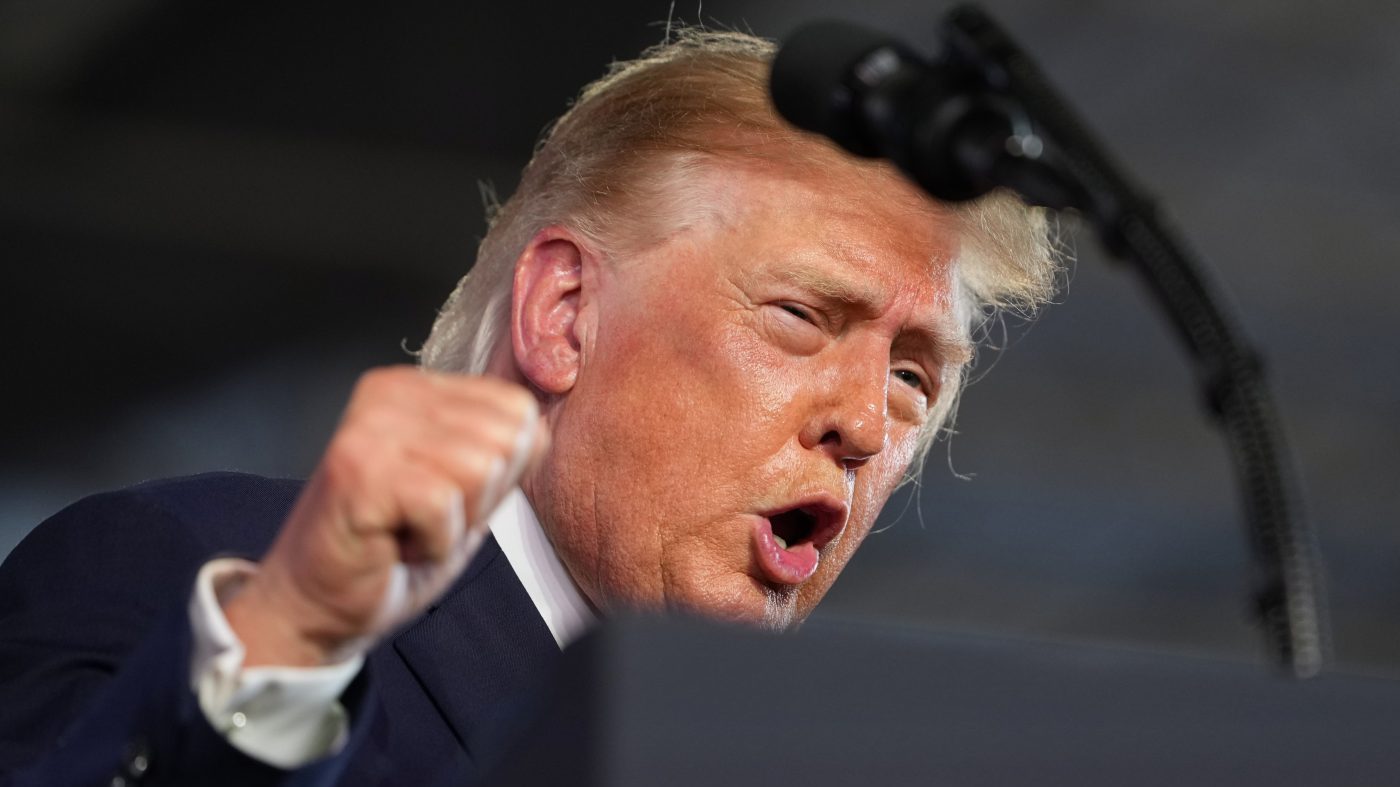
The move is the latest in a series of executive actions on the terminology. In September, Trump signed an executive order directing the executive branch to adopt "super intelligence" in place of "artificial intelligence." Earlier this month, he went further, posting that the White House "considers anyone that uses the term, 'Artificial Intelligence,' as opposed to the highly accepted new and more accurate term, 'Super Intelligence,' THE ENEMY!"
Trump also raised the issue on the international stage at the United Nations General Assembly last month, telling world leaders that the United States would be renaming AI to SI in official documents. "The United States also totally rejects any attempt to construct a globality scheme to control for the artificial intelligence being spoken of so much now, hereinafter called super intelligence. Changing the name," he said.
During that address, Trump explained his rationale: "The use of the word artificial makes intelligence sound fake. It is not fake. It's actually amazing. But we have to be careful. In fact, it is exactly the opposite of what it purports."
The president has also moved to institutionalize the new terminology. Earlier this month, he announced the creation of the "Super Intelligence Force," to be led by Director of National Intelligence Jay Clayton. According to Trump, the force is "tasked with coordinating the effort of the Federal Government to ensure that America continues to lead the World in Super Intelligence, which many say is bigger than the Industrial Revolution, and the Internet, and will protect the interests, and improve the lives, of all Americans."
The group is directed to coordinate with a broad range of stakeholders, including "Consumers, Public Interest Groups, Religious Organizations, Critical Infrastructure Providers, and Super Intelligence Companies."
The terminology shift has drawn criticism from technology policy experts, who note that "artificial intelligence" is a widely recognized and technically precise term. However, the administration's push reflects a broader effort to reshape the public narrative around emerging technologies, a move that has implications for regulatory policy and international cooperation. Some observers see the ban as part of a pattern of the president seeking to control language, similar to his conditions on midterm acceptance and his sanctions on the ICC.
Whether the term "super intelligence" will gain traction beyond the executive branch remains uncertain. But for now, federal agencies and contractors will need to adjust their language to comply with the president's directive.