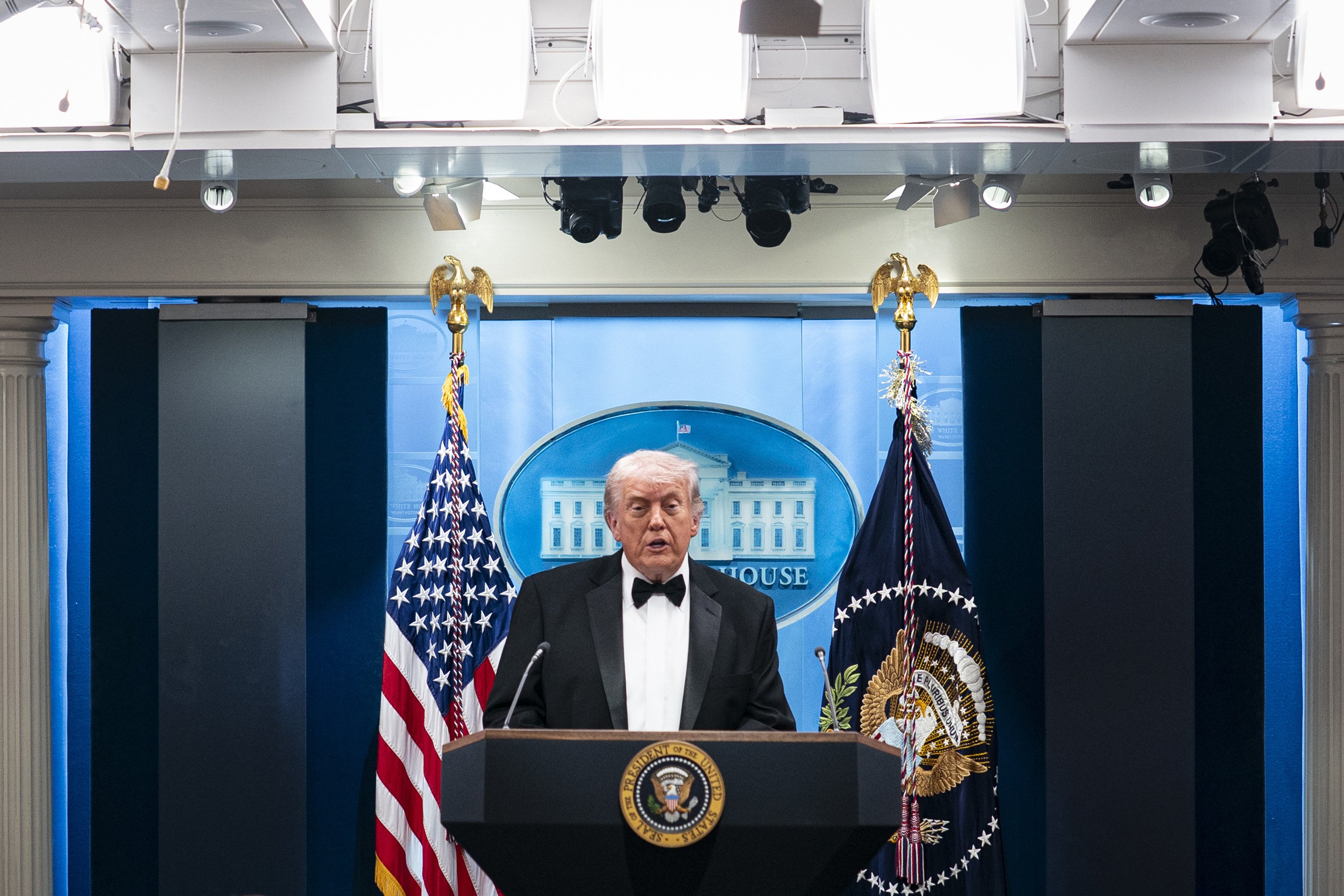
President Trump has a narrow window to leverage last week's domestic upheaval into a strategic reset of his foreign policy, correcting misguided overtures to Vladimir Putin on Ukraine and Xi Jinping on Taiwan. The alternative—continued division—risks confirming that the U.S. president is not fully committed to the West's existential battle against a rising authoritarian coalition.
Russia, China, Iran, and North Korea have formed an informal but effective axis, each contributing to a shared goal: dismantling the U.S.-led international order. Their cooperation mirrors the collective security principle of "all for one, one for all," but applied to an anti-Western agenda guided by a Marxist-Leninist ethos: from each according to ability, to each according to need.
How the Axis Operates
Russia's invasion of Ukraine served as the first test of this coordinated push. China supplied weapons, drones, and intelligence; Iran provided its own drones; North Korean troops entered Russia to help repel Ukraine's counter-incursion in Kursk. All three backed Moscow diplomatically at the United Nations and other forums.
The next challenge came with the U.S.-Israel strikes on Iran. China and Russia are now shipping air defense systems and weapons to Tehran, while Moscow shares targeting data to kill Americans in Gulf states and hosts an Iranian delegation for strategy coordination. North Korea may deploy battle-hardened troops to coastal positions to resist a potential U.S. ground landing.
This axis also forces the U.S. to stretch its resources thin. Tomahawk missiles are being expended against Iran when they could strike deep inside Russia for Ukraine. Other weapons systems reserved for Iran may be needed if China attacks or blockades Taiwan—a scenario that could also involve North Korea's strategic pivot toward Beijing and Moscow.
Resource Strain and Democratic Limits
America's adversaries see a clear pattern: U.S. military resources are being depleted faster than they can be replenished, weakened for the next confrontation—be it China against Taiwan or the Philippines, North Korea against the South, or Iran opposing U.S. initiatives. The U.S. defense industrial base is constrained by democratic governance—rule of law, separation of powers, and consent of the governed—which has been further eroded by Trump's quasi-authoritarian decision to wage war without proper congressional consultation or allied buy-in.
A more humble appeal for congressional funding to rebuild weapons systems and defense capacity would send a powerful signal—domestically and abroad—that the unilateralist, tone-deaf governing style is ending. With bridges repaired to political foes and insulted allies, Trump could secure bipartisan support and allied participation in what he calls an existential moment for America and the West. This includes navigating tensions with allies, as seen in King Charles's upcoming address to Congress amid U.S.-UK strains over the Iran conflict.
A Second Chance—or a Final Test
Restoring credible deterrence requires more than empty boasts about American supremacy. It demands a quiet infusion of arms and a bipartisan foundation. Domestic unity would send a chastening message: time and patience are not on the adversaries' side.
This moment could turn a near-national catastrophe into a healing outcome—an opportunity Trump squandered after the first assassination attempt. If he fails again to seize the moment and unite the country, it will raise serious doubts about whose side he is on in the existential struggle between authoritarians and the West.