By November 3, Washington is unlikely to have publicly defined what should happen to Iran's remaining enriched uranium, who would verify its fate, or what penalties Tehran would face for non-compliance. Tehran has not scheduled International Atomic Energy Agency (IAEA) access to Isfahan with a specific date and site list. And the two governments have not agreed on a reciprocal shipping arrangement—where Iran halts attacks on commercial vessels and Washington boards or diverts sanctioned tankers instead of sinking them.
If none of these occur, President Trump's Iran pause is merely a calendar, not diplomacy. If any do, I will gladly concede I was wrong. But as currently structured, the pause gives neither capital a public reason to move before the election.
Trump's October 8 pledge set no Iranian condition. He said the two governments were holding productive talks, that the blockade of Iranian ports would remain fully in force, and tied his promise not to attack to the midterm calendar. He also said strikes could follow the election. That differs from his April pause, which he explicitly linked to Iran's complete, immediate, and safe reopening of Hormuz. This one simply asks Iran to wait, with no stated incentive to do more.
Before Israel's first strikes in June 2025, the IAEA estimated Iran possessed 441 kilograms of uranium enriched up to 60 percent. In March, Director General Rafael Grossi said the agency believed a bit more than 200 kilograms remained in tunnels at Isfahan, with some at Natanz. Iran has not told the IAEA what survived or where it is, and inspectors have not returned to the bombed sites.
Putting accounting first is my judgment, not settled fact. Hawks will argue the deeper problem is enrichment capacity, including an Isfahan facility that apparently escaped the attacks, and the status of centrifuges. They are right that accounting alone would solve little. But Washington cannot negotiate the disposition of material it cannot locate, and capacity limits cannot be verified until both governments establish what remains. Vice President JD Vance says Iran must make a “meaningful” reduction in enrichment capacity. But “meaningful” is not measurable. By “measurable,” I mean Washington must identify three things: the disposition it would accept for the remaining 60 percent enriched uranium; the authority responsible for verification; and the consequences if Iran refuses.
A new shipping rule would have to cost both sides something. Iran would have to stop attacking commercial vessels. Washington would board, divert, or otherwise interdict sanctioned tankers rather than sinking them, except when a vessel is attacking U.S. forces or civilian shipping. In September, U.S. forces struck Iranian tankers after an attempted attack on a Navy ship. Under this rule, that option narrows. The blockade of Iranian ports could remain—what would change is how it is enforced.
Iran will ask what it gets in return. The honest answer is very little—no sanctions relief, no end to the blockade, no recognition of its broader demands. It would get a defined process for resolving disputed incidents. That is deliberately modest. The point is to learn whether Tehran can make any verifiable commitment.
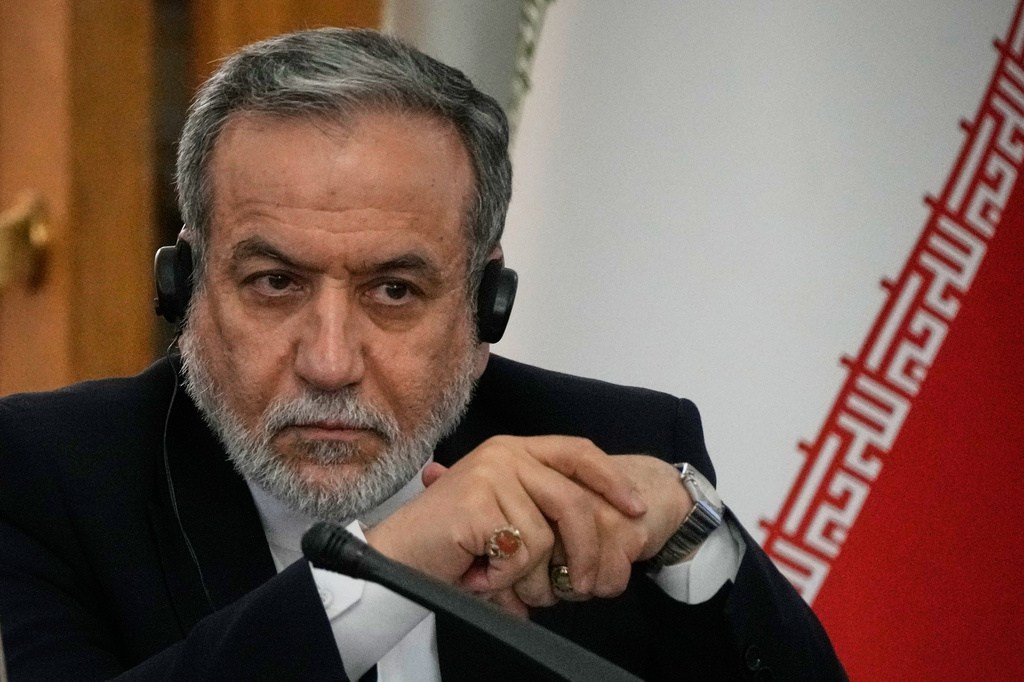
Iran has terms of its own. In New York, it reportedly demanded that the blockade be lifted, frozen assets transferred, and the war ended on all fronts. Trump rejected them. The problem is not silence. It is that neither side has turned demands into a narrow first step. Whether Tehran can take one is unclear. As I argued earlier this month, Iran has become harder to read. As of this writing, the motion to impeach Foreign Minister Abbas Araghchi over the New York meeting has been registered but has not reached the agenda, and the Supreme National Security Council's secretary has said the trip was approved in advance.
None of that proves Iran cannot make a deal. But it does suggest authority in Tehran is contested, which is precisely why the pause should test whether anyone can actually deliver on a commitment. If Washington names terms but Tehran schedules nothing, it will be impossible to tell whether the problem is unwillingness or inability. That ambiguity is precisely the problem. If Tehran schedules access and Washington names nothing, the burden shifts to the administration. Three steps would not mean peace. They would mean the pause produced the minimum for a negotiable arrangement.
Tehran may be waiting out the clock. That does not rescue the pause. It is the point. A pause that gives both sides a reason to wait is a calendar. If Iran is waiting, it will schedule nothing. If it wants a deal, scheduling access is a limited first step: it commits Iran to a date and sites, not to enrichment limits, sanctions terms, or an end to the blockade.
Trump may believe force after Nov. 3 will do better than diplomacy. But military victory is an objective, not an endgame, until Washington says what it should produce. A pause without measurable terms is not restraint. It is a calendar.