President Trump used a campaign stop in Lubbock, Texas, on Tuesday night to announce that his administration will move to dismantle federal methane regulations imposed on the oil and gas industry under his predecessor.
Speaking at a rally aimed at boosting Republican Senate candidate Ken Paxton, the state attorney general, Trump told supporters he was “officially terminating Biden’s expensive and unnecessary methane regulations.” He added that the rollback had been in the works for “a long time” with Environmental Protection Agency Administrator Lee Zeldin.
The announcement is part of a broader push by the administration to reduce regulatory burdens on fossil fuel producers, a key constituency in Texas and other energy-producing states. The proposed changes are expected to significantly relax how the industry handles methane, a greenhouse gas roughly 28 times more potent than carbon dioxide over a 100-year period.
Key rollbacks expected
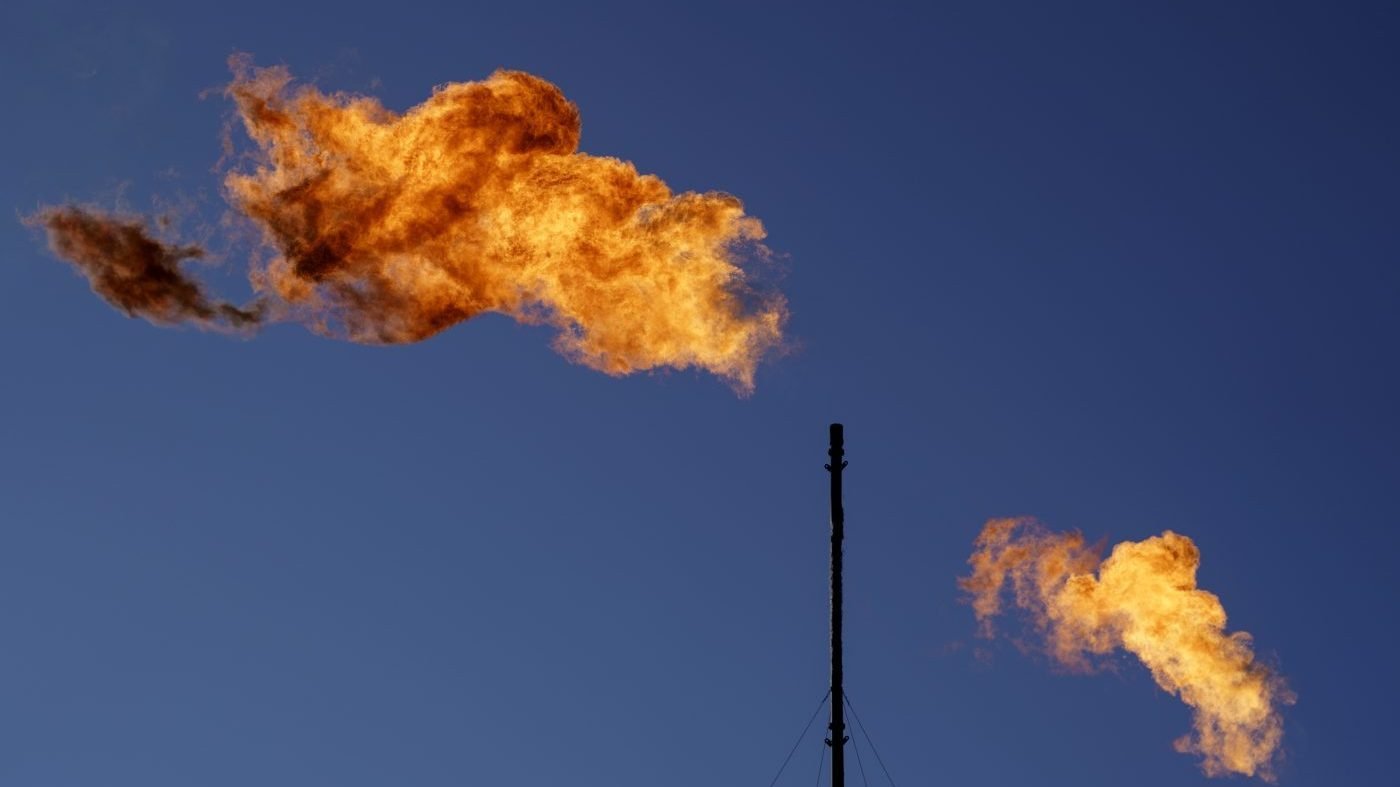
According to officials familiar with the plan, the administration is likely to propose looser rules for marginal wells—those that produce relatively small amounts of oil but collectively account for about half of the sector’s methane emissions. The changes would also ease Biden-era restrictions on flaring, the practice of burning off excess gas during oil extraction, and would eliminate the Super Emitter Program, which required companies to respond to credible reports of major methane leaks.
Administration officials argue that these steps will save the oil and gas industry an estimated $45 billion. They also project that the looser rules could unlock an additional 210 million barrels of oil and 1.41 trillion cubic feet of natural gas between 2027 and 2050. To put that in perspective, the U.S. consumes about 21 million barrels of oil and 92 billion cubic feet of natural gas per day, meaning the projected gains would cover roughly ten days of oil consumption and fifteen days of gas consumption.
Environmental groups and climate scientists, however, warn that the rollback will accelerate global warming. When the Biden administration tightened methane rules in 2023, it estimated that the regulations would prevent 58 million tons of methane from entering the atmosphere between 2024 and 2038—the equivalent of taking 28 million gasoline-powered cars off the road for a year.
The announcement comes as Trump has been courting voters in Texas, where Paxton faces a competitive Senate race. The president’s support for Paxton is seen as a test of his influence in a state that has become a battleground over energy policy.
Critics have also pointed to the timing of the announcement, noting that it was made at a political rally rather than through an official regulatory process. Legal challenges are expected, as any rollback would require a formal rulemaking process that could take months or years.
The move is part of a broader trend under the Trump administration to unwind environmental regulations across multiple sectors. In recent weeks, the administration has also moved to reshape federal technology policy and has faced court rulings on other executive actions, such as a judge halting a rule on refugee appeals.
Industry groups have praised the proposed changes, arguing that they will create jobs and lower energy costs. But environmental advocates say the administration is prioritizing short-term profits over long-term climate stability, and they vow to fight the rollback in court.
As the regulatory process unfolds, the fate of the methane rules will likely become a flashpoint in the broader debate over U.S. energy policy and climate action.