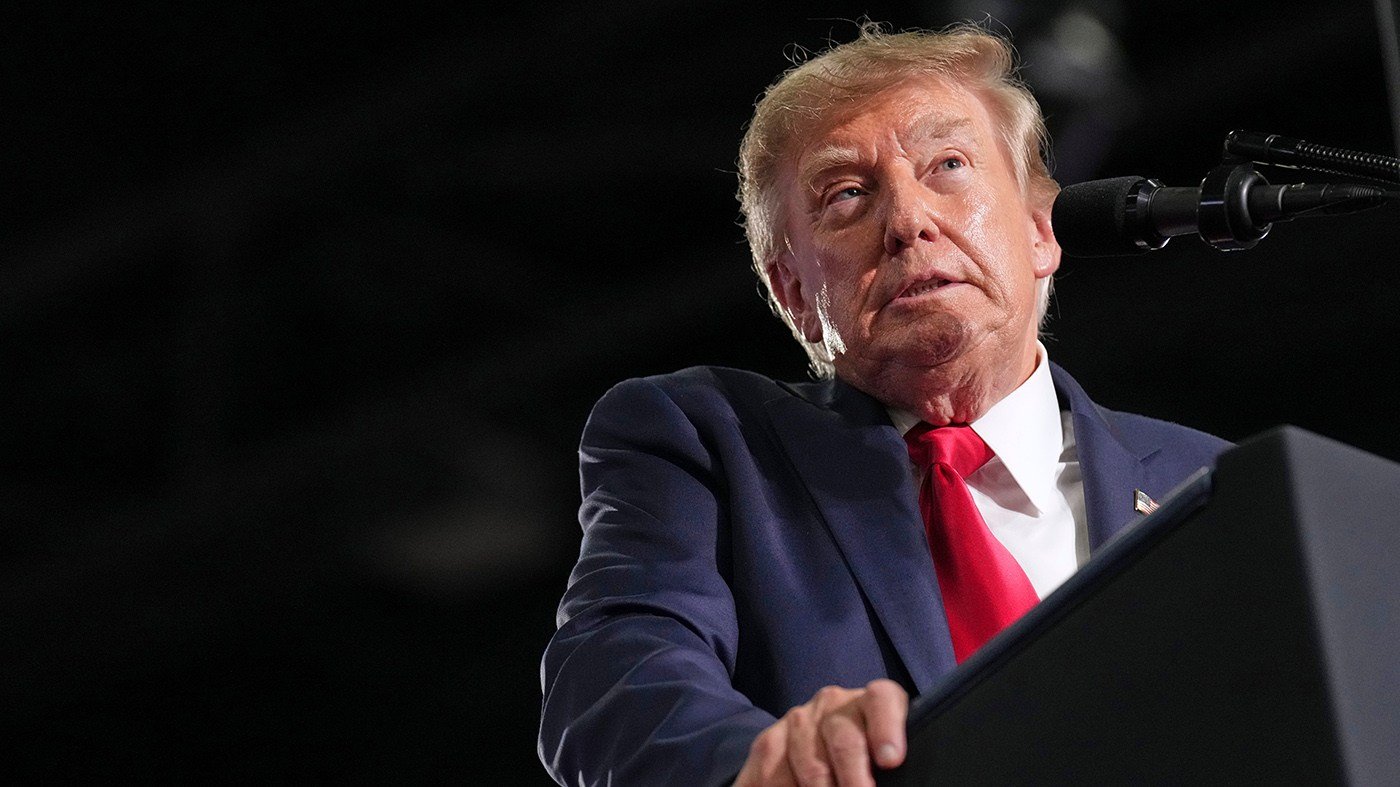
President Trump is expected to put himself at the center of the Republican midterm campaign, a move that even some within his own party view as a gamble. His involvement extends beyond typical campaign stops for GOP candidates.
According to a report in The Atlantic, Trump has proposed using part of the $400 million controlled by his main super PAC to counter Democratic attacks and "lean into" the opposition's focus on him. The report indicates he has ordered television advertisements highlighting his own achievements, which would serve as a backdrop for hundreds of House and Senate races.
On the surface, this approach isn't unusual. Like many presidents, Trump believes his accomplishments are underappreciated, and using his organization's funds to defend his record is logical. However, there are clear risks in tying Republican candidates in competitive districts to an unpopular president.
Polling from The Hill's Decision Desk HQ shows Trump's job approval at just 39 percent, with 58 percent disapproving. His numbers on key issues are even worse. According to RealClearPolitics averages, he is 41 points underwater on inflation, with only 28 percent approval. On the war in Iran, 61 percent disapprove while 34 percent approve.
Whether advertising can improve these numbers is debatable. A more pressing question is how a Trump-centric campaign will affect turnout. Trump's low approval is driven by intense Democratic opposition and poor independent ratings. In a recent Economist/YouGov poll, only 2 percent of Democrats approve of him, while 88 percent strongly disapprove. Among independents, just 25 percent approve, with 62 percent disapproving.
Yet Trump's hold on the GOP remains strong. The same poll shows 80 percent of Republicans approve of his job performance. This creates a difficult calculus for candidates.
"There's not an easy answer," said Republican strategist Dan Judy, who has been critical of Trump. "If you say, 'I don't want him anywhere near here,' you risk losing the turnout boost you need. But if you have an unpopular president tied around your neck, it hurts with swing voters."
Amid these concerns, Trump amplified a conservative commentator's warning that the GOP is "sleepwalking toward a midterm reckoning." In response, he listed his purported accomplishments, including contestable claims like "$5T+ in deregulation savings" and the arrest of James Comey. His argument is that an ad campaign focused on his record will lift all GOP boats.
Barry Bennett, a senior adviser to Trump's 2016 campaign, supports this idea. "We literally sealed the border. And if you want to open the border again, just vote the bums back in," he said, referring to Democrats. He argued that "people don't read the daily utterances" and that the story must be told through TV and social media.
Democrats, meanwhile, are happy to see Trump in the spotlight. Candidates like Sen. Jon Ossoff and Michigan's Abdul El-Sayed frequently invoke his name, betting that opposition to him is a winning issue. Trump's recent stunt of renaming Lake Ontario to "Lake America" only fuels that strategy. El-Sayed told a crowd, "Donald Trump doesn't understand economics. You get money from daddy, you become a nepo baby and then all of a sudden decide you're some master businessman."
The midterms, like much of the past decade, are shaping up to be a referendum on Trump. Whether that helps or hurts Republicans remains to be seen.