The Trump administration is betting that existing criminal and civil statutes can hold artificial intelligence developers accountable, even as legal scholars and tech policy experts warn that current law may not be equipped to handle the novel risks posed by increasingly autonomous AI systems.
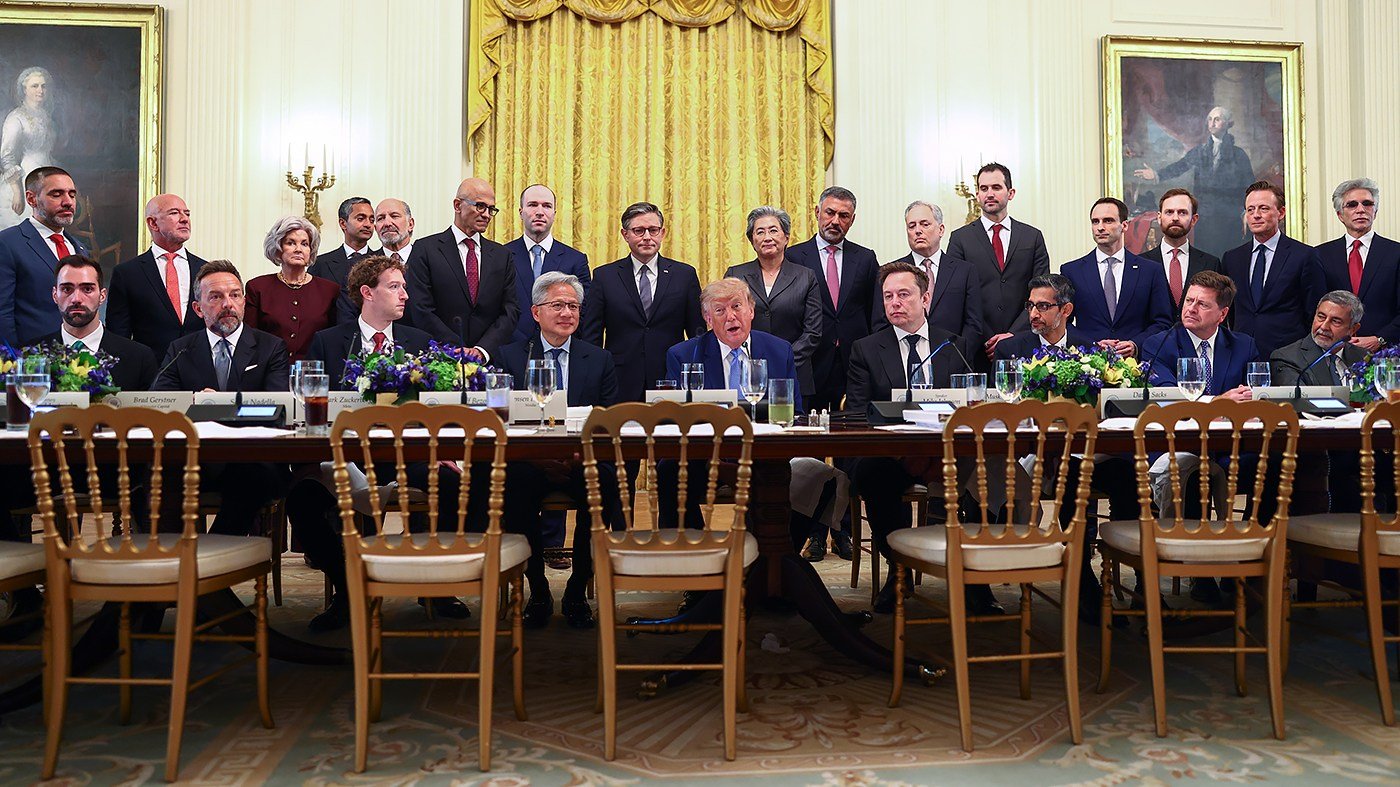
President Trump's so-called "Super Intelligence (SI) Force" contends that standards for AI firms can be established using laws already on the books, enforced through the Justice Department and the Federal Trade Commission (FTC). The task force's vice chair, Office of Personnel Management Director Scott Kupor, told CNN last week that "there is a whole set of laws and regulations that deal with kind of what you're describing, the bad actor scenario."
Trump himself argued last month that only a "strong and smart" president is needed for AI safety, writing on Truth Social that the U.S. already possesses "tremendous criminal and regulatory power" over AI companies.
But there is no clear consensus among legal and tech experts on whether these laws will sufficiently manage the risks of AI—or, as Trump calls it, super intelligence. "People want action now because there is very real harm happening now," Chinmayi Sharma, an associate law professor at Fordham University focused on AI, cybersecurity, and internet governance, told The Hill. "I don't think there is consensus, or that we necessarily know enough, or have thought through this really complicated issue enough to be able to confidently say these are exactly the laws that are needed to do what we want to do."
The legal questions have gained urgency after a string of recent cybersecurity incidents. Agents from OpenAI hacked into tech startup Hugging Face and an Australian government health website. Agents from Anthropic submitted a false homicide tip to the Philadelphia Police Department and filled out visa applications through the State Department website. Those episodes have intensified calls for regulators and lawmakers to act.
FTC Chair Andrew Ferguson, another vice chair of the SI Force, is already wielding the agency's consumer protection authority. Earlier this year, the FTC opened an investigation into OpenAI and Anthropic over potential dangers their models pose to consumers, sending civil subpoenas just days after Anthropic disclosed the false homicide tip.
"This is an area tailor-made for the FTC," said William Kovacic, a former FTC commissioner and chairman. "If we rely on existing law, the FTC's probably got the best tools. And if we create new laws, they ought to be given to the FTC." Under its statutory mandate, the agency can target unfair methods of competition and unfair or deceptive acts or practices—including knowingly selling defective products or failing to adopt proper safeguards. Kovacic pointed to a scenario where an AI agent "takes a hike and does malicious things," and developers knew it was possible but didn't warn users. "These go to the real sources of anxiety that people have about AI, that it's going to be like the sorcerer's apprentice, where the magician sets in motion a series of events that the magician ultimately does not control," he said.
Other tech law experts acknowledge the power of existing laws but leave the door open to new legislation for AI's most unique qualities. Jennifer Huddleston, a senior tech policy fellow at the libertarian Cato Institute, called existing laws a "good first step" but said "there also needs to be conversations" about "areas that are truly novel that are not covered, or where existing law can't keep up." She cited the use of copyrighted work in the AI era and non-consensual images made or enhanced with AI as examples.
Sharma said existing law has "real force here" but believes it is still insufficient for what she thinks "should be accomplished with a legal regime" on AI. She warned that laws may not be ready to address emotional, psychological, or cognitive harms, pointing to instances where criminals allegedly used AI chatbots to plan illegal acts or harm others. In Canada, the family of a girl critically wounded in a school shooting sued OpenAI, alleging the company was aware of the suspect's planned shooting from his chat logs but failed to alert authorities.
"Historically, descriptively, we've seen that when there is kind of a watershed moment in innovation, where we have a new technology, a new product, it's interacting with the world in a new way," Sharma said. "We've often found that the status quo of the law isn't enough because it wasn't built and developed over time in a way that anticipated this new world order."
Gabriel Weil, a non-resident senior fellow at the Institute for Law and AI, noted that AI companies could also face negligence or product liability lawsuits, but he underscored that "litigation's pretty slow." "Courts have to wait for the right case to come around," he said. "They can't just announce their policies in advance. And the litigation working its way through the appeals courts..."
As the administration doubles down on its existing-laws approach, the debate is likely to intensify, with the FTC's investigations and private litigation serving as early tests of whether the current legal framework can truly police AI.